Managed sourcing from Bangladesh, for export and for buyers at home
Get it sourced

Machinery and handling

Valve supplier in Bangladesh

Roptan works as your valve supplier in Bangladesh: send the valve schedule with size, class, material and service, and we source gate, ball, butterfly, check, control or safety valves from verified importers and stockists, check the test records and certificates, and deliver.

  • Verified sellers
  • Checked before it ships
  • Delivered by Roptan

Get valves sourced

Prefer to deal with suppliers yourself? Post it on the requirement board

Valve products

Pick a product and we source it for you, or send one requirement that covers several.

Buying valves in Bangladesh

Valves isolate, regulate and protect water mains, fire lines, steam and condensate in textile plants, compressed air, ETPs and process lines across Bangladesh. Many industrial valves here are imported, so the buyer's risk is a valve whose material, pressure class or test record does not match the quote. Buyers include contractors and maintenance teams in Dhaka, factories in Gazipur and Narayanganj, and power, fertiliser and utility projects around Chattogram.

A valve supplier in Bangladesh should show a pressure test record and a material certificate for every lot. Send your schedule by form or chat. We source from verified importers and stockists, compare quotes like for like, check markings and certificates against the order and deliver; for control and safety valves, the seller sets and commissions them on site. You deal with Roptan only.

Valves we source

Gate valves

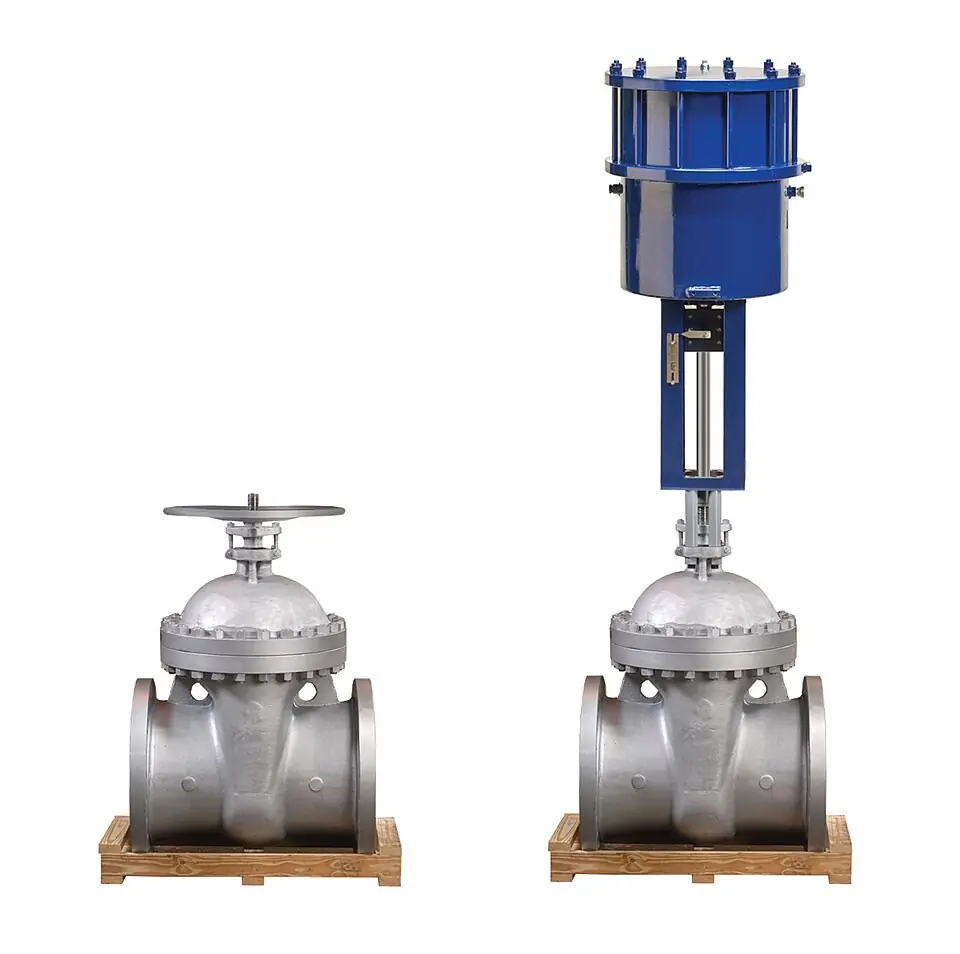
Wedge gate valves for on-off isolation with little pressure loss when open; do not throttle with them, as the wedge wears and leaks. Steel gate valves for process and steam service follow API 600; waterworks valves come in cast or ductile iron.

Ball valves

A ball with a bore turns 90 degrees for quick, tight shut-off on water, air, gas, oil and chemicals. Floating balls suit smaller sizes, trunnion-mounted designs larger sizes and higher pressures; for gas and fuel lines, ask for fire-safe designs tested to API 607 or ISO 10497.

Butterfly valves

A disc on a shaft, in wafer, lug or double-flanged form: lighter, shorter and usually lower priced than a gate valve in large sizes, for water, HVAC, fire and ETP lines. Match the seat, EPDM or PTFE, to the liquid and temperature.

Check valves

Swing, lift, dual plate and non-slam designs that stop backflow, usually on pump outlets. Choose non-slam types on booster and fire pump lines: a valve that slams shut on every pump stop causes water hammer, which damages pumps and pipework.

Control valves

Globe or rotary valves with actuators and positioners that hold a flow, pressure, level or temperature on a control signal, in boiler houses, process lines and chilled water systems. Sized by Cv or Kv to IEC 60534 from your process data, not by pipe size.

Safety valves

Spring-loaded valves that open at a set pressure to protect boilers, air receivers and pressure vessels. Specify set pressure, relieving capacity and medium; each comes tested and sealed at its set pressure, with a certificate. Never replace one with an ordinary valve.

What to tell a valve supplier in Bangladesh

Service conditions
Fluid, temperature, working and design pressure, and any solids or chemicals. These decide body, trim and seat materials more than size does.
Size, class and ends
DN or NPS, PN or ASME class (PN16, Class 150, 300), and ends: flanged to EN 1092-1 or ASME B16.5, butt-weld, threaded, wafer or lug. Flanges of different standards usually do not bolt together.
Face-to-face
The face-to-face standard, ASME B16.10 or EN 558, so a replacement fits the gap in your existing line.
Materials
Body, trim and seat: cast or ductile iron, carbon steel (ASTM A216 WCB), stainless CF8 or CF8M (304 or 316 grades), or bronze. Avoid bare cast iron in salt air or brackish water.
Temperature rating
A steel valve's allowed pressure falls as temperature rises. Read the class from the ASME B16.34 table at your working temperature, and ask for it on the quote.
Tightness
The seat leakage you accept: API 598 or ISO 5208 for isolation valves, and an FCI 70-2 class such as IV or VI for control valves.
Actuation
Lever, gearbox or actuator; air supply or three phase power; the control signal; fail-open or fail-closed on power loss; and an IP67 or IP68 enclosure for pits that flood.
Certificates and tags
Material certificates to EN 10204 type 3.1 for pressure parts, a pressure test record per lot or serial, and a valve schedule with tag numbers so each valve is checked against its line.

Standards, markings and test records for valves

API 598
Valve inspection and pressure testing: for steel valves, a shell test at 1.5 times the rated pressure, plus seat tests with allowed leakage. Ask for the record for your lot, not a generic certificate.
ASME B16.34
Pressure and temperature ratings and wall thickness for steel valves. It gives the real limit at your working temperature.
API 600 and API 6D
API 600 covers bolted bonnet steel gate valves; API 6D covers pipeline valves. Ask which one a quoted valve is built to.
IEC 60534
Control valve sizing, inspection and testing. Ask for the sizing sheet at minimum, normal and maximum flow, and the seat leakage result.
MSS SP-25
The standard marking system for valves. Compare body markings for size, class, material and heat number with the certificate before a lot is accepted.

What moves the price of a valve

  • Size and pressure class: cost climbs steeply with DN and class, as each step adds wall thickness and weight.
  • Materials: iron, carbon steel, stainless steel or bronze bodies, and soft seats against the metal seats that high temperature needs.
  • Design standard and tests: API or EN valves with 3.1 certificates and batch test records cost more than general-purpose valves.
  • Actuation: on small valves, an actuator and positioner can cost more than the valve.
  • Origin: European, Japanese, Korean, Chinese or Indian makers differ in price and documentation.
  • Quantity and stock: common sizes from importers' stock, or a full schedule imported in one shipment, which lowers freight and clearance cost per valve.

Lead times and delivery

Standard gate, ball, butterfly and check valves in common sizes are usually held by importers in Dhaka and Chattogram and can arrive within days to two weeks. Steel and stainless valves in large sizes, high classes or special materials, and most control and safety valves, are imported to order and typically take six weeks to four months, longer with third-party inspection at the maker. Roptan confirms dates in the quote.

Valves arrive capped and crated, each tagged to your schedule line. On delivery we check markings, quantities and certificates against the order. Your piping contractor usually fits isolation valves; the seller can mount actuators, calibrate control valves and stroke-test them on site. Handover papers: test records and material certificates per lot, datasheets, actuator wiring diagrams, warranty and a VAT invoice (Mushak 6.3).

What we check for this order

  • Trade licence and import documentsThe importer's trade licence and the bill of entry for the lot, so origin and quantity match the quote.
  • Brand authorisation or stated originA letter from the maker naming the seller, or the origin stated plainly with the maker's test certificates and body markings that match.
  • Spare parts and serviceWho holds seat kits, packing, actuator parts and positioners in Bangladesh, and who can calibrate control valves on site.
  • Warranty in writingPeriod and start date, what counts as a seat or body failure, and exclusions for dirty or off-design service.

Questions buyers ask

Should I use a gate valve or a butterfly valve?

For isolating large water lines, a butterfly valve is lighter, shorter and usually lower priced. A gate valve gives a clear bore with little pressure loss and, in steel, suits steam and higher pressures. Do not throttle with a gate valve; use a globe or control valve to regulate flow.

How do I know a valve is genuine and of the stated material?

Check the body marking against the certificate: size, class, material grade and heat number should match an EN 10204 type 3.1 certificate. For stainless steel, ask for a PMI (positive material identification) check on a sample to confirm 316 rather than 304. Roptan asks for these checks before a lot is released.

What pressure test should a valve pass?

Usually API 598 or ISO 5208: a shell test above rated pressure, 1.5 times it for steel valves under API 598, and seat tests with an allowed leakage by size. Ask for a record per lot or serial number. For critical service, have tests witnessed at the maker or by a third-party inspector.

What do PN16 and Class 150 mean?

Both are pressure ratings. PN16 is a European rating, nominally 16 bar at room temperature; Class 150 is an American rating. Both allow less pressure as temperature rises, and their flanges usually do not bolt together, so state both the rating and the flange standard of your pipe.

Can you supply valves with actuators fitted?

Yes. Tell us the power or air supply available, the signal from your control system, and whether each valve should fail open or closed if power is lost. The seller mounts and tests the actuator on the valve before delivery, and the test record comes with it.

How soon will I hear back about valves?

Within 48 hours of a complete requirement, with a price and a delivery date. A requirement is complete when it has the model or specification, where it is needed and by when.

Who do I deal with?

With Roptan, when Roptan manages the order: we buy from the verified seller and deliver to you. With the supplier directly, when you post on the requirement board and choose a quote yourself.