Managed sourcing from Bangladesh, for export and for buyers at home
Get it sourced

HVAC and cold chain

Cold room supplier in Bangladesh

Roptan acts as your cold room supplier in Bangladesh. Tell us the product, the holding temperature, the daily intake and the room size, and we source walk in rooms, blast freezers and cold stores from verified sellers, check the design at summer conditions and deliver.

  • Verified sellers
  • Checked before it ships
  • Delivered by Roptan

Get cold rooms sourced

Prefer to deal with suppliers yourself? Post it on the requirement board

Cold room products

Pick a product and we source it for you, or send one requirement that covers several.

Buying cold rooms in Bangladesh

Cold rooms keep fish, meat, dairy, fruit, vegetables and potatoes chilled or frozen, and medicines and vaccines at 2 to 8 °C. Buyers include shrimp and fish processors around Khulna and Chattogram, potato and seed stores, dairy and frozen food companies, and hospitals, pharmacies, hotels and supermarkets in Dhaka. Heat, humidity and load shedding make insulation, door seals and backup power as important as refrigeration, so a cold room supplier in Bangladesh should design from your product and daily intake, not room size.

You send the requirement once. We turn your product, temperature and throughput into one brief for verified sellers, check panel specifications, refrigeration capacity at Bangladesh summer conditions and door details, and compare quotes on build cost, power use and service. We deliver; the seller builds and commissions the room and records a pull-down test.

Cold rooms we source

Walk in cold rooms

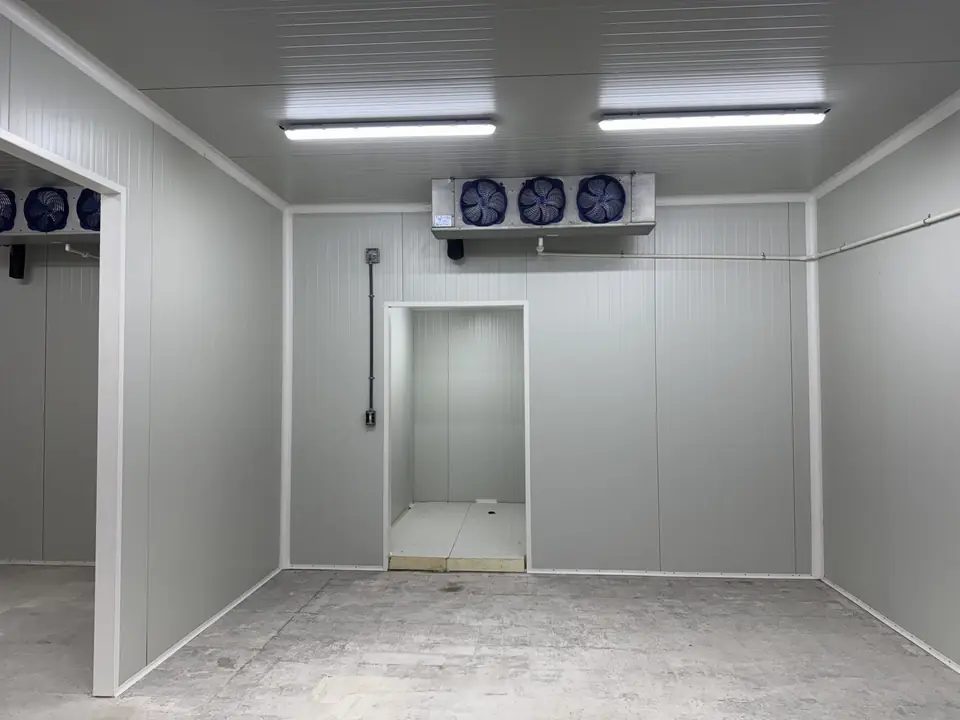
Rooms assembled from insulated panels with a condensing unit and evaporator, for chilled storage around 0 to 5 °C or frozen storage around minus 18 to minus 25 °C, in restaurants, hotels, pharmacies, supermarkets and processing units. Panels can be moved or extended later.

Blast freezers

Freeze product quickly to the core with air at around minus 30 to minus 40 °C and high air velocity, for fish, shrimp, meat and ready meals. Specify kg per batch, entry and target core temperatures and freezing time.

Cold storage warehouses

Large chilled or frozen stores for potatoes, seed, fruit, fish and frozen food, often on ammonia or multiple compressor systems. Plan racking, sealed dock doors, floor insulation and, for freezer floors on the ground, heating underneath against frost heave.

PU insulated panels

Polyurethane foam between steel skins, joined with cam locks, commonly around 100 mm thick for chill rooms and 150 mm or more for freezers. Specify foam density, skin finish or stainless steel for food areas, joint type, fire class and a PIR core where fire performance matters.

Cold room doors

Insulated hinged or sliding doors with gaskets, heater wires in freezer frames to stop ice, and an inside release so no one can be locked in. Freezers also need a pressure relief valve. Add strip curtains or high speed doors where doors open often.

Condensing units

Outdoor units with hermetic, semi-hermetic or scroll compressors and air cooled condensers. Rate them at your hottest site ambient and your room temperature, ask for coated coils near the coast, and add a standby unit where a breakdown would spoil stock.

How to specify a cold room

Product and temperature
Name the product and the holding temperature and humidity it needs: 2 to 8 °C for medicines, around 0 to 5 °C for chilled food, minus 18 °C or colder for frozen.
Intake and pull-down
Give kg loaded per day, its arrival temperature and how fast it must cool. Warm incoming product, not room volume, drives the refrigeration load.
Room size and door use
Internal dimensions or pallet positions, racking, clear height and door positions, how often doors open and whether forklifts pass. Each opening lets in humid air that turns to ice.
Site ambient
Rate condensing units at your hottest outdoor temperature, and place them in shade with free airflow, away from other hot exhausts.
Floor
Indoors or outdoors, and which floor. A freezer room on the ground needs an insulated floor with heating or ventilation below, or it can crack or lift the slab over time.
Power and backup
Three phase supply at 50 Hz, voltage protection for compressors, generator backup with automatic restart, and a temperature alarm that calls someone when a room warms.
Monitoring and redundancy
Calibrated temperature loggers that keep records, a temperature mapping study for vaccines and medicines, and whether a standby condensing unit is required, as it usually is for high-value stock.

Standards and tests to ask a cold room supplier in Bangladesh for

EN 378 or ISO 5149
Safety and environmental requirements for refrigerating systems, covering design, pressure testing, refrigerant charge limits and machinery rooms. Ask which one the design follows.
EN 14509 and EN 13501-1
EN 14509 is the product standard for double-skin metal faced insulating panels; EN 13501-1 gives the reaction to fire class. Ask for the declared values and the fire test report.
BNBC 2020 Part 4 and FSCD
The building code's fire protection part and the Fire Service and Civil Defence licence apply to stores in buildings. Share panel fire data with your fire consultant.
Calibrated monitoring
Temperature loggers and sensors calibrated at an ISO/IEC 17025 accredited lab, with certificates, for rooms holding food or medicines; medicine stores also expect temperature mapping before use.
Test records at handover
Refrigerant pressure and leak test, vacuum record, charge weight, pull-down time to set point, a temperature log and alarm tests, all signed.

What moves the price of a cold room

  • Temperature: freezers and blast freezers need thicker panels, floor insulation, door heaters and bigger compressors than chill rooms.
  • Refrigeration load from daily intake and pull-down time, not only room volume.
  • Panels: thickness, foam density, core type (PU or PIR), skin finish, joint type and fire class.
  • Refrigeration: compressor type, origin and refrigerant, capacity at summer conditions, and a standby unit.
  • Doors, strip curtains, racking, dock doors and monitoring with alarms and remote alerts.
  • Running cost: daily power at your load, defrost, door losses and service.

Lead times and delivery

A standard walk in cold room from stock panels and units can typically be installed within 2 to 4 weeks of order. Blast freezers, custom sizes and imported panels or condensing units usually take 6 to 12 weeks. Cold storage warehouses with civil work, floor heating or ammonia plant take several months, longer in the monsoon. Roptan confirms each date in the quote.

We deliver panels and equipment to site across Bangladesh. The seller assembles the room, seals the joints, installs and pipes the refrigeration, pressure tests and evacuates the system, charges it and runs the pull-down test to set point before handover. Handover includes test records, a temperature log, controller settings, drawings, O&M manual, operator training and warranties for panels and compressors, with a VAT invoice (Mushak 6.3).

What we check for this order

  • Trade licence and installation recordWe confirm the seller's licence and ask for running rooms of the same temperature class and similar size, with the client named.
  • Brand authorisationFor branded compressors, condensing units and controllers in the quote, we ask for the distributor's letter so the warranty holds.
  • Warranty and after sales in writingCompressor, panel and door warranty periods, breakdown response times and service visits, included or priced, confirmed before you commit, since a failure can spoil stock quickly.
  • A visit to a working installationBefore the order is placed, we arrange a visit to a running room of similar size and temperature, to check sealing, ice at the doors and its temperature records.

Questions buyers ask

What temperature should my cold room run at?

It depends on the product. Most chilled foods sit around 0 to 5 °C, though some fruit and vegetables need warmer rooms; frozen foods at minus 18 °C or colder; vaccines and many medicines at 2 to 8 °C. Tell us the product and any buyer or regulator requirement, and the seller designs to that.

How thick should the panels be?

Commonly around 100 mm for chill rooms and 150 mm or more for freezers, with thicker panels and floor insulation for blast freezers. On hot sites with long running hours, thicker panels cut running cost. Ask the seller for the heat gain calculation behind the choice.

What happens to the room during load shedding?

A well-sealed room holds temperature for a while with the doors shut, but not for hours in summer. Put the refrigeration on generator backup sized for compressor starting, fans and defrost heaters, with automatic changeover, and fit an alarm that alerts staff by phone when the temperature rises.

Why does ice build up around the freezer door?

Warm, humid air leaks in through a worn gasket, a failed frame heater or a door left open, and its moisture freezes. Replace gaskets, check the heater wires, add a strip curtain and make sure the pressure relief valve works, so pressure differences do not strain the seals.

What is the difference between a blast freezer and a freezer room?

A blast freezer freezes warm product quickly with very cold, fast air; a freezer room only keeps frozen product frozen. Warm product in a freezer room overloads it and freezes slowly, which harms quality, so if you freeze your own product you need both.

How soon will I hear back about cold rooms?

Within 48 hours of a complete requirement, with a price and a delivery date. A requirement is complete when it has the capacity, where it is needed and by when.

Who do I deal with?

With Roptan, when Roptan manages the order: we buy from the verified seller and deliver to you. With the supplier directly, when you post on the requirement board and choose a quote yourself.