Managed sourcing from Bangladesh, for export and for buyers at home
Get it sourced

Water and wastewater

Wastewater treatment plant supplier in Bangladesh

Roptan acts as your wastewater treatment plant supplier in Bangladesh. Send us the flow, the wastewater analysis and the discharge limit, and we source complete plants or process packages from verified sellers, check the design and deliver to site.

  • Verified sellers
  • Checked before it ships
  • Delivered by Roptan

Get wastewater treatment plant sourced

Prefer to deal with suppliers yourself? Post it on the requirement board

Wastewater treatment plant products

Pick a product and we source it for you, or send one requirement that covers several.

Buying wastewater treatment plant in Bangladesh

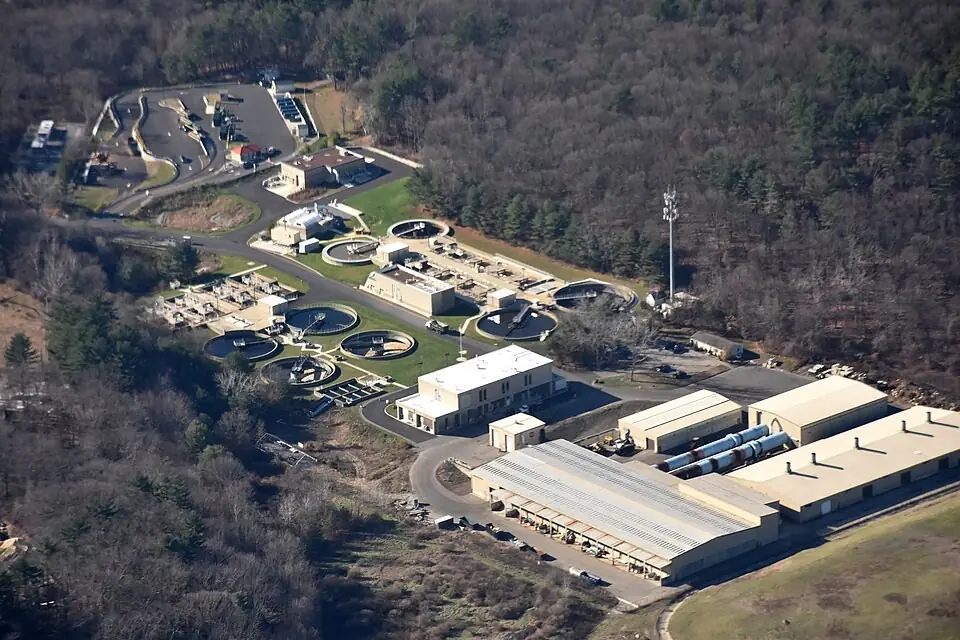
Wastewater treatment plants serve towns, economic zones, industrial parks and large factories at volumes far beyond a single building's STP. Buyers are municipal bodies and utilities in and around Dhaka, zone developers in places like Mirsarai, factory groups in Gazipur and Narayanganj, and contractors on tendered projects who need clarifier mechanisms, blowers and diffusers that match a specification. A wastewater treatment plant supplier in Bangladesh should design to measured loads and the ECR 2023 limits.

You send the requirement once. We take your design basis or tender specification to verified sellers, check each offer for compliance and scope, and set capital cost, power use and spare parts side by side. We deliver the equipment; the seller installs and commissions it under a written test plan and trains your operators.

Wastewater treatment plant we source

Municipal treatment

Screening, grit removal, biological treatment, clarification and disinfection for sewage from a town or estate, usually built in concrete and sized for growth. Capacity is often stated in MLD; 1 MLD is 1,000 m³ per day. Plan for monsoon inflow as well as dry weather flow.

Industrial treatment

Common or single-factory plants for mixed industrial wastewater, with equalisation and pre-treatment for oil, metals or colour ahead of biological treatment. Loads change with tenants and production, so agreed inlet limits for each connected unit matter as much as the main process.

Clarifiers

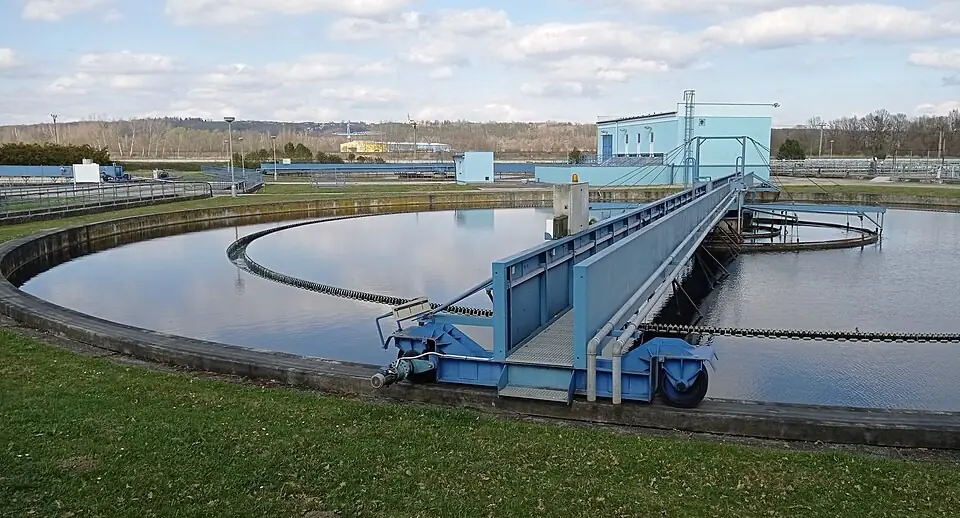
Settling tanks that separate sludge from treated water. Circular clarifiers use a rotating scraper bridge; lamella settlers use inclined plates to fit more settling area into less space. Specify surface overflow rate, side water depth, scraper materials and drive rating.

Aeration systems

Fine bubble membrane diffusers with twin-lobe, screw or turbo blowers, or surface aerators for ditches and lagoons. Aeration is usually the largest power user in a plant, so compare oxygen transferred per kWh, blower turndown and membrane life, not only purchase price.

Sludge treatment

Thickeners, aerobic or anaerobic digestion, then belt press, screw press, centrifuge or filter press dewatering; drying beds suit small plants with land. The target cake dry solids and the disposal route decide the choice, and sludge handling is a large share of running cost.

Tertiary filtration

Sand, multimedia or disc filters, activated carbon and disinfection by chlorine or UV after secondary treatment. Choose it when the discharge limit is tight or treated water goes back into use for cooling, flushing or irrigation; it adds capital and running cost.

How to specify a wastewater treatment plant

Flows
Average dry weather flow, peak flow and monsoon wet weather flow, in m³ per day or MLD, with the design year, growth assumption and any future phases.
Influent quality
BOD, COD, TSS, oil and grease, pH, ammonia, total nitrogen, phosphorus and temperature from composite samples over several days. For industrial inflows, add metals and toxic substances.
Effluent limits
ECR 2023 limits for the receiving water, plus any stricter condition in the Environmental Clearance or the lender's requirements. List reuse targets separately; they decide whether tertiary treatment is needed.
Site and ground
Plot plan, highest flood level, groundwater depth and soil report. Soft ground often needs piles, and empty tanks need a check against uplift from high groundwater.
Power supply
Available capacity at 50 Hz three phase, your tariff and how long outages last. Blowers and inlet pumps need standby generation sized for their starting current.
Process and operators
Say if you want or exclude a process: activated sludge, extended aeration, SBR, MBBR or lagoons. Land, power and operator skill decide what works.
Scope split
Which civil, mechanical, electrical and automation work each party does, and where dewatered sludge will go. A clear split stops gaps and double counting between quotes.
Performance guarantees
Ask for guaranteed effluent values, power per m³ and chemical use, with the test method, the test period and the remedy if they are missed.

Standards a wastewater treatment plant supplier in Bangladesh should meet

ECR 2023 and DoE clearance
Discharge limits come from the Environment Conservation Rules 2023, and the plant is part of the project's Department of Environment Environmental Clearance. Put the limits and the clearance conditions in the contract.
Public Procurement Act 2006
Public plants are usually bought under this act and the Public Procurement Rules 2008. Share the tender specification in full, so offers comply and deviations are flagged.
Clean water oxygen transfer test
Diffuser performance proven by a clean water test to ASCE/EWRI 2-06 at your diffuser density and water depth; the design must then correct for the lower transfer in real wastewater.
ISO 9906 pump tests
For the main pumps, ask for factory test certificates to ISO 9906, the standard for hydraulic performance acceptance tests, and a stated test standard for blower airflow and power.
Accredited lab performance run
Effluent sampled over an agreed period after stabilisation and tested at an ISO/IEC 17025 accredited lab against the contract values, not a single sample on the day.

What moves the price of a wastewater treatment plant

  • Design flow, peak factor and growth allowance, and whether tanks for future phases are built now.
  • Process choice: lagoons need land; activated sludge, SBR and MBBR need power and trained operators.
  • Nutrient removal or reuse quality, which adds anoxic zones, chemical dosing, filters and disinfection.
  • Civil works: piling on soft ground, dewatering during excavation and flood protection.
  • Equipment origin and efficiency: European, Japanese, Chinese or Indian blowers, diffusers and scrapers differ in price, power use and local support.
  • Automation: manual controls, PLC, or full SCADA with online sensors.

Lead times and delivery

Process packages such as clarifier mechanisms, blowers and diffusers typically take 8 to 16 weeks from approved drawings, longer when shipped by sea. Complete plants are projects: a small industrial plant often takes 4 to 8 months, and a municipal plant a year or more, set mostly by civil work, piling, land handover and dry season work windows. Roptan confirms each date in the quote.

We deliver equipment to site across Bangladesh, from Dhaka and Narayanganj to Chattogram (Chittagong) and Khulna, with heavy items lifted by crane. The seller installs, tests and commissions each package, supervises start-up and trains your operators. Handover includes as-built drawings, P&ID, O&M manuals, spare parts lists, test certificates, the performance report and warranties, with a VAT invoice (Mushak 6.3).

What we check for this order

  • Trade licence and installation recordWe confirm the seller's licence and ask for running plants or packages of similar scale, with the client named, before shortlisting.
  • Design basis and discharge standardFlows, influent values and guaranteed effluent limits are written into the offer, so every guarantee has a measurable target.
  • Warranty and after sales in writingDefects period, performance guarantee, service visits, a priced spare parts list and local technician support, confirmed before you commit.
  • A visit to a working installationBefore the order is placed, we arrange a visit to a running plant using the same process, to see its operation and records.

Questions buyers ask

What is the difference between an STP and a wastewater treatment plant?

Mostly scale and scope. An STP usually serves one building or campus. A wastewater treatment plant serves a town, industrial park or large site, often with mixed flows, larger clarifiers, sludge treatment and formal performance guarantees. The design steps are the same: flow, quality, limits.

Can you supply only the clarifier or aeration package for our project?

Yes. Send the tender specification, bill of quantities, tank dimensions and drawings. We source offers that comply from verified sellers, flag any deviations, and collect the data sheets and test certificates the engineer asks for at approval.

How do I check that an aeration system delivers the oxygen promised?

Ask for oxygen transfer figures from a clean water test at your diffuser density and depth, and the blower curve at site temperature. Oxygen transfer in real wastewater is lower than in clean water, so the design must correct for it. Check that correction in the calculation, and compare blower efficiency alongside price.

Which process suits a plant with little land?

MBBR, SBR or activated sludge with lamella clarifiers use less land than conventional plants with circular clarifiers, and far less than lagoons. They need steady power and trained operators. Weigh land cost near Dhaka and other cities against the higher power and skill need.

What should the performance guarantee cover?

Effluent values for each parameter, the flow and load they apply to, power use per m³, chemical use and sludge output. It should name the sampling method, the lab and the test period, and what the seller does if the plant fails. Tie the final payment and any retention to that test.

How soon will I hear back about wastewater treatment plant?

Within 48 hours of a complete requirement, with a price and a delivery date. A requirement is complete when it has the capacity, where it is needed and by when.

Who do I deal with?

With Roptan, when Roptan manages the order: we buy from the verified seller and deliver to you. With the supplier directly, when you post on the requirement board and choose a quote yourself.