Managed sourcing from Bangladesh, for export and for buyers at home
Get it sourced

Packaging and printing

Die cutting supplier in Bangladesh

Need a die cutting supplier in Bangladesh for steel rule or solid rotary dies, die cut cartons or labels? Send the dieline, board and machine. We source from verified sellers, get a proof or sample approved before the bulk run, and deliver.

  • Verified sellers
  • Checked before it ships
  • Delivered by Roptan

Get die cutting sourced

Prefer to deal with suppliers yourself? Post it on the requirement board

Die cutting products

Pick a product and we source it for you, or send one requirement that covers several.

Buying die cutting in Bangladesh

Die cutting turns printed board, corrugated sheets and label stock into cartons, inserts, tags and labels. Buyers include garment exporters needing export cartons, pharma, food and cosmetics brands with folding cartons, label converters needing solid rotary dies, and printers who outsource die making, around Dhaka, Gazipur, Narayanganj and Chattogram (Chittagong). The die is a one-off cost; board, print and waste in every run decide the real price.

A die cutting supplier in Bangladesh must match the die to your machine and board, because a die built for the wrong caliper cracks creases and tears flaps. Send the dieline, board and quantity by form or chat. We source from verified sellers, compare die cost and unit price at your quantities, get a sample approved, check the board against the quote and deliver. You deal with Roptan only.

Die cutting we source

Carton dies

Steel cutting and creasing rules set in laser-cut plywood, with rubber to eject waste, for platen and flatbed die cutters. Give the machine, chase size and board caliper; cutting rules are commonly 2 or 3 point at the standard 23.8 mm height.

Die cutting services

Cutting, creasing and stripping of your printed sheets on the seller's press, often priced per thousand impressions plus make-ready, using your die or one made for the job. Useful for short runs or overflow; agree waste allowance and bundle counts first.

Corrugated cartons

Regular slotted cartons and die cut boxes in 3, 5 or 7 ply with A, B, C or E flutes. Slotted boxes are made on a slotter without a die; trays, shaped boxes and inserts are die cut.

Folding cartons

Printed paperboard cartons from duplex or solid board for food, pharma, cosmetics and retail, die cut, creased and glued. Specify board and GSM, print, varnish or lamination and gluing style; the die must register to the print.

Rotary dies

Solid rotary dies are machined from one steel cylinder and suit long label and film runs; flexible dies on a magnetic cylinder cost less and change faster. Rotary dies for high-volume corrugated work use curved plywood with steel rules.

Die cut labels

Labels kiss cut through the face stock and adhesive, leaving the liner whole, then wound on rolls. Give face material, adhesive, label size, gap, labels across, core size and winding direction so they run on your applicator.

What to tell a die cutting supplier in Bangladesh

Dieline or sample
A CAD file, such as DXF or CF2, with cut, crease and perforation lines on separate layers, or a physical sample to copy. The die is priced from it.
Carton size and style
Internal length × width × height in mm, and the style, for example FEFCO 0201 for a regular slotted carton.
Board and caliper
Board type, GSM, flute and caliper in mm. Crease rule and channel width depend on caliper, so send a sheet of the real board; a material change may need a new die.
Machine details
For flatbed dies: machine, chase size and gripper margin. For rotary dies: cylinder width and gear pitch, or the cylinder drawing. For labels: press, repeat length and labels across.
Quantity and repeats
Ups per sheet, quantity per order and per year. Repeat orders spread the die cost; long runs justify laser-cut boards, better ejection rubber or a rotary die.
Strength targets
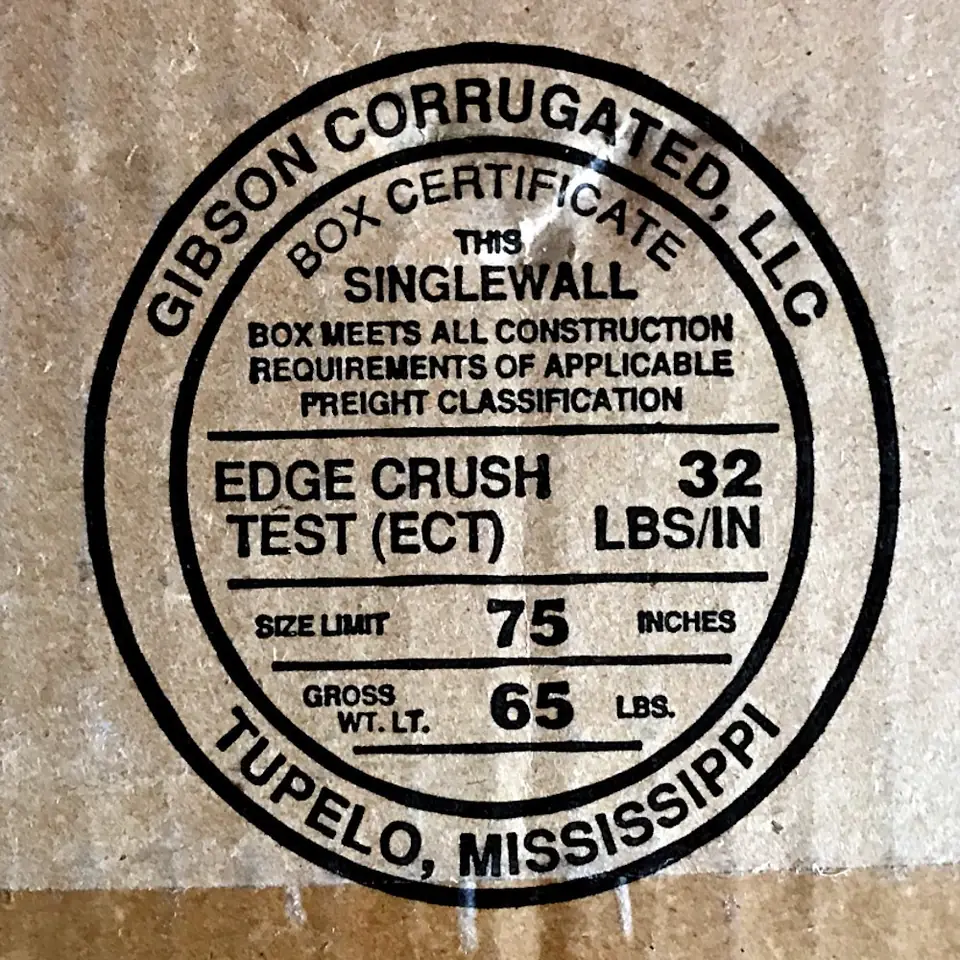
For corrugated cartons: ply, liner and fluting GSM, and the edge crush, bursting or box compression value your buyer requires, with the test method.
Commercial terms
Die ownership and storage, price breaks by quantity, sample charges, tolerances in mm, VAT, payment terms and delivery point, so quotes compare like for like.

Carton tests and standards to ask for

TAPPI T 811
Edge crush test for corrugated board. Ask for the ECT per batch on the board actually used; with caliper, it predicts stacking strength.
ISO 2759
Bursting strength of board. Many export carton specifications still state a bursting value, so test it on the same board as your approved sample.
ASTM D642
Compression test of the finished box, showing whether cartons survive stacking in the container and the warehouse. Ask for it on new designs.
ISO 187 and ISTA
ISO 187 conditions samples at 23 °C and 50% relative humidity before testing; humid samples read lower. ISTA 1A and 2A are transit tests some export buyers require.
FSC chain of custody
For FSC-certified packaging the converter needs a valid chain of custody certificate and must show the FSC claim on the invoice; certified paper alone is not enough.

What moves the price of dies and die cut work

  • Die type: steel rule dies cost less; solid rotary dies cost more but run far longer and can be resharpened.
  • Rule length and detail: more metres of cutting and creasing rule, perforations, small holes and tight radii add cost.
  • Board grade: ply, flute, liner GSM and virgin or recycled fibre drive carton cost and follow paper prices.
  • Print and finishing: colours, varnish, lamination, foil and window patching add passes and waste.
  • Quantity: make-ready and die cost spread over the run, so small orders cost far more per piece; some quotes hide the die in the unit price.

Lead times and delivery

A flatbed steel rule die is usually made within two to five working days of an approved dieline. Solid rotary dies are often imported and typically take two to four weeks. Carton and label runs typically take one to three weeks after sample approval. Minimums follow make-ready, so ask for prices at several quantities. Roptan confirms dates and minimums in the quote.

Dies are delivered flat and wrapped, with a proof sheet, to your plant in Dhaka, Gazipur, Narayanganj or Chattogram. Cartons arrive flat, bundled and strapped, in covered trucks, since damp weakens board in the monsoon; labels come packed by size with counts marked. Documents: VAT invoice (Mushak 6.3), delivery challan, the approved sample reference and batch test results where specified.

What we check for this order

  • Trade licenceCurrent and in the name on the quote, before any advance is paid.
  • A sample before the bulk orderA proof cut or pre-production sample, approved by you in writing, becomes the standard the bulk run is checked against.
  • Material specification in writingBoard type, ply, flute, liner GSM and strength targets in the quote, and the delivered board checked against it.
  • A delivery schedule agreedDates for die, sample and bulk in the quote, not after it, split into lots if your line needs staged deliveries.

Questions buyers ask

What is a solid rotary die and when is it worth it?

A solid rotary die is machined from one steel cylinder. It costs more but lasts through very long label and film runs and can be resharpened. For short runs or frequent design changes, a flexible die on a magnetic cylinder costs less and is quicker to make.

Flatbed or rotary die cutting for cartons?

Flatbed die cutting is more precise and suits printed folding cartons and complex corrugated shapes. Rotary die cutting runs faster and suits long runs of corrugated boxes. Choose by your machine, the run length and the accuracy the design needs.

Why do our cartons crack at the creases?

Usually the crease does not suit the board: rule height, channel width or depth do not match the caliper, or the crease runs against the flute or grain. Very dry board cracks more easily too. Send a sheet of your real board so the die is built for it.

Who owns the die after the order?

Agree it in the quote. If you pay for the die, it should be yours: ask for the die cost as a separate line and agree that the seller stores it for repeat orders. A well-kept steel rule die runs many repeats before it needs new rules.

Why do small orders cost more, and how do I compare quotes?

Every run carries fixed costs: die, make-ready, print set-up and waste. Spread over 500 pieces they dominate; over 20,000 they almost disappear, so ask for prices at two or three quantities. Then check both quotes state the same ply, flute, liner GSM, print and strength value; a lower price often means lighter board.

How soon will I hear back about die cutting?

Within 48 hours of a complete requirement, with a price and a delivery date. A requirement is complete when it has the quantity, where it is needed and by when.

Who do I deal with?

With Roptan, when Roptan manages the order: we buy from the verified seller and deliver to you. With the supplier directly, when you post on the requirement board and choose a quote yourself.