Managed sourcing from Bangladesh, for export and for buyers at home
Get it sourced

Packaging and printing · Testing instruments

Tensile tester supplier in Bangladesh

Looking for a tensile tester supplier in Bangladesh? Tell Roptan your materials, the break force you expect and the methods your customers name. We source the machine and grips from verified sellers, check the force calibration and arrange installation and training through the seller.

  • Verified sellers
  • Checked before it ships
  • Delivered by Roptan

Get tensile testers sourced

Prefer to deal with suppliers yourself? Post it on the requirement board

Buying tensile testers in Bangladesh

A tensile tester pulls a clamped specimen at a controlled rate until it breaks and records force and extension. From that it gives tensile strength, elongation at break and, with an extensometer, modulus. Producers of plastic film, woven bags and straps, moulders and packaging converters use it to prove material strength to buyers and to check incoming film and tape.

Bangladesh makes and exports almost none of these machines, so a tensile tester supplier in Bangladesh usually sells imported equipment. Roptan helps you choose the frame, load cell and grips for your materials, compares offers from verified sellers on the same basis, and has the seller install the machine and train your staff. You deal with Roptan only.
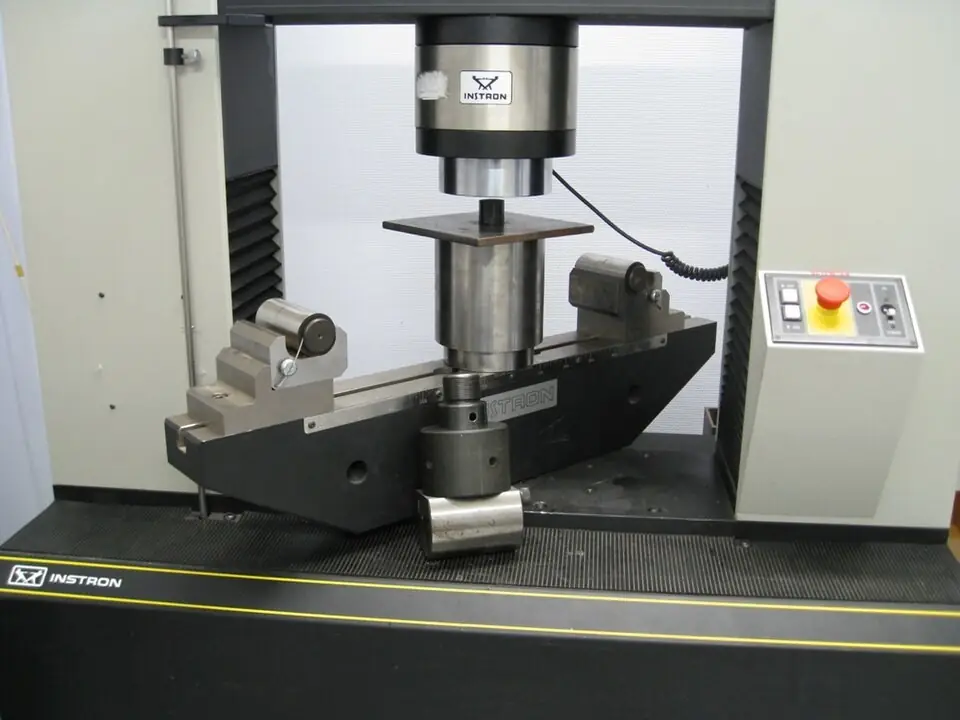
Kinds of tensile tester

Single-column bench testers

A compact frame with a peak-hold digital display and capacities of about 5 to 500 kg. Choose one for routine checks on film, tape and bag straps.

Double-column universal testing machines

A twin-column frame with computer control and full stress-strain curves. Choose one for mixed materials, higher forces and customers who want graphs and modulus.

Electromechanical machines

An electric motor drives a screw, which gives precise speed control on plastics, film and packaging. A packaging or plastics plant almost always wants this drive.

Hydraulic machines

Hydraulic frames give the high forces needed for metals, and rarely suit film or packaging.

Grips and fixtures

Plate, wedge, roller, vice, flexural and compression fixtures are usually sold as extras. Films and woven tapes usually need pneumatic or roller grips so they do not slip or tear at the jaw.

How to specify a tensile tester

Test method
Name the method for each material: ASTM D882 for film under 1.0 mm, ASTM D638 for plastics up to 14 mm as dumbbells, ISO 527-3 for film and sheet under 1 mm.
Load cell capacity
Choose a load cell close to your highest break force. Accuracy is often quoted as a share of capacity, so an oversized cell widens the error at low forces.
Grip travel
Travel must take the gauge length plus elongation. One bench model allows 25 to 700 mm grip separation; stretchy films need long travel, rigid parts little.
Extension measurement
Grip separation serves for strength and elongation. If you report modulus, specify an extensometer, which ASTM D882 recognises as the better way.
Speed, specimen and atmosphere
Results vary with thickness, specimen preparation, speed, grip type and environment, so write the speed, specimen shape and conditioning into the order.
Lab and power
Place the machine in an air-conditioned lab on a stabilised single-phase, 50 Hz supply; bench models usually run small single-phase motors.

Tensile methods and force calibration

ISO 527
Tensile properties of plastics: Part 1 general principles, Part 2 moulding and extrusion plastics (the 2025 edition replaced the withdrawn 2012 one) and Part 3 film and sheet.
ASTM D638 and ASTM D882
D638 for plastics, D882 for thin sheeting and film. ASTM warns that D638 and ISO 527-1 differ in technical content, so state which one your customer names.
ISO 7500-1 and ASTM E4
Force verification of tension and compression machines. A class claim applies only within the verified range of the load cell, so compare class and range together.
ISO/IEC 17025 certificate
Ask which accredited lab issued the calibration certificate, and plan periodic recalibration of the load cell. The Bangladesh Accreditation Board accredits labs here.

What moves the price of a tensile tester

  • Capacity and frame: a double-column machine with a large load cell costs more than a single-column bench unit.
  • Drive and control: servo control costs more than a simple motor with fixed speeds.
  • Software for curves, modulus and batch reports, often an extra on bench models.
  • Each set of grips, pneumatic grips in particular, and an extensometer if you report modulus.
  • An environmental chamber for tests away from room conditions.

Lead times and delivery

Sellers do not publish delivery times for Bangladesh. A single-column bench tester with standard grips is simpler to supply than a double-column machine with servo control, custom grips, an extensometer or a chamber, and each option can add time. Freight, clearance and calibration add more. The minimum is usually one set. Roptan confirms the dates and the minimum in the quote.

The seller levels the frame, fits the load cell and grips, checks the force reading with a reference device, and trains your staff on your own specimens. At handover you receive the VAT invoice (Mushak 6.3), a calibration certificate naming the load cell serial number and class, the manual, the software licence and the warranty in writing.

What we check for this order

  • Method set-upWe check the quote names each method you need, with the grips, speeds and fixtures that go with it.
  • Class and rangeThe verified class must be stated for the load cell range you will use, not only for full capacity.
  • A pull on your specimensThe seller tests your film, tape or strap on the quoted model and grips, and you confirm nothing slips at the jaw.
  • Calibration sourceWe ask which accredited lab issued the force certificate and when the load cell is next due.

Questions buyers ask

Can one machine run both ASTM and ISO tensile tests?

Usually yes, with the right grips, fixtures and settings. The methods differ in specimen shape, speed and technical detail, and ASTM says D638 and ISO 527-1 are not the same, so results are not interchangeable. Set up each method separately and report which one you used.

Why do film specimens break at the grips?

Usually because the film slips or the grip face tears it. Pneumatic or roller grips hold film and woven tape more evenly than plain wedge or vice grips. Cut specimens cleanly and set the grip pressure for the film gauge before you trust the results.

What capacity should we buy for plastic film?

Size the load cell to the highest break force you expect, not the frame's maximum. Single-column bench testers come from about 5 to 500 kg, with finer least counts on small cells. A plant testing both thin film and heavy straps may be better served by two load cells.

Do we need an extensometer?

Only if you report modulus. Strength and elongation at break can come from grip separation. ASTM D882 notes that modulus is generally based on grip separation but recognises extensometers as better, so customers who ask for modulus usually expect one.

How soon will I hear back about testing instruments?

Within 48 hours of a complete requirement, with a price and a delivery date. A requirement is complete when it has the model or specification, where it is needed and by when.

Who do I deal with?

With Roptan, when Roptan manages the order: we buy from the verified seller and deliver to you. With the supplier directly, when you post on the requirement board and choose a quote yourself.

Other testing instrument products

Each product type has its own page as it is published; until then its card opens the category form.

All testing instruments