Managed sourcing from Bangladesh, for export and for buyers at home
Get it sourced

Packaging and printing · Testing instruments

Bursting strength tester supplier in Bangladesh

Need a bursting strength tester supplier in Bangladesh? Tell Roptan the papers and boards you test, the method your customer names and the readout you want. We source from verified sellers, check calibration and clamping, and arrange installation and training through the seller.

  • Verified sellers
  • Checked before it ships
  • Delivered by Roptan

Get bursting strength testers sourced

Prefer to deal with suppliers yourself? Post it on the requirement board

Buying bursting strength testers in Bangladesh

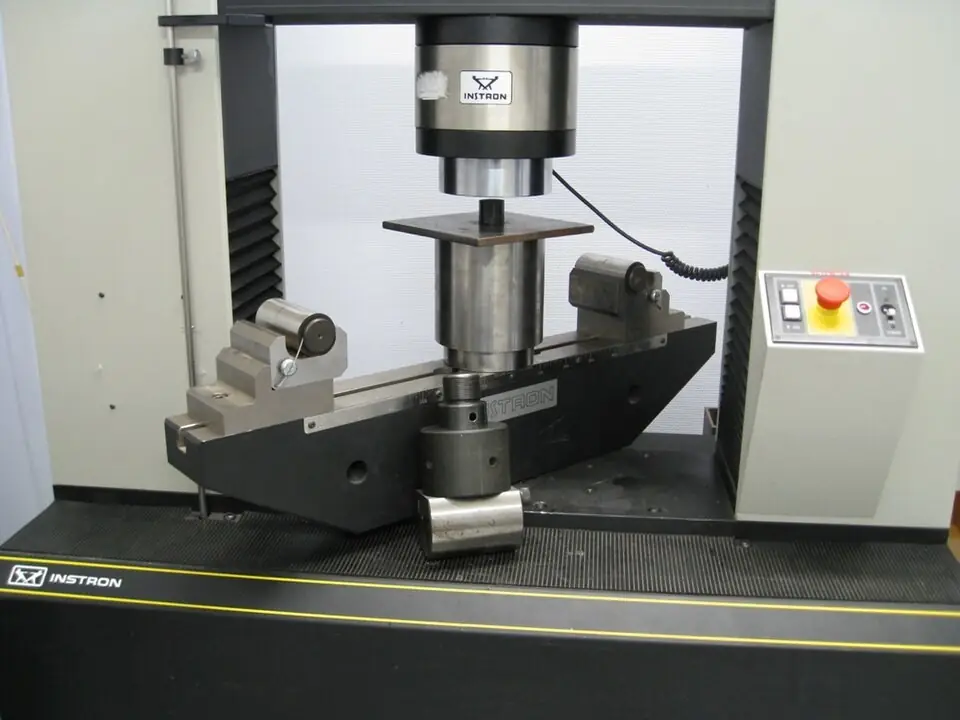
A bursting strength tester clamps a sheet over a rubber diaphragm and raises hydraulic pressure beneath it until the sheet ruptures. The peak pressure is the result, in kPa or kg/cm². The paper trade calls it the Mullen test. Paper mills use it on liner and medium, and carton plants on incoming board, wherever a customer's specification quotes a burst value.

Bangladesh exports almost none of these instruments, so a bursting strength tester supplier in Bangladesh is usually a reseller of imported models. Roptan matches the pressure range to your grades, compares offers from verified sellers on clamping, readout and spares, and has the seller install the tester and train your staff. You deal with Roptan only.
Kinds of bursting strength tester

Paper-range testers

Built for the lower pressures of ISO 2758, which covers 70 to 1,400 kPa. Choose one for paper grades only: it cannot burst corrugated board.

Board-range testers

Built for ISO 2759, 350 to 5,500 kPa, which covers corrugated and solid fibreboard and their linerboard and fluting medium. A carton plant needs this range; on thin paper it loses resolution.

Analogue dial testers

Pressure is read from dial gauges. One model carries two ranges, 0 to 7 kg/cm² for light material and 0 to 35 kg/cm² for board. Choose it where a simple reading is enough.

Digital and computerised testers

A digital display, quoted to 0.01 kPa resolution, with stored results; computerised models add software. Choose them when audits need records.

Pneumatic-clamp testers

Air clamps the sample with a fixed force instead of a hand screw, which removes one operator variable. Choose one when several people run the tester.

What to tell a bursting strength tester supplier in Bangladesh

Grades and method
List the papers and boards you test and the method each customer names. Without an agreement, ISO 2758 sends materials below 600 kPa to the paper method and the rest to ISO 2759.
Pressure range
The range must cover your strongest board with margin. One board model reads to 35 kg/cm², about 3,430 kPa; check that against your heaviest grade.
Clamping
Manual screw clamps depend on the operator; pneumatic clamps apply a fixed force. Poor clamping, a worn diaphragm and lapsed calibration are the usual causes of bad readings.
Diaphragm, fluid and spares
Ask for the diaphragm and clamp specification, the test fluid (one model uses glycerin) and a supply of spare diaphragms.
Figures to compare
Quotes list clamping force, fluid delivery rate and accuracy, and vendor figures disagree. Ask for the values the method sets.
Conditioning and power
Condition samples to ISO 187, usually 23 °C and 50 per cent relative humidity, which needs dehumidification in monsoon months. Bench units run on single phase, 50 Hz, behind a stabiliser.

Bursting test methods and calibration

ISO 2758
Bursting strength of paper, 70 to 1,400 kPa. ISO reviewed and confirmed the 2014 edition in 2025. It is not meant for corrugated board or its components.
ISO 2759
Bursting strength of board, 350 to 5,500 kPa, including corrugated and solid fibreboard. The 2014 edition is current; the 2001 edition is withdrawn.
TAPPI methods
Some North American customers name TAPPI burst methods. Ask for the exact method number and check the tester's range against it.
ISO/IEC 17025 certificate
The pressure-measuring system needs a certificate from an accredited lab. The Bangladesh Accreditation Board accredits labs here; ask which lab issued yours and whether its scope covers pressure.

What moves the price of a bursting strength tester

  • Pressure range: paper, board or both, which sets the gauges and the hydraulics.
  • Readout: analogue dials, a digital display, or a computerised unit with software and data output.
  • Clamping: a pneumatic clamp usually costs more than a hand screw clamp.
  • Accessories such as spare diaphragms and clamp rings ordered with the tester.

Lead times and delivery

No seller publishes a delivery time for Bangladesh. Bench units weigh roughly 50 to 90 kg, so air freight is practical, and a local trader may hold stock. A custom range, software or calibration before dispatch adds time. The minimum is usually one set. Roptan confirms the dates and the minimum in the quote.

The tester sits on a bench, roughly 400 to 600 mm wide, so no lifting gear is needed. The seller sets it up, checks the gauge against a calibrated reference, runs your samples and trains your staff. You receive the VAT invoice (Mushak 6.3), the calibration certificate, the manual and spare diaphragms.

What we check for this order

  • Range against your gradesWe check the quoted range against your weakest paper and strongest board, so neither falls outside the method.
  • Gauge against a referenceThe pressure reading is checked against a calibrated gauge, and the certificate's serial number matches the tester.
  • Reference and own samplesThe seller runs known reference papers or boards and your own, and you compare one result with a second lab's.
  • Clamp and diaphragmWe check clamp concentricity and diaphragm condition, and that spare diaphragms come with the tester.

Questions buyers ask

Can one tester handle both paper and corrugated board?

Rarely well. ISO 2758 for paper runs from 70 to 1,400 kPa and ISO 2759 for board from 350 to 5,500 kPa. A paper tester cannot burst corrugated board, and a board tester loses resolution on thin paper. Some analogue models carry two gauge ranges; check each range against your grades.

Does a burst result tell me how much weight a box can hold?

No. A burst value shows how a sheet resists pressure, not how much load a box carries in a stack, as a Bangladeshi student study also notes. For stacking strength, test edge crush and box compression. Burst index, worked out from the burst result and paper weight, helps compare grades.

Why do our burst readings drift?

Usually clamping, a worn diaphragm or lapsed calibration. Check that the clamp closes evenly, replace a worn diaphragm and confirm the certificate date. Humidity matters too: condition samples to the standard atmosphere before testing, since paper and board strength shifts with moisture.

Which method should a carton plant quote to customers?

ISO 2759 for corrugated board and its liner and medium, unless the customer names another method. Some vendor pages list ISO 2758 for corrugated board testers, but ISO 2758 itself is for paper. Write the method into every test report so the customer's lab can repeat the test.

How soon will I hear back about testing instruments?

Within 48 hours of a complete requirement, with a price and a delivery date. A requirement is complete when it has the model or specification, where it is needed and by when.

Who do I deal with?

With Roptan, when Roptan manages the order: we buy from the verified seller and deliver to you. With the supplier directly, when you post on the requirement board and choose a quote yourself.

Other testing instrument products

Each product type has its own page as it is published; until then its card opens the category form.

All testing instruments