Buying buttons in Bangladesh
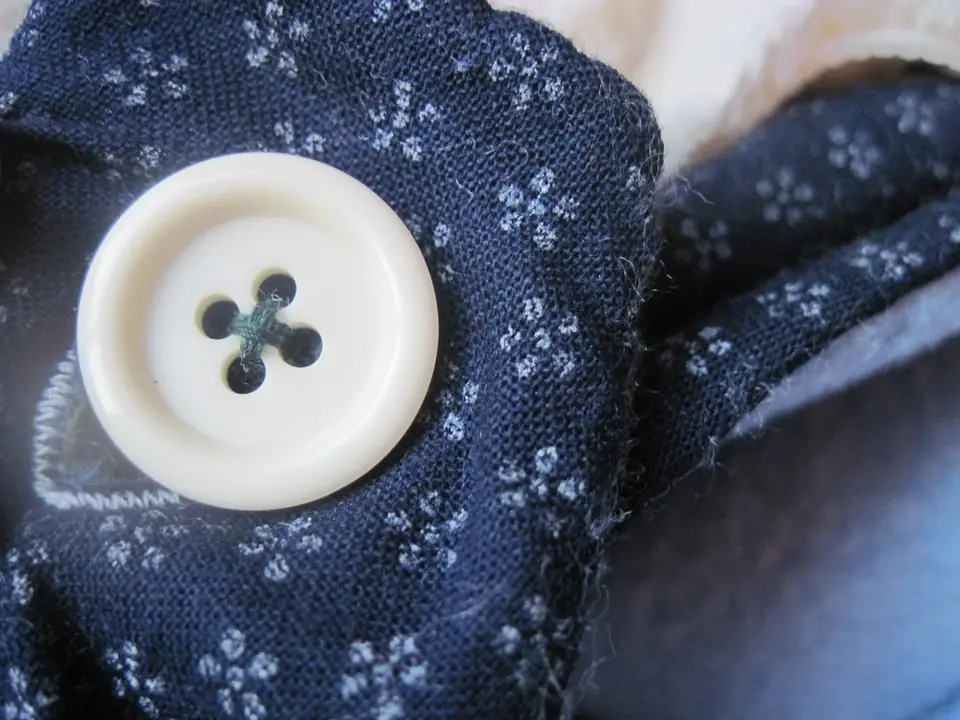
Buttons close shirts, trousers, jackets and knitwear. Hard plastic, shell, metal and wood are the common materials, with polyester resin the typical choice on shirts; denim adds metal shank buttons and snaps. Garment exporters in Bangladesh commonly buy buttons against each export order, and local brands buy the same items.
The trade approves buttons in three steps: a development sample, a trim card the buyer signs, and a check of the delivery against that card. Roptan, your button supplier in Bangladesh, runs those steps with verified makers or your brand's nominated source, and you deal with Roptan only.
What to tell a button supplier in Bangladesh
- Size in lignes
- 40 lignes make an inch, so 1 L is 0.635 mm: 16 L is about 10 mm, a shirt size, and 32 L about 20 mm, a jacket size.
- Holes, shank and thickness
- Two or four holes or a shank, and the thickness, since the buttonhole is usually cut to the button size plus its thickness.
- Material, finish and colour
- Material, face finish, colour against the approved swatch or lab dip, and the fabric the button goes on.
- Logo or new shape
- Vector artwork and the logo position; a logo or a new shape needs tooling before the first sample.
- Care the button must survive
- The garment's wash, dry-clean and ironing care: colour and finish must hold and metal must not corrode; wood and fabric-covered buttons usually wear badly.
Tests and reports for buttons
- EN 1811:2023 and EN 12472:2020
- Nickel release from metal buttons, snaps and rivets in prolonged skin contact, against the REACH nickel limit, after EN 12472 wear and corrosion conditioning for coated finishes. One report per finish.
- ASTM D4846
- Resistance to unsnapping of snap fasteners. Buyers may add ASTM B117 salt spray, with their own duration and rating, and 500, 1,000 or more open and close cycles.
- Button pull test
- Usually run on the finished garment with a calibrated tester, recording peak force, hold time and failure point. The pass force is the buyer's; no single figure is law.
- CPSIA lead rule, 16 CFR 1500.91
- Only stainless steel and precious metals are on the US list of metals determined not to exceed lead limits for children's products, so brass and zinc-alloy buttons need a lead test.
Lead times and delivery
Lead time depends on the button, the maker and how many approvals it needs, so Roptan plans each order back from your in-house date. Stock shapes in running colours are quicker; a new mould, dyeing to match, plating and resubmitted colours or samples add time. Roptan confirms the dates and the minimum in the quote.
We deliver to your factory store in packs marked with item code, size, colour and quantity, ready for the AQL check against the signed card. You receive the packing list, lab reports and a VAT invoice (Mushak 6.3). Buttons for export orders are commonly paid by back-to-back LC against the garment order.
Buying buttons for export
Buttons, press and snap fasteners, moulds and blanks fall under HS heading 9606; metal jeans rivets sit under 8308, so list them separately. Roptan quotes buyers abroad FOB Chattogram (Chittagong), or air from Dhaka for small lots, with the nickel or lead reports the market needs, and your broker confirms the subheading.
Questions buyers ask
How do I convert millimetres to lignes?
Divide the diameter in millimetres by 0.635, since a ligne is a fortieth of an inch: 10 mm is about 16 L, 15 mm about 24 L and 20 mm about 32 L. Before ordering, check that the maker's size card uses 40 lignes to the inch.
Are buttons allowed on clothing for young children in the US?
Yes. US rules exempt children's clothing and accessories such as buttons from the small-parts ban, but lead, surface coating and sharp-edge rules still apply. The CPSC recommends voluntary use-and-abuse tests on attachments up to size 2, and UK buyers may cite BS 7907, a code of practice on children's clothing safety.
Which button works on a heavy coat?
A shank button, or a flat one with a thread shank worked under it, so it sits above the thick fabric and the buttonhole closes without strain. Test it sewn to the coat fabric, since thread and fabric affect strength too.
Can buttons be dyed to match our fabric?
Polyester resin and corozo take dye, and metal can be plated or painted. Send the approved swatch or lab dip; makers usually submit three options, A, B and C. Approve one on the trim card, checked under the same light as the fabric.
How soon will I hear back about garment accessories?
Within 48 hours of a complete requirement, with a price and a delivery date. A requirement is complete when it has the quantity, where it is needed and by when.
Who do I deal with?
With Roptan, when Roptan manages the order: we buy from the verified seller and deliver to you. With the supplier directly, when you post on the requirement board and choose a quote yourself.