Managed sourcing from Bangladesh, for export and for buyers at home
Get it sourced

Footwear and leather · Leather footwear

Safety shoes manufacturer in Bangladesh

Need a safety shoes manufacturer in Bangladesh for a factory, warehouse or site? Tell Roptan the hazards, the category and the sizes by headcount. We source a certified model from a verified maker, check the marks and deliver to your floor.

  • Verified sellers
  • Checked before it ships
  • Delivered by Roptan

Get safety shoes sourced

Prefer to deal with suppliers yourself? Post it on the requirement board

Buying safety shoes in Bangladesh

Safety shoes protect the foot at work with a toe cap that passes a 200 J impact and a 15 kN compression test, often with a midsole that stops nails. Factories and construction sites in Bangladesh buy them for their staff, and importers buy them for export markets. With a safety shoes manufacturer in Bangladesh, the order starts from the category under EN ISO 20345:2022.

Roptan runs the sourcing. We match your hazards to a category, find a verified maker with a current certificate for that model, check that the certificate, marking and shoe agree, and inspect pairs before delivery. You deal with Roptan only.
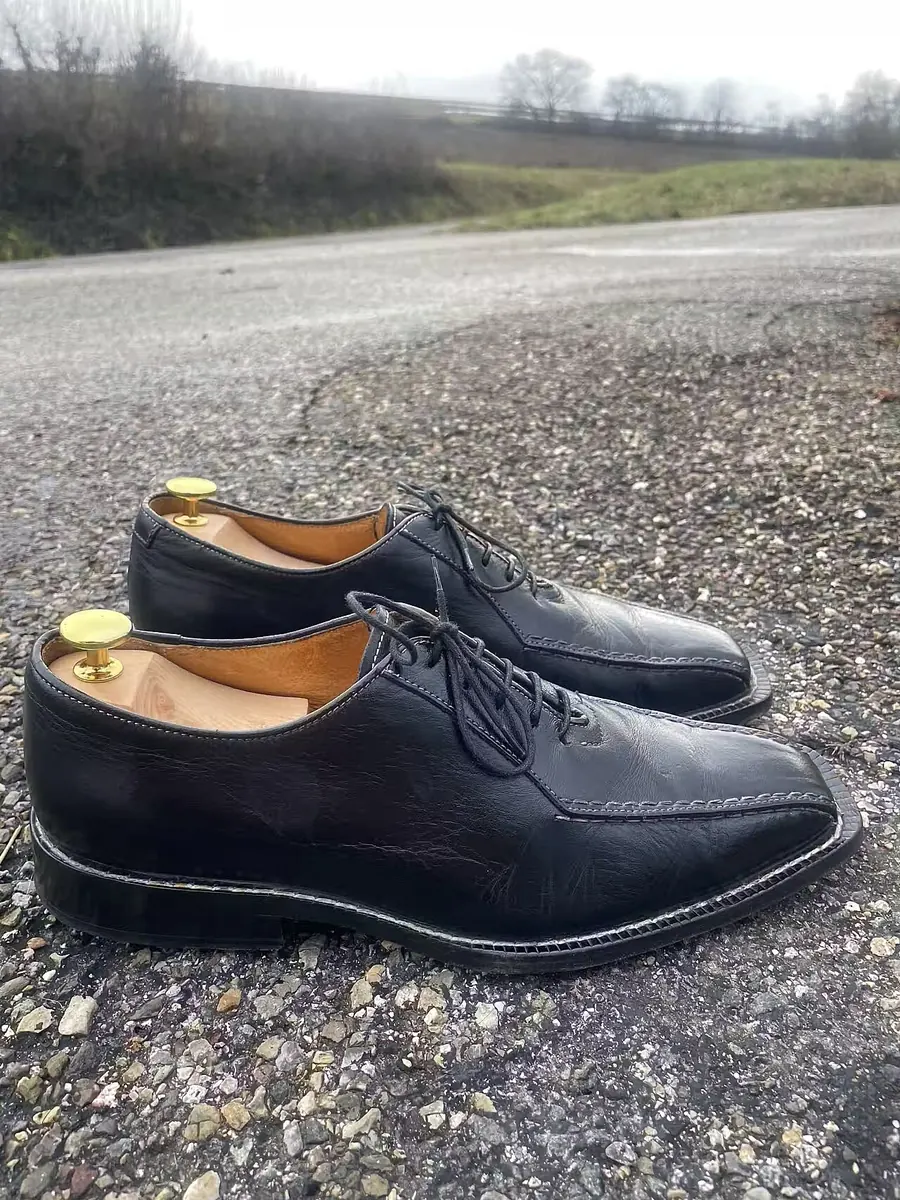
Kinds of safety shoe by category

SB and S1

SB is the basic class with the tested toe cap. S1 adds a closed heel area, heel energy absorption and antistatic properties, for dry indoor work.

S1P, S1PL and S1PS

S1 with a penetration-resistant midsole, for dry indoor floors where nails or sharp scrap may lie. P marks a metal midsole, PL or PS a non-metal one.

S2

S1 with an upper that resists water penetration and absorption, but no penetration-resistant midsole. Choose it for damp indoor floors where nothing sharp lies underfoot.

S3, S3L and S3S

S2 with a penetration-resistant midsole and a cleated outsole. Usually the choice for wet floors, outdoor yards and construction sites; L or S marks a non-metal midsole.

S6 and S7

New in 2022: S6 is S2 and S7 is S3, each with a whole-shoe water resistance test (WR), for when the whole shoe must keep water out.

How to specify safety shoes

Category and marks
SB, S1, S1P, S2, S3, S6 or S7, plus extra marks such as SR for the extra glycerine slip test or FO for fuel and oil resistance.
Toe cap
Steel, alloy or composite. Steel can set off metal detectors and conducts heat and cold; alloy caps are described as about 30 to 50 percent lighter.
Midsole
Metal, marked P, or non-metal, marked PL or PS. The mark on the shoe must match the certificate for that model.
Outsole
Cleated for site and outdoor work, as S3 requires. Ask for FO on oily floors, as fuel and oil resistance became optional in 2022.
Upper leather
Smooth or suede leather; for S2 and above, an upper tested for water penetration and absorption. Name the colour and approved swatch.
Sizes by headcount
One size system and a count per size from your staff list. EU sizes step 2/3 cm per whole size; UK and US rest on the 1/3 inch barleycorn.

Standards and certificates for safety shoes

EN ISO 20345:2022 with A1:2024
The safety footwear standard: basic and optional requirements for general use, covering mechanical risks, slip, thermal risks and ergonomics. It replaced the 2011 edition.
EN ISO 20344:2021
The test methods behind EN ISO 20345, including the upper to outsole bond. The 2011 edition was withdrawn in December 2021.
EN ISO 20347:2022
Occupational footwear with no protective toe cap. A shoe without a tested toe cap is not EN ISO 20345 safety footwear, whatever the label says.
Regulation (EU) 2016/425
Safety footwear sold in the EU is personal protective equipment under this regulation. Ask for the certificate for that exact model.

What moves the price of safety shoes

  • Category: S3 and S7 add a midsole, a cleated sole and water resistance over S1.
  • Toe cap: steel, alloy and composite caps differ in material, weight and cost.
  • Midsole: a metal or non-metal penetration-resistant midsole adds cost per pair.
  • Leather and sole: water-resistant uppers and fuel and oil resistant soles cost more.
  • Certificate: each model's test and certification cost is spread over its pairs.

Lead times and delivery

Time depends mostly on the certificate. A model the maker already holds a current 2022 certificate for skips the testing step; a new or changed model is tested first, often at a lab abroad. Roptan confirms the dates and the minimum per model in the quote.

Inside Bangladesh, Roptan delivers to your factory, warehouse or site, with pairs marked by size or by name from your staff list, the packing list, a copy of the model's EN ISO 20345 certificate, the inspection report and a VAT invoice (Mushak 6.3).

Buying safety shoes for export

Importers usually buy FOB Chattogram. Leather safety footwear with a metal toe cap has its own HS line, 6403.40; composite-cap models are classed elsewhere, so your broker confirms the line. For the EU, each model needs its certificate under Regulation (EU) 2016/425. Origin goes on a REX statement for EU GSP or under UK DCTS rules.

What we check for this order

  • Certificate matches the modelWe check that the certificate names this model, the 2022 edition, and the category and marks on the shoe.
  • Midsole markWe check that a shoe marked P has a metal midsole and one marked PL or PS a non-metal one.
  • Toe cap and midsole in every sizeWe check pairs from across the size run for the stated toe cap and midsole before packing.
  • Older certificates in dateWhere a maker offers a 2011-edition certificate, we check its expiry and ask for a 2022 one on a new order.

Questions buyers ask

Should a factory order S1P or S3?

S1P usually suits dry indoor floors where nails or sharp scrap may lie. S3 adds a water-resistant upper and a cleated outsole, so it usually suits wet floors, yards and construction sites. Where the whole shoe must keep water out, look at S7.

What do P, PL and PS mean on a safety shoe?

They mark penetration resistance. Since the 2022 edition, a plain P means a metal midsole only; PL and PS mean a non-metal midsole passed with a 4.5 mm or a 3 mm test nail. So S1P with a composite midsole is now S1PL or S1PS, and S3 becomes S3L or S3S.

Are 2011-edition certificates still valid?

Usually until their own expiry, five years from issue, so 2011 and 2022 certificates will sit side by side for some time. For a new order, ask for EN ISO 20345:2022, since its slip test, marks and categories differ.

Is a steel or a composite toe cap safer?

Neither by the standard: both must pass the same 200 J impact and 15 kN compression tests. Steel can set off metal detectors and conducts heat and cold, so composite or alloy caps usually suit sites with detectors or cold stores.

How soon will I hear back about leather footwear?

Within 48 hours of a complete requirement, with a price and a delivery date. A requirement is complete when it has the quantity, where it is needed and by when.

Who do I deal with?

With Roptan, when Roptan manages the order: we buy from the verified seller and deliver to you. With the supplier directly, when you post on the requirement board and choose a quote yourself.

Other leather footwear products

Each product type has its own page as it is published; until then its card opens the category form.

All leather footwear