Buying leather sandals in Bangladesh
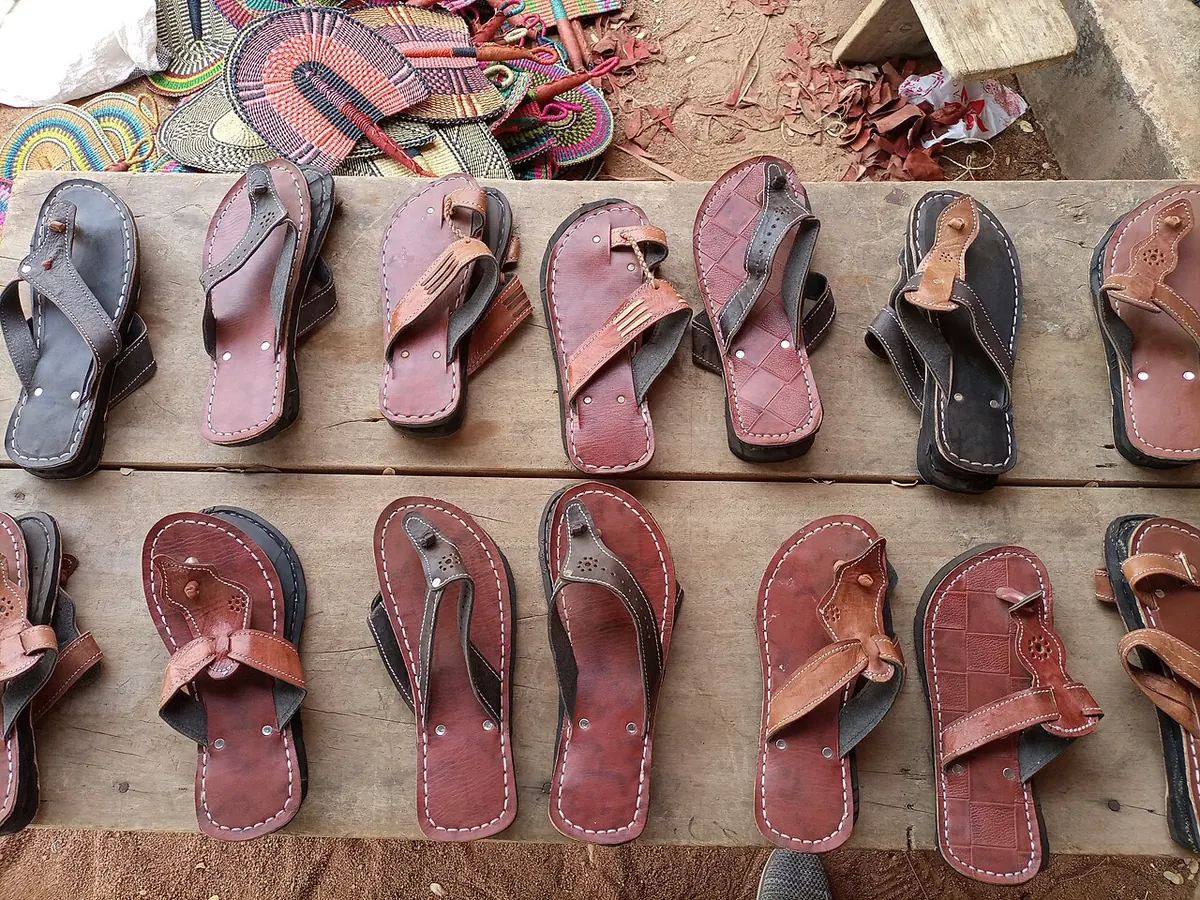
A sandal is an open shoe: a sole held to the foot by straps over the instep and around the ankle, leaving most of the foot bare. Bangladesh exports leather sandals, though most on rubber or plastic soles are counted with other low shoes. Because the straps sit on bare skin, testing is the main subject for a leather sandals manufacturer in Bangladesh.
Roptan does the sourcing. We find a verified maker for your strap layout, get the leather, sole and buckles named in the quote, check the test reports on the strap leather and metal parts, and check pairs from the bulk before they leave. You deal with Roptan only.
How to specify a leather sandal
- Strap layout
- A drawing or sample showing each strap, its width and where it fastens: over the instep, round the ankle, round the big toe or across the toes.
- Strap leather
- Name the leather and its finish, and send a swatch. A sandal is usually unlined, so bare, damp skin touches the strap leather directly.
- Buckles and rivets
- State the metal and finish of every buckle, rivet and ring that touches the skin, so the nickel release test covers the right parts.
- Sole and construction
- Name the sole material, its pattern and how the straps are fixed to it. A glued sole costs least to make; ask for the outsole flex result (EN ISO 17707) on that exact sole.
- Size system
- EU sizes step 2/3 cm per whole size; UK and US sizes rest on the 1/3 inch barleycorn. State one system, the run and pairs per size.
Tests for leather that touches bare skin
- EN ISO 11641:2025
- Colour fastness of leather to perspiration, written to cover the uppers of unlined shoes, as sandal straps are. Name the 2025 edition.
- EN ISO 11640:2018
- Colour fastness of dyed leather to to-and-fro rubbing. Ask for it in each strap colour, alongside the perspiration result.
- EN 1811:2023
- Nickel release from metal parts in skin contact, the test behind REACH Annex XVII entry 27. Ask for it on buckles and rivets in EU orders.
- EN ISO 17075-1 or -2
- Chromium VI in leather. REACH bars skin-contact leather at 3 mg/kg or more; ask which of the two methods the lab used.
- EN ISO 17234-1:2024
- Azo colourants in dyed leather. The 2020 edition was withdrawn at the end of 2024, so name 2024 in the request.
Lead times and delivery
A sandal on the maker's existing sole and strap pattern moves faster than a new design with its own sole mould. A custom leather colour waits for a tannery batch, and new hardware may need its nickel test first. Roptan confirms the dates and the minimum per style and colour in the quote.
Inside Bangladesh, Roptan delivers boxed or bagged pairs to your shop or warehouse anywhere in the country, with a packing list by style, colour and size, the test reports, the inspection report and a VAT invoice (Mushak 6.3) for your records.
Buying leather sandals for export
Importers usually buy FOB Chattogram. Sandals with leather soles and leather straps have their own HS line, 6403.20; those with rubber or plastic soles and leather uppers usually fall under 6403.99, so your broker confirms the line. Origin goes on a REX statement for EU GSP or under UK DCTS rules.
Questions buyers ask
Why does a leather sandal need a perspiration test?
Because the strap touches bare, often damp skin with no lining in between. EN ISO 11641:2025 measures the leather's colour fastness to perspiration, and it is written to cover the uppers of unlined shoes. Ask for it with rubbing fastness to EN ISO 11640:2018 on every strap colour.
Do buckles need testing for the EU?
Yes, when they touch the skin. REACH Annex XVII entry 27 restricts nickel release from metal parts in skin contact, and EN 1811:2023 is the test method. Ask for the report on the actual buckles and rivets, and tell the maker not to change hardware after approval.
Do thong sandals need the same tests as strap sandals?
Yes. The toe post and straps of a thong sit on bare skin just as the straps of a buckled sandal do, so ask for colour fastness to perspiration (EN ISO 11641:2025) and rubbing (EN ISO 11640:2018) on each leather colour, and chromium VI results on the strap leather. Metal trims need the nickel release test for EU orders.
Which chemical tests does an EU sandal order need?
Chromium VI below 3 mg/kg in the strap leather, tested to EN ISO 17075; azo colourants to EN ISO 17234-1:2024; the eight listed PAHs at 1 mg/kg each in rubber or plastic parts touching the skin; nickel release on metal parts; and no dimethyl fumarate above 0.1 mg/kg.
How soon will I hear back about leather footwear?
Within 48 hours of a complete requirement, with a price and a delivery date. A requirement is complete when it has the quantity, where it is needed and by when.
Who do I deal with?
With Roptan, when Roptan manages the order: we buy from the verified seller and deliver to you. With the supplier directly, when you post on the requirement board and choose a quote yourself.