Buying rain jackets in Bangladesh
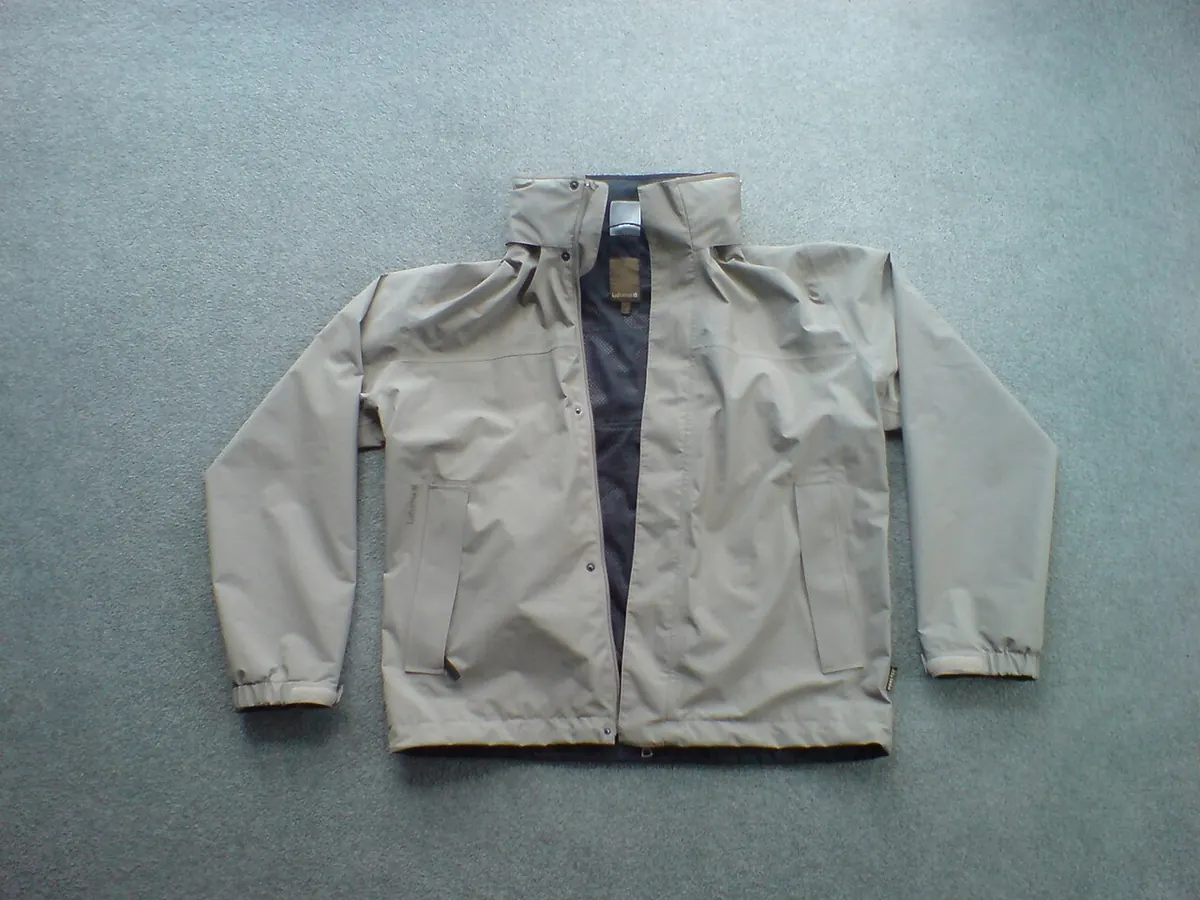
A rain jacket is a waist-length raincoat with long sleeves, waterproof or water-resistant; with rain trousers it makes a rainsuit. Its shell is usually nylon or polyester with a polyurethane coating or a laminated membrane. Companies in Bangladesh buy them for outdoor staff through the June to September monsoon, and importers buy them for retail ranges.
A jacket can leak at zips, hood and seams even when its fabric holds a high head. A rain jacket manufacturer in Bangladesh may quote the fabric rating alone, so Roptan writes seam build, closures and a whole-garment test into the order, sources from verified factories and checks a finished jacket before bulk.
How to brief a rain jacket manufacturer in Bangladesh
- Hydrostatic head
- The height of water column the fabric holds before leaking, tested to ISO 811 and usually quoted in mm, new and after stated washes. Write a value; the word waterproof has no fixed meaning.
- Seams and closures
- Taped or welded seams, zip type, storm flap and hood design. A fabric rating does not test closures, so ask for a water test on the finished jacket.
- Breathability
- Water-vapour transmission in g/m2 per 24 hours, or resistance Ret to ISO 11092. ISO 15496 suits quality control in the plant, not classification or protective equipment.
- Coating ageing
- Polyurethane can break down by hydrolysis in damp air. If stock will wait through the monsoon, ask which ISO 1419 accelerated ageing method the seller ran, and the result.
- Abrasion and seam strength
- Martindale (ISO 12947-2) does not apply to coated or laminated fabrics; ISO 5470 covers coated surfaces. The grab seam test usually does not suit coated fabric either, so agree a method.
Rainwear standards and tests
- EN ISO 24232:2025
- Protection against rain for materials and ready-made garments sold as protective equipment under the EU PPE Regulation 2016/425. It replaced EN 343 on 3 November 2025.
- ISO 811 and ISO 4920
- Hydrostatic head for water penetration, and the spray test for surface wetting. The spray test does not measure penetration, so it cannot back a waterproof claim.
- Regulation (EU) 2024/2462
- From 10 October 2026, limits PFHxA in textiles in clothing for the general public, naming rain jackets as an example. Its exclusion for protective equipment covers only certain category III risks, not rainwear.
Lead times and delivery
Sample rounds usually take four to six weeks in all, and seam-tape trials, a whole-garment water test and any ageing test must pass before bulk. Published agency figures for woven outerwear run about 90 to 140 days from order to FOB, and imported coated or membrane fabric adds time. For staff jackets, count back from June, when the monsoon begins. Roptan confirms dates and the minimum per style and colour in the quote.
Roptan delivers rain jackets to head offices, depots and sites anywhere in Bangladesh, packed per person or branch from your size list, with the packing list, fabric and garment test reports, the inspection report and a VAT invoice (Mushak 6.3).
Buying rain jackets for export
Rain jackets in fabric of headings 5903, 5906 or 5907, such as fabric coated or laminated with plastics, usually enter under HS 6210 when woven and 6113 when knitted. A woven jacket with only a repellent finish goes to 6201 or 6202 instead. Your customs broker confirms the subheading. Roptan quotes FOB Chattogram (Chittagong) with the fabric, garment and inspection reports.
Questions buyers ask
Is a 20,000 mm fabric enough to keep staff dry?
Not on its own. Garments of fabrics rated above 20,000 mm have leaked through zips, hoods and seams, as a fabric rating does not test closures. Specify taped or welded seams, the zip, a storm flap and the hood, and test a finished jacket.
Is EN 343 still the rainwear standard?
No. EN 343:2019 was withdrawn on 3 November 2025 and replaced by EN ISO 24232:2025, the European adoption of ISO 24232:2024. It covers protective rainwear sold as personal protective equipment; a fashion rain jacket with no protective claim does not need it.
Coated or membrane: which should I choose?
A solid PU coating is waterproof but usually does not breathe, so sweat stays in. A membrane lets water vapour out, but breathes less once its outer fabric wets out, so it needs a repellent finish tested after washing. State the choice and the test values in the order.
Will PU-coated jackets survive storage through the monsoon?
Polyurethane can break down by hydrolysis, reacting with moisture in the air. Ask which of the four ISO 1419 accelerated ageing methods the coated fabric passed, and the result, if jackets will wait in a warehouse between seasons.
How soon will I hear back about jackets and outerwear?
Within 48 hours of a complete requirement, with a price and a delivery date. A requirement is complete when it has the quantity, where it is needed and by when.
Who do I deal with?
With Roptan, when Roptan manages the order: we buy from the verified seller and deliver to you. With the supplier directly, when you post on the requirement board and choose a quote yourself.