Managed sourcing from Bangladesh, for export and for buyers at home
Get it sourced

HVAC and cold chain · Chillers

Process chiller supplier in Bangladesh

Roptan acts as your process chiller supplier in Bangladesh. Tell us the heat load, the coolant, the leaving temperature and its tolerance: we source a packaged unit from verified sellers, check it against your process and ambient, and deliver it.

  • Verified sellers
  • Checked before it ships
  • Delivered by Roptan

Get process chillers sourced

Prefer to deal with suppliers yourself? Post it on the requirement board

Buying process chillers in Bangladesh

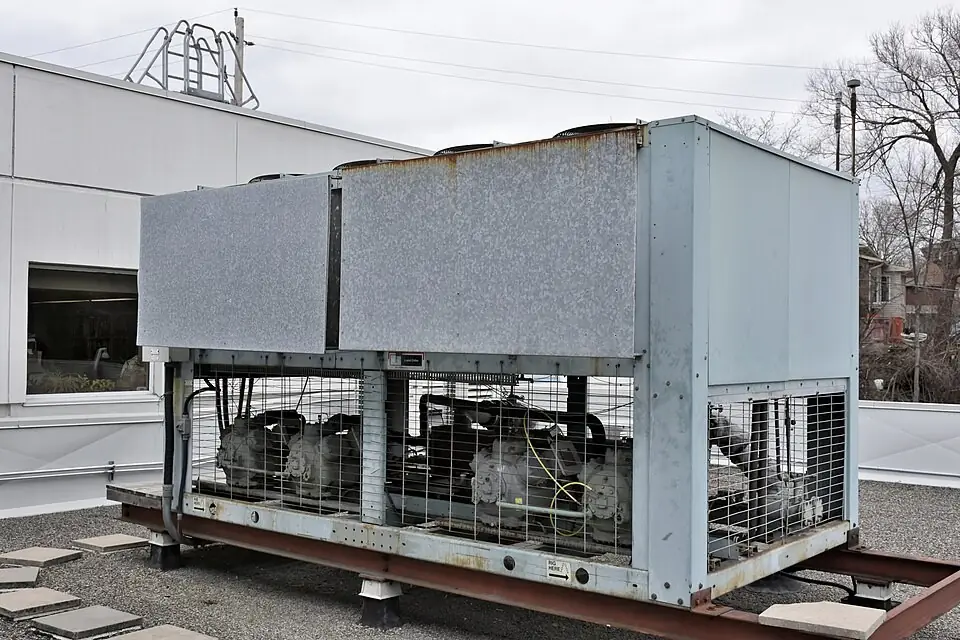
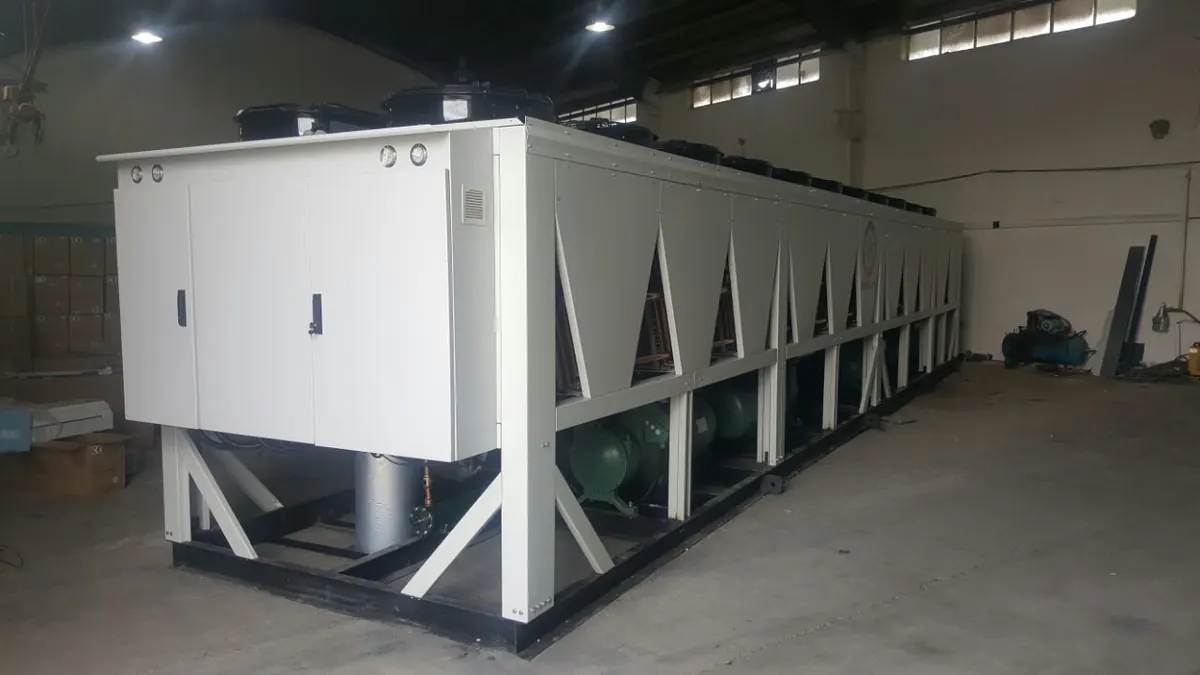
A process chiller cools products, machines and processes rather than building air. It usually comes as a packaged closed loop: compressor, condenser, pump station, expansion valve, flow protection and temperature control on one frame. Plants in plastics and moulding, metalworking, welding, die-casting, chemicals, pharmaceuticals, food and beverage use them, as do lasers and other equipment that must hold a set temperature.

A process chiller supplier in Bangladesh has to start from the temperature your process needs and the heat of your factory floor. Roptan sends one specification to verified sellers, asks each for capacity and COP at your leaving temperature and ambient, and checks the wetted materials and controls. We deliver; the seller installs and commissions.
Kinds of process chiller

Packaged closed-loop units

Recirculate clean coolant at constant temperature and pressure, with an internal tank that damps temperature spikes. The usual choice for moulds, machines and reactors.

Open-loop units

Less common. They control the temperature of a liquid held in an open tank or sump, for processes where the coolant is exposed.

Low-temperature glycol units

Run a glycol mixture for low leaving temperatures. Glycol has lower specific heat and higher viscosity than water, which changes capacity, flow and pump power.

Central or at the machine

One central chiller can serve several points, or each machine can have its own, or a mix. Centralise where many points need the same duty.

Air cooled or water cooled

Most use scroll or screw compressors. Air cooled units need no tower; water cooled units need a tower or water source and more installation work.

How to brief a process chiller supplier in Bangladesh

Coolant and leaving temperature
Water, often with an additive, or glycol. State the leaving temperature and its tolerance: the lowest temperature drives the compressor choice, not capacity alone.
Load, flow and pressure
The heat load in TR or kW (1 TR is 3.517 kW), with the coolant flow and the pressure the process needs.
Ambient
Summer highs usually reach 38 to 41 °C, and a factory floor can run hotter. Rate the unit at the air it will actually draw.
Efficiency at your conditions
Ask for the COP, cooling kW per electrical kW, at your process temperature and ambient, not at comfort cooling conditions. A figure at a mild point overstates what you will get.
Materials, IP rating and noise
Name the wetted pipework materials for your fluid, the IP rating of the electrical gear for dust and heat, and a noise limit.
Controls
Local and remote panels, fault and alarm indication, temperature and pressure readouts, and options such as hot gas bypass and city water switchover.

Ratings and standards for process chillers

EN 14511 and EN 14825:2022
The standards that name process chillers: EN 14511 (2022 parts) for rating chillers with electrically driven compressors, EN 14825 for part load and seasonal performance.
AHRI certification scope
AHRI does not certify custom units, so a process chiller built to order is usually outside the certified listing. Ask for the test basis instead.
EN 12102-1:2022
How the sound power of liquid chilling packages and process chillers is measured. Ask for sound power to it.
Kigali Amendment
Bangladesh ratified it on 8 June 2020 and is working towards an 85 percent cut in HFC use by 2045. Ask about refrigerant supply for service.

What moves the price of a process chiller

  • The lowest leaving temperature, and whether the coolant is glycol or water.
  • Air cooled or water cooled, and the tower or water source water cooling needs.
  • Compressor type and number.
  • The tank and pump set, and the control and alarm options.
  • Hot or dusty conditions, which push the choice towards demountable or higher IP builds.

Lead times and delivery

Process chillers are usually built to order, and the factory slot, sea freight to Chattogram and customs clearance add to the time; smaller standard units are sometimes held in dealers' stock abroad. Because a stopped chiller can stop production, plan spare capacity or a standby unit before you need it. Roptan confirms the delivery date in the quote.

Process chillers arrive as packaged skids. We deliver to the floor or plinth; the site connects process supply and return, make-up water, power and controls, plus the tower or clear air space. Ask for the process flow diagram, pump curve and wiring diagram before ordering. The seller commissions the unit, and handover includes these drawings, manuals and a VAT invoice (Mushak 6.3).

What we check for this order

  • Leaving temperature heldWe check that the offer holds your leaving temperature and tolerance at your ambient, not at a milder one.
  • COP at your conditionsWe ask each seller for COP at your process temperature and ambient, so offers compare on one basis.
  • Wetted materialsWe confirm the pipework and parts in contact with the coolant suit your fluid and additive.
  • Drawings before orderWe get the process flow diagram, pump curve and wiring diagram before the order, so site works can start.

Questions buyers ask

What does a seller need to size a process chiller?

The heat load, the coolant, the leaving temperature and its tolerance, the flow and pressure, and the ambient air the unit will draw. Add the fluid materials, the IP rating and the noise limit. The lowest leaving temperature matters most, because it drives the compressor choice as much as the capacity does.

When do I need glycol?

When the leaving temperature is too low for plain water. Low-temperature process chillers run a glycol mixture, which carries less heat per litre and is thicker than water, so flow, capacity and pump power change. Below about minus 5 °C a special pump is usually needed for the higher glycol concentration.

One central chiller or one per machine?

Centralise where many points of use need the same duty, since one machine can serve them all. Put a chiller on each machine where duties differ or a stop on one line must not affect the others. Many plants use a mix of both.

What if the chiller breaks down?

Production can stop, which is why spare capacity is worth planning. Ask the seller how much cooling remains with one compressor out, which spare parts are held locally and how quickly an engineer can attend. A smaller standby unit is another way to keep critical machines running.

How soon will I hear back about chillers?

Within 48 hours of a complete requirement, with a price and a delivery date. A requirement is complete when it has the capacity, where it is needed and by when.

Who do I deal with?

With Roptan, when Roptan manages the order: we buy from the verified seller and deliver to you. With the supplier directly, when you post on the requirement board and choose a quote yourself.

Other chiller products

Each product type has its own page as it is published; until then its card opens the category form.

All chillers