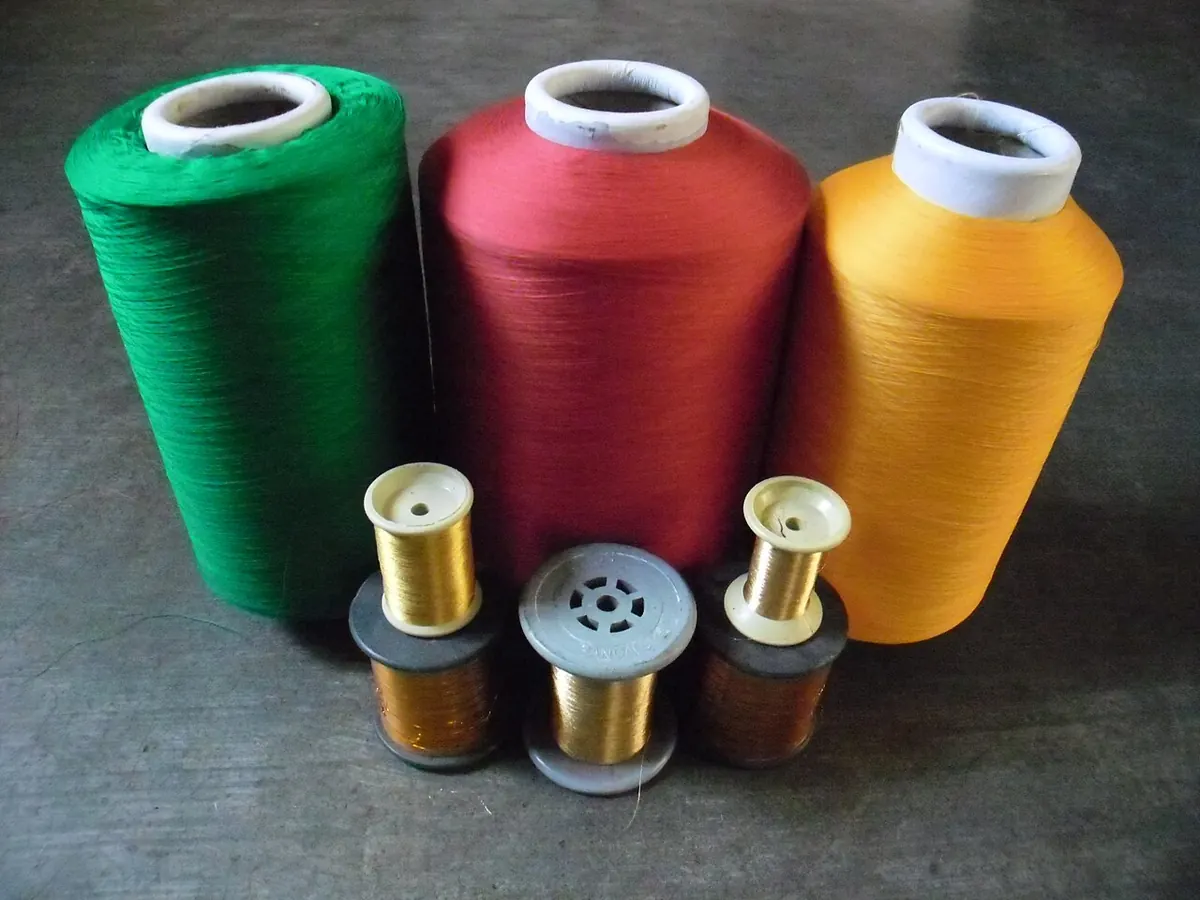
Buying polyester spun yarn in Bangladesh
Polyester spun yarn is spun from polyester staple fibre, filament cut to short lengths so it blends easily with other fibres. Mills sell it as 100 percent polyester or blended with cotton or viscose. Bangladeshi spinners import the fibre and supply knit and woven factories, sportswear makers among them, as man-made fibre gains share in the country's apparel; some yarn is exported.
Blend labels are easy to misread, and a loosely blended lot can drift from its ratio. Roptan sources from verified mills, writes fibre names and percentages into the order, has the blend tested on your lot, checks the cones and delivers. Whichever polyester spun yarn manufacturer in Bangladesh spins it, you deal with Roptan only.
How to brief a polyester spun yarn manufacturer in Bangladesh
- Blend in words and numbers
- Each fibre with its percentage, such as 65 percent polyester and 35 percent cotton, plus a tolerance. Never send a label alone.
- Blending route
- Ask whether the fibres are mixed in the blowroom or as slivers at the draw frame; sliver blending usually holds the ratio more precisely.
- Fibre grade
- Virgin or recycled, regular or low-pill, raw white or dyed. Fibre dyed before spinning usually loses tenacity, so set strength limits for dyed lots separately.
- Count, strength and evenness
- Count in Ne, single-end tenacity in cN/tex to ISO 2062:2009 with the method and speed, and U% or CV% to ISO 16549:2021.
- Conditioning and moisture
- Ask whether the cones were steamed or humidified after winding, and their moisture at packing: conditioning cuts snarling and fly in knitting.
Tests and certificates for polyester spun yarn
- ISO 1833-11:2017
- A sulfuric-acid method giving the mass share of the cellulose fibre, such as cotton, in a blend with polyester. The 2006 edition is withdrawn; ISO 1833-1:2020 sets the general rules.
- ISO 2076:2021
- Defines the generic names of man-made fibres by main polymer, so 'polyester' on a label means the polymer family. Use generic names on the papers, not trade names.
- GRS and RCS
- Textile Exchange's recycled-content schemes; the GRS sets a 50 percent minimum and adds processing and chemical rules. Both are moving into a new standard from 31 December 2026, so check scope and expiry.
- OEKO-TEX Standard 100
- Tests for harmful substances from yarn to finished product, in four product classes by end use. Certificates run one year and can be checked online.
Lead times and delivery
Raw white blends in running counts are usually quicker than yarn needing dyed, recycled or low-pill fibre bought in. The fibre is imported, so a late letter of credit delays the start, and gas cuts slow mills spinning to order. Roptan confirms the dates and the minimum in the quote.
We deliver to your knitting or weaving unit, cartons marked by lot, count and blend so a CVC lot is never taken for PC. The papers include the lot's blend report, the packing list, copies of any GRS or OEKO-TEX certificate and a VAT invoice (Mushak 6.3).
Buying polyester spun yarn for export
Customs goes by the fibre that weighs most: PC under HS heading 5509, whose polyester lines split at 85 percent, CVC under the cotton yarn headings. Give the broker exact percentages. We quote FOB Chattogram with the lot's blend report, the packing list, the certificate of origin and, for EU GSP, a REX statement.
Questions buyers ask
What is the difference between PC and CVC yarn?
Which fibre leads. PC is polyester-majority and written polyester first, so PC 60/40 is 60 percent polyester. CVC has cotton above half and is written cotton first, so CVC 60/40 is 60 percent cotton. Write fibre names with percentages on every paper.
How is the blend ratio checked?
By chemical analysis of yarn from the lot: ISO 1833-11:2017, with sulfuric acid, for polyester-cotton, and ISO 1833-24 or 1833-25 for polyester with certain other fibres. Ask for the report and the part used.
Does polyester spun yarn pill?
It can, in knits that are washed and rubbed. Lower molecular weight fibre usually pills less but is harder to spin, so ask for a low-pill grade. Pilling is tested on the knitted fabric, not the yarn, so knit a sample before bulk.
Is yarn from dyed fibre weaker?
Usually. Dyeing polyester fibre before spinning is reported to cut its tenacity by 10 to 15 percent and make it slightly coarser, so a yarn from dyed fibre is weaker than one from raw white fibre. Agree a strength limit for the dyed-fibre lot itself.
How soon will I hear back about cotton and synthetic yarn?
Within 48 hours of a complete requirement, with a price and a delivery date. A requirement is complete when it has the quantity, where it is needed and by when.
Who do I deal with?
With Roptan, when Roptan manages the order: we buy from the verified seller and deliver to you. With the supplier directly, when you post on the requirement board and choose a quote yourself.