Buying PET bottles and jars in Bangladesh
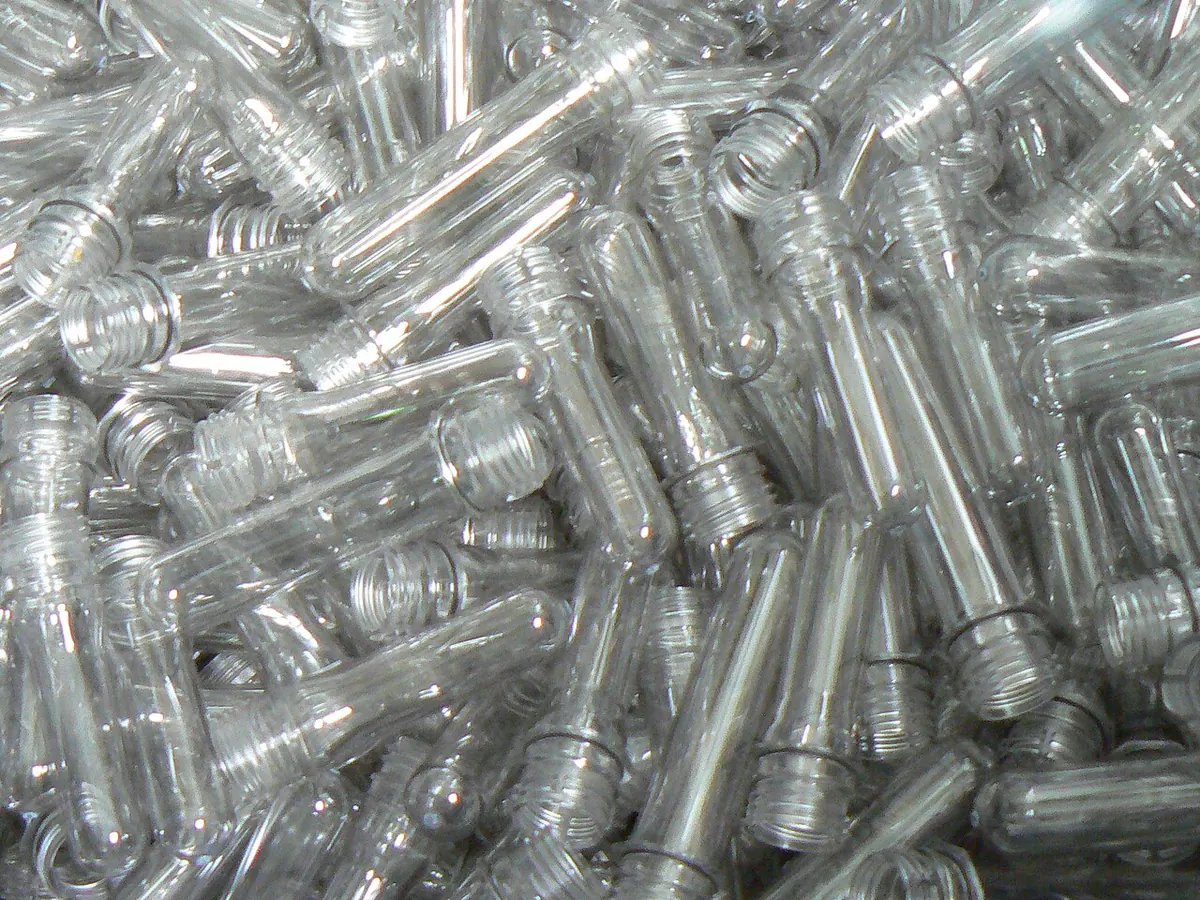
A PET bottle starts as a preform, a test-tube shape with the neck and threads already moulded, which is reheated and stretch blow moulded into the bottle. Preforms can be stored or sold to another plant that blows them. Buyers in Bangladesh include fillers of drinking water, soft drinks, juice, edible oil and personal care products; EPB records show only small exports of plastic bottles.
Bottle faults usually show on the line or in the drink: a cap that will not seat, a brittle wall, an off-taste in water. A PET bottles and jar manufacturer in Bangladesh has to match neck, weight and resin to your filler. Roptan sources from verified makers, has samples tried with your caps and inspects each lot before dispatch.
How to brief a PET bottles and jar manufacturer in Bangladesh
- Neck finish
- Send the neck drawing or a sample, and match it to your caps and filler before anything else is fixed.
- Resin grade
- Bottle-grade PET with its intrinsic viscosity, usually about 0.70 to 0.78 for still drinks and 0.78 to 0.85 for carbonated ones, and the resin certificate.
- Volume and weight
- Fill volume, and preform or bottle weight in grams with a tolerance, in writing, because weight sets most of the resin cost.
- Taste for water
- Residual acetaldehyde results. It forms when PET is overheated or held too long in moulding, and 10 to 20 parts per billion can be tasted in water.
- Dry storage
- PET takes up moisture, and damp resin gives brittle bottles. Ask how resin and preforms are kept dry through the monsoon and dried before moulding.
Standards, tests and certificates for PET bottles
- BDS 1958:2019 (BSTI)
- Containers for mineral and drinking water, on BSTI's mandatory certification list. See the licence holder's certificate, not only a test report.
- ASTM D2659, D2463 and D5276
- Top load, drop impact of blow-moulded containers, and free-fall drop of filled containers. Agree which apply, and pass levels, before samples.
- ASTM F2013
- Residual acetaldehyde in PET bottle polymer, also adopted by BSTI. Ask for it on water bottles.
- Regulation (EU) No 10/2011
- For the EU: an overall migration limit of 10 mg per dm², a declaration of compliance, and a specific limit for antimony trioxide.
- 21 CFR 177.1630
- The US section for PET in contact with food. Ask for the resin maker's letter naming it and the conditions of use.
Lead times and delivery
Standard bottles and stock-neck preforms are usually quicker than a new shape, which needs a blow mould, samples and a line trial before bulk. Imported resin, certification paperwork and port clearance can move the date. Roptan confirms the dates, and the minimum for your shape and neck, in the quote.
Roptan delivers to your filling plant anywhere in Bangladesh, with lots labelled, the resin certificate, your test reports and a VAT invoice (Mushak 6.3). Preforms should arrive sealed and stay dry until blown. A 2024 government circular, as reported in the news, lists plastic bottles and their caps among single-use items to be phased out, so confirm the current rule for your use.
Buying PET bottles and jars for export
Roptan quotes FOB Chattogram for buyers abroad. EU duties sit with the EU filler or importer: Directive (EU) 2019/904 requires caps on drink containers up to three litres to stay attached and sets recycled-content targets for PET drink bottles, and Regulation (EU) 2025/40 has applied since 12 August 2026. Food-contact recycled PET needs a process permitted under Regulation (EU) 2022/1616.
Questions buyers ask
Why does our bottled water taste of plastic?
The usual cause is acetaldehyde, formed when PET is overheated or held too long in moulding. It stays in the bottle wall and passes into the water. Ask for residual acetaldehyde results under ASTM F2013 on the preforms, and taste filled samples.
Do drinking water bottles need BSTI certification?
BDS 1958:2019, the standard for mineral and drinking water containers, is on BSTI's list of products under its mandatory certification marks scheme. Ask which licence covers the bottles you buy and see the certificate. Confirm the current list with BSTI.
Which neck finish do we need?
For most drink bottles, the 28 mm PCO 1881 finish, the lighter successor to the taller PCO 1810. It is used for still water and juice as well as carbonated drinks. Send the drawing your caps are made to.
Can PET bottles be hot filled?
Ordinary PET bottles are usually not chosen for it. Polypropylene is the usual material for hot-filled products because it copes with higher filling temperatures. If a PET bottle is offered for hot filling, have the seller confirm in writing that it suits your fill temperature.
How soon will I hear back about plastic packaging and film?
Within 48 hours of a complete requirement, with a price and a delivery date. A requirement is complete when it has the quantity, where it is needed and by when.
Who do I deal with?
With Roptan, when Roptan manages the order: we buy from the verified seller and deliver to you. With the supplier directly, when you post on the requirement board and choose a quote yourself.