Managed sourcing from Bangladesh, for export and for buyers at home
Get it sourced

Footwear and leather · Footwear components

Outsole manufacturer in Bangladesh

Need an outsole manufacturer in Bangladesh? Send the last or sole drawing, compound, hardness and size run. Roptan sources rubber, TPR, PU or PVC soles from verified makers, has each compound batch tested and delivers to your factory or ships FOB Chattogram.

  • Verified sellers
  • Checked before it ships
  • Delivered by Roptan

Get outsoles sourced

Prefer to deal with suppliers yourself? Post it on the requirement board

Buying outsoles in Bangladesh

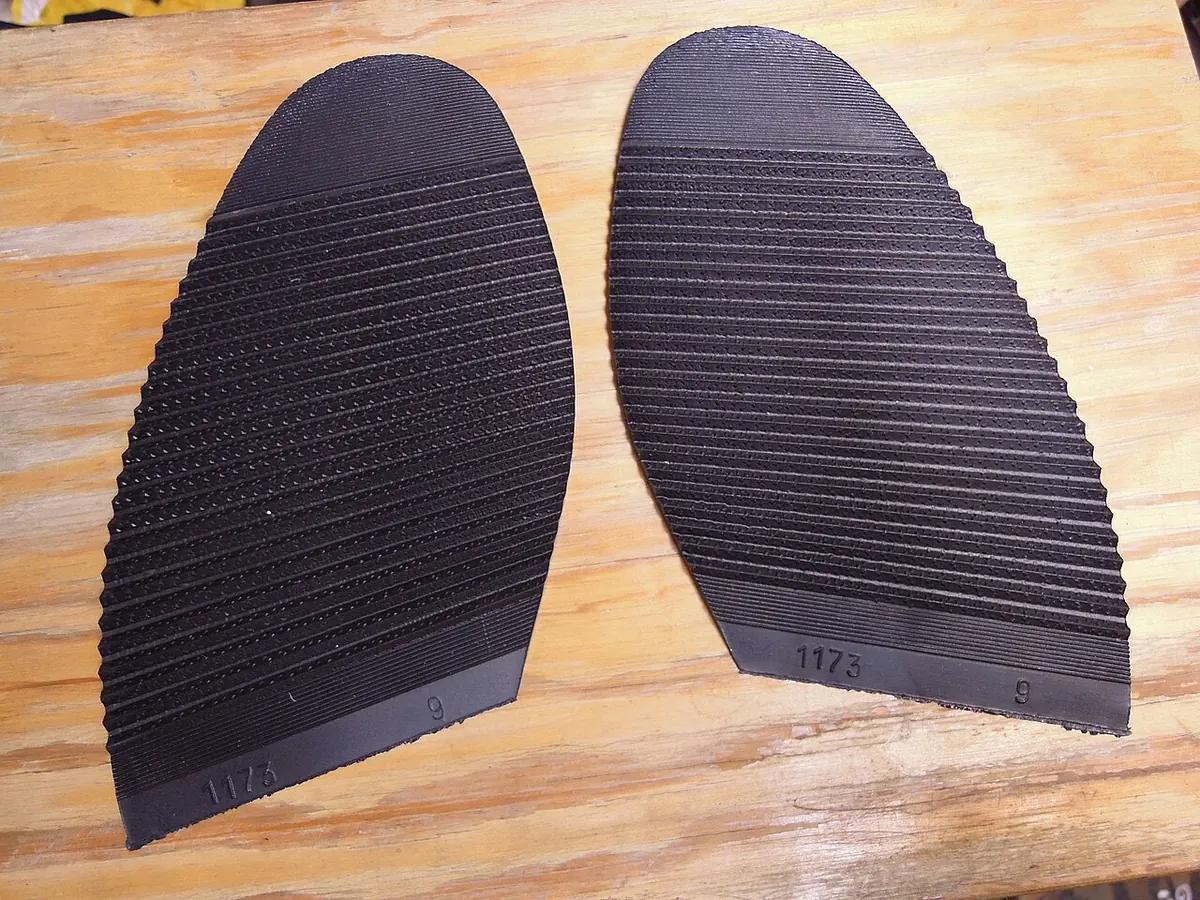
The outsole is the layer of a shoe that meets the ground. Most modern soles are natural rubber, polyurethane or PVC compounds, and dress shoes may use leather or resin rubber. Shoe factories buy soles moulded to their lasts, size by size, and the compound decides wear, grip and resistance to oil.

An outsole manufacturer in Bangladesh should be held to measured figures: hardness, abrasion loss and bond strength on your upper. Roptan sources from verified makers, writes those targets into the order, has compound batches tested at a lab and checks the size set against your last before bulk.
Kinds of outsole

Vulcanised rubber outsoles

Chosen for wear and grip in casual, work and school shoes. Ask for the abrasion result per compound batch, since grip and wear follow the blend.

Nitrile rubber (NBR) outsoles

Resists oils and acids and is stronger than natural rubber, but less flexible. Choose it for workshop and industrial shoes where oil on the floor is expected.

TPR outsoles

Thermoplastic rubber, a plastic and rubber blend that can be re-melted, which suits fast injection moulding. It is not a vulcanised rubber; choose it for light, cost-led footwear.

PU outsoles

Polyurethane is a tough elastomer, but its behaviour depends on the chemicals and cross-linking used. Ask for hardness and abrasion results, not only the material name.

Combination soles

A rubber plate under the heel for wear and grip with a leather front for style. Say whether you want a full-length unit or separate heel and forepart pieces.

How to brief an outsole manufacturer in Bangladesh

Compound
Name the polymer: natural rubber, NBR, TPR, PU or PVC, and the blend where it matters, so every maker quotes the same sole.
Hardness
A Shore A target with a tolerance in points, measured by durometer to ISO 48-4 on the finished sole, not on a slab.
Abrasion target
Abrasion loss to ISO 4649 for the compound, or ISO 20871 for the finished outsole, each with a pass level.
Size run and moulds
Soles are moulded per size, so give the size system, the range and pairs per size, and who owns the moulds.
Weight per pair
A target weight with a tolerance, checked on bulk pairs, because heavier soles use more compound.
Grip on wet floors
Floors are often wet in the monsoon. Agree the tread pattern and compound, and a slip test where the shoe is protective footwear.

Tests for shoe outsoles

ISO 4649 and ISO 20871
Abrasion loss of the rubber compound on a rotating drum, and abrasion of the finished outsole. ISO 4649 itself warns that results do not predict service life.
ISO 17707
Flex resistance of outsoles: how the material and tread pattern resist cut growth. It applies to outsoles of limited stiffness, up to 30 N.
ISO 17708
Upper to sole adhesion, tested on the whole shoe for cemented, vulcanised and injection-moulded construction. Ask for it on a trial pair with your upper.
Chemical limits
The EU limits PAHs in rubber and plastic parts that touch the skin, footwear included, to 1 mg/kg for each listed PAH. Test PVC soles for phthalates to ISO 16181-1.

What moves the price of an outsole

  • Compound: oil-resistant NBR and PU systems are usually priced above general-purpose blends.
  • Weight per pair, since every extra gram of sole is extra compound.
  • Moulding route: injection tooling usually costs more than compression moulds, then runs faster.
  • Moulds per size and construction: a one-piece unit costs less to tool than a heel plate and separate forepart.

Lead times and delivery

We quote no typical lead time for outsoles alone; it depends on the mould and the compound. Time is shorter from an existing mould and a compound the maker already runs. It grows with new moulds for every size, a special colour, a compound that has to be imported, and a trial bond to your upper. Roptan confirms dates and the minimum per size in the quote.

Inside Bangladesh, Roptan delivers to your shoe factory or export processing zone, pairs counted by size and marked with the compound batch. Each delivery carries the packing list, hardness and abrasion reports for that batch and a VAT invoice (Mushak 6.3), and can be split to follow your production plan.

Buying outsoles for export

Rubber and plastic outer soles share EPB line 640620 with heels; leather soles fall in a different line. In FY2025-26 about 96 percent of that line was recorded under a local export code, and the rest went mainly to India and Cambodia. Roptan quotes FOB Chattogram, with a packing list by size, the certificate of origin, the seller's ERC and test reports per compound batch.

What we check for this order

  • Hardness and weightMeasured on pairs drawn from bulk on an ISO 2859-1 plan, against your target and tolerance.
  • Batch test reportsAbrasion and flex reports per compound batch, with test pieces conditioned to ISO 17709, so two makers compare.
  • Trial bond to your upperA trial pair is cemented or moulded to your upper and tested for adhesion before bulk.
  • Every size mouldSoles from each size mould are checked against your last, because one faulty mould spoils a whole size.

Questions buyers ask

Which outsole compound suits a factory or workshop shoe?

Nitrile rubber, usually. NBR resists oils and acids and is stronger than natural rubber, though less flexible, so it holds up on oily floors. Fix a Shore A hardness and an abrasion limit in the order, and ask for both results on the bulk compound batch.

Does a good ISO 4649 result mean the sole lasts longer?

Not directly. The standard warns that its result does not closely predict service performance. Use it to compare compounds and to catch a batch that differs from the approved one, and ask for ISO 20871 when you want abrasion measured on the finished outsole.

Why do two PU soles behave so differently?

Polyurethane properties depend on the isocyanates and polyols used and on how far the material is cross-linked. Two soles of the same colour and name can differ in hardness, wear and flex, so the order should carry test targets, not just the word PU.

How is outsole slip resistance tested?

Slip resistance of protective footwear is tested to ISO 13287, and outsoles or sole units can be tested on their own during development. Heel shape and material also affect slipping, so agree the tread and compound for wet floors before the moulds are cut.

How soon will I hear back about footwear components?

Within 48 hours of a complete requirement, with a price and a delivery date. A requirement is complete when it has the quantity, where it is needed and by when.

Who do I deal with?

With Roptan, when Roptan manages the order: we buy from the verified seller and deliver to you. With the supplier directly, when you post on the requirement board and choose a quote yourself.

Other footwear component products

Each product type has its own page as it is published; until then its card opens the category form.

All footwear components