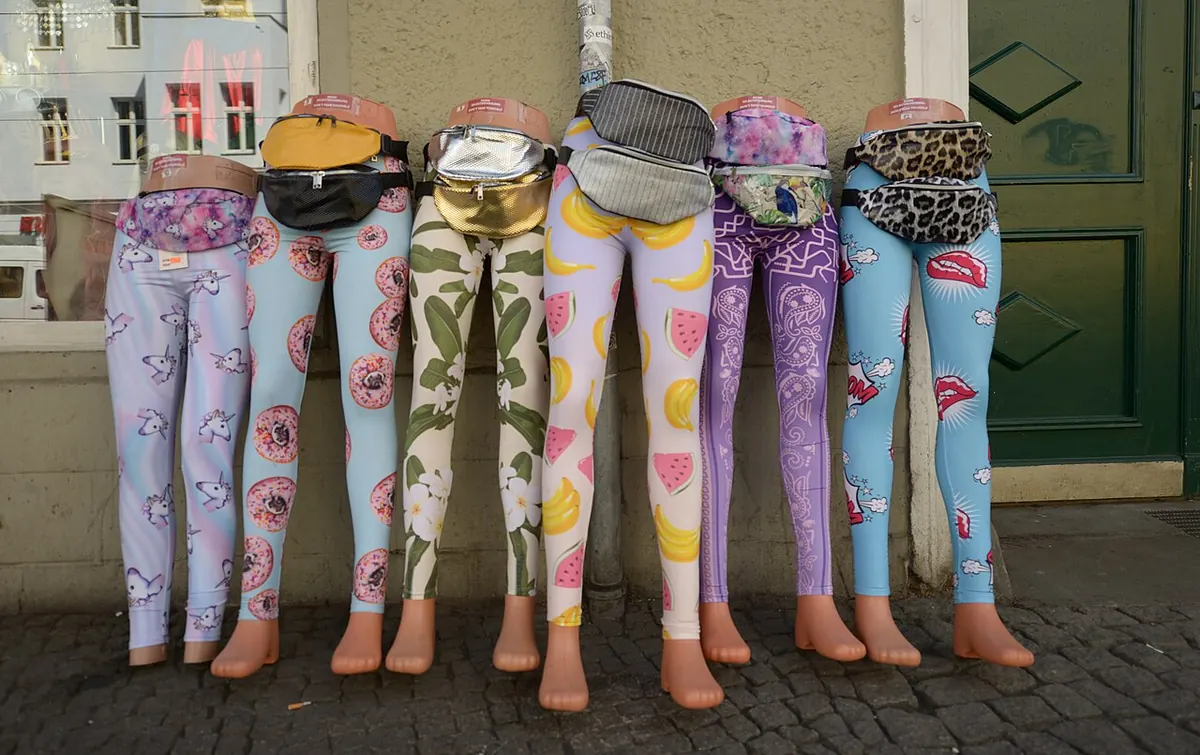
Buying leggings in Bangladesh
Leggings are close-fitting knitted trousers that depend on elastane, a fibre that can stretch up to five to eight times its length and return almost fully. Importers and brands buy them for gym, running, yoga and athleisure ranges, and shops and online sellers in Bangladesh buy them too. Fabric weight and elastane share set opacity, compression and cost.
Leggings faults show in use: fabric that turns sheer in a squat, baggy knees, a waistband that rolls down. A leggings manufacturer in Bangladesh works to your brief, so Roptan writes fabric and fit limits into it, places the order with a verified seller, has a sample worn through squats and lunges, and inspects the bulk.
How to brief a leggings manufacturer in Bangladesh
- Fabric and elastane share
- Give fibre percentages, the knit and GSM with a tolerance. Higher elastane, typically 20 percent and above, gives more compression and recovery; 5 to 10 percent suits casual pairs.
- Waistband and gusset
- A higher-compression waistband stops roll-down, and a crotch gusset adds hip mobility and takes stress off the seams. Keep seam crossings out of high-stress zones.
- Length, pockets and fit
- Inseam per size, pockets and reflective details for running, on a graded size set. Fit on an experienced fit model, not on yourself, since you see only one side.
- Opacity
- Write the opacity check into the order: each colour, cut from bulk fabric, stretched on a body. Heavier fabric is usually more opaque.
- Decoration
- All-over prints suit sublimation on polyester, printed on panels before sewing to avoid white streaks at seams. Screen print can crack on stretch fabric.
Tests for leggings fabric and seams
- EN ISO 20932-1
- The strip test for fabric elasticity; its scope excludes narrow fabrics such as elastic tape. Ask the lab for stretch and recovery figures on bulk fabric: poor recovery shows later as baggy knees.
- ISO 12945-2, ISO 12947-2 and ISO 5077
- Modified Martindale pilling, Martindale abrasion and shrinkage after washing. Set a limit and a wash count for each, measured on the bulk fabric.
- ISO 13938-2
- Bursting strength of knit fabric, pneumatic method. The grab seam test ISO 13935-2 is written for woven fabric, so agree the seam test with the lab.
- ISO 105-X12 and ISO 105-E04
- Rubbing and perspiration fastness on dark colours and prints, plus washing (C06), with staining read on the ISO 105-A03 grey scale.
Lead times and delivery
Sampling, from proto to pre-production, usually takes four to six weeks. Knit programmes usually run about 75 to 120 days from order to port, longer with custom-dyed or imported fabric or in the August to October peak. Minimums usually start around 1,000 pieces per style and colour. Roptan confirms the dates and the minimum in its quote.
Inside Bangladesh, Roptan delivers to your store, studio or warehouse, packed by size and colour, with the packing list, final inspection report and a VAT invoice (Mushak 6.3). Online sellers can ask for each pair bagged and labelled for dispatch.
Buying leggings for export
Your customs broker confirms the tariff line for your leggings before duty is quoted. For the EU, the label must give the fibre composition under Regulation 1007/2011, so state exact percentages. Quotes are FOB Chattogram, or by air from Hazrat Shahjalal International Airport, with the commercial invoice, packing list, fabric test reports and final inspection report.
Questions buyers ask
What elastane share should leggings have?
Usually 15 to 25 percent for performance leggings, with 20 percent and above for strong compression and recovery. Polyester pairs typically carry 10 to 20 percent, and casual cotton pairs 5 to 15 percent. Ask for recovery figures, not stretch alone.
Are compression leggings a medical product?
Not when sold as sportswear. Sports compression zones pressure through fabric, elastane and panels. Medical compression is different: garments at 20 to 30 mmHg or more typically need a doctor's prescription, and graduated compression hosiery is a separate tariff line. Leave medical claims off the label.
Nylon or polyester leggings?
Nylon-elastane in heavier weights gives opaque, compressive performance pairs at a higher cost. Polyester-elastane is usually cheaper, dries quickly and takes sublimation prints, but can hold odour without an antimicrobial finish. For printed ranges, choose polyester.
Can you supply leggings knitted in one piece?
We source them where a seller has access to the machines, often through a knitting partner. Few cut-and-sew seams add comfort, but sizing and stretch are harder to keep even, so we ask who knits them and measure every size against the approved set.
How soon will I hear back about sportswear and swimwear?
Within 48 hours of a complete requirement, with a price and a delivery date. A requirement is complete when it has the quantity, where it is needed and by when.
Who do I deal with?
With Roptan, when Roptan manages the order: we buy from the verified seller and deliver to you. With the supplier directly, when you post on the requirement board and choose a quote yourself.