Buying knitted work gloves in Bangladesh
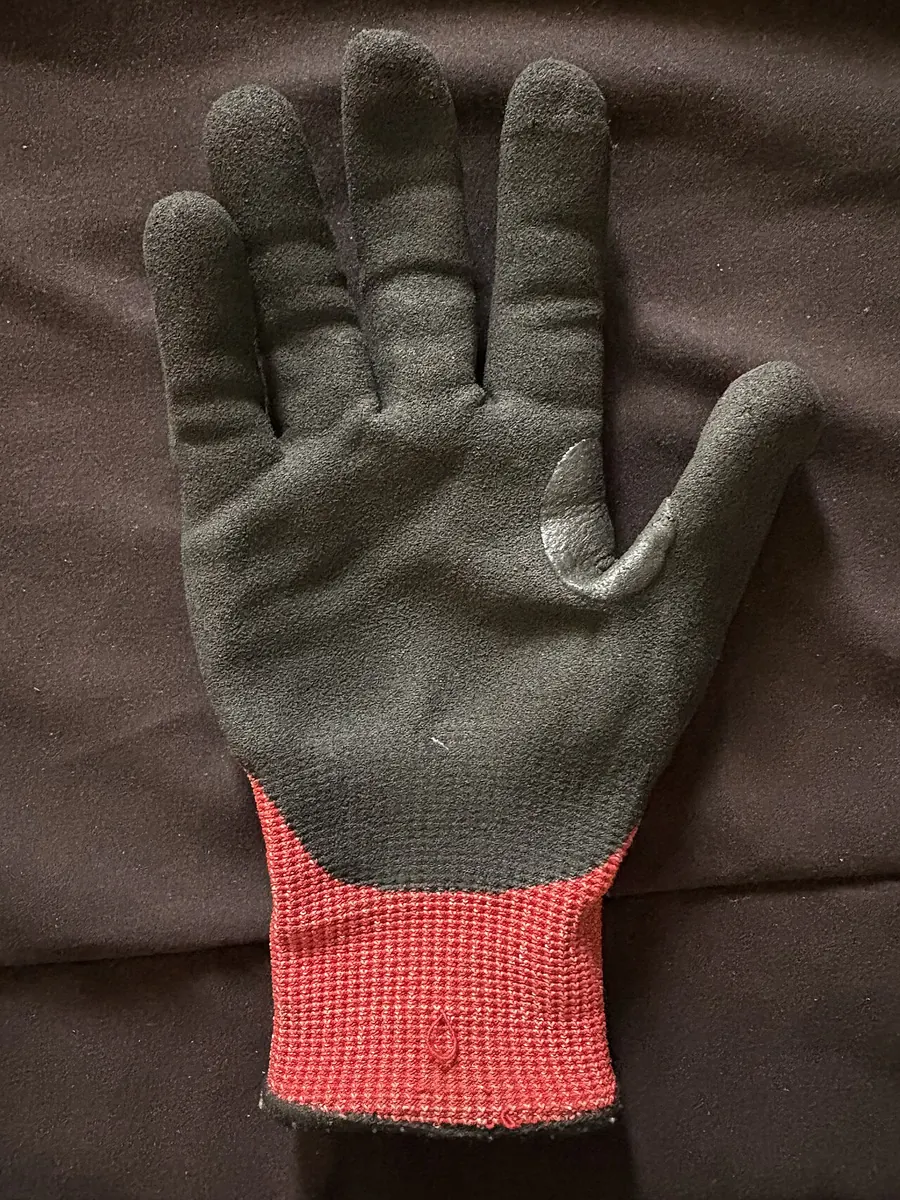
A knitted work glove is a string-knit glove in cotton, cotton-polyester or polyester, knitted in one piece with a ribbed elastic wrist, plain or PVC dotted. OSHA describes fabric gloves as protecting against dirt, slivers, chafing and abrasions, and not as protection for rough, sharp or heavy materials. Workshops, building maintenance and logistics teams use them, and HSE suggests cotton gloves under protective gloves to absorb sweat.
Two things to guard against: a bulk lot lighter than the sample, and dots that lift. Roptan places your order with a verified knitted work glove manufacturer in Bangladesh, writes the yarn, gauge, weight per dozen pairs and dot pattern into it, then weighs and inspects the lot.
What to tell a knitted work glove manufacturer in Bangladesh
- Gauge with the yarn
- Gauge is the fineness of the knitting machine; 7, 10 and 13 are common. It does not fix thickness or weight, so always state it with the yarn.
- Yarn count and blend
- Cotton count (Ne) is the number of 840-yard lengths in a pound; a higher count is finer. State the count, the fibre or blend ratio, and carded or combed.
- Weight per dozen pairs
- Give a target weight with a tolerance, and have a sample of the delivered lot weighed against it. Weight shows how much yarn you are paying for.
- Dots and wrist
- Palm side or both sides, dot colour, and whether dots must survive washing. Give the cuff length and confirm a ribbed elastic wrist.
- Washing and reuse
- Cotton gloves can be laundered and reused, which suits long, sweaty shifts. If you plan reuse, state a wash count and check size and dots after it.
Rules and tests for knitted work gloves
- Regulation (EU) 2016/425
- A plain or dotted knit sold only against superficial mechanical injury usually sits in Category I: the maker self-assesses, signs a declaration of conformity and applies CE marking.
- EN 388:2016+A1:2018
- Needed only when the glove claims abrasion or tear protection. Samples are cut from the palm, so the report must name the exact gauge, yarn and dots.
- Regulation (EU) No 1007/2011
- Annex V frees oven gloves and textile products for protection and safety from fibre labelling. Whether a light-duty work knit counts is for your importer; a composition label avoids the question.
- REACH entries 50 and 51
- PVC dots are plastic. For EU orders, ask for a PAH result (at most 1 mg/kg of each listed PAH in consumer goods) and a phthalate result (four phthalates, under 0.1 percent by weight combined).
Lead times and delivery
Time depends on whether the seller already knits your gauge, yarn and weight. On trade listings, minimums for knitted and dotted gloves usually run to thousands of pairs per model. Roptan confirms the minimum and the dates in the quote. FOB orders add sea freight of usually about three to five weeks to Europe or North America; the quote gives the schedule.
Roptan delivers inside Bangladesh to stores, plants and sites in Dhaka, Gazipur, Narayanganj or Chattogram, with cartons marked by size and packed as the quote states. Each delivery carries the packing list, the weight and inspection report and a VAT invoice (Mushak 6.3).
Buying knitted work gloves for export
Roptan quotes FOB Chattogram (Chittagong). Your broker confirms the customs line for plain and dotted knits. The quote gives pairs per pack, packs per carton, carton size and gross weight, so freight can be checked. EU orders carry the declaration of conformity and the PVC test reports.
Questions buyers ask
What gauge should a cotton work glove be?
There is no single answer: 7, 10 and 13 gauge are all sold, and a common work version is a 7 gauge cotton-polyester shell with dots on the palm. Gauge measures the machine, not the glove, so compare samples at your target weight per dozen pairs.
Are knitted work gloves PPE in the EU?
Usually yes, at the lowest level. Category I of Regulation (EU) 2016/425 covers minimal risks, including superficial mechanical injury. General requirements sit in EN ISO 21420:2020+A1:2024: design, innocuousness, comfort and marking. A claim of cut, heat or chemical protection usually moves the glove to Category II or higher.
Can you supply gloves made from recycled cotton?
Yes, with paperwork. Ask for a Global Recycled Standard (GRS) certificate whose scope covers the glove unit and the lot, and check the certificate number with the certifier. Without a certificate, treat the word recycled as marketing and buy the glove on its yarn, weight and dots.
Do knitted gloves protect against cuts?
No. OSHA describes fabric gloves as protecting against dirt, slivers, chafing and abrasions, and a plain or dotted knit makes no cut claim. For glass, sheet metal or blades, choose a cut-resistant glove with a cut result on its report, and keep knitted gloves for light handling.
How soon will I hear back about gloves?
Within 48 hours of a complete requirement, with a price and a delivery date. A requirement is complete when it has the quantity, where it is needed and by when.
Who do I deal with?
With Roptan, when Roptan manages the order: we buy from the verified seller and deliver to you. With the supplier directly, when you post on the requirement board and choose a quote yourself.