Managed sourcing from Bangladesh, for export and for buyers at home
Get it sourced

HVAC and cold chain · HVAC systems

Air handling unit supplier in Bangladesh

Roptan is an air handling unit supplier in Bangladesh for projects on chilled water. Send the airflow, coil duty, filter stages and plant room size: we source packaged or custom-built units from verified sellers, check casing and coil data, and deliver to site.

  • Verified sellers
  • Checked before it ships
  • Delivered by Roptan

Get air handling units sourced

Prefer to deal with suppliers yourself? Post it on the requirement board

Buying air handling units in Bangladesh

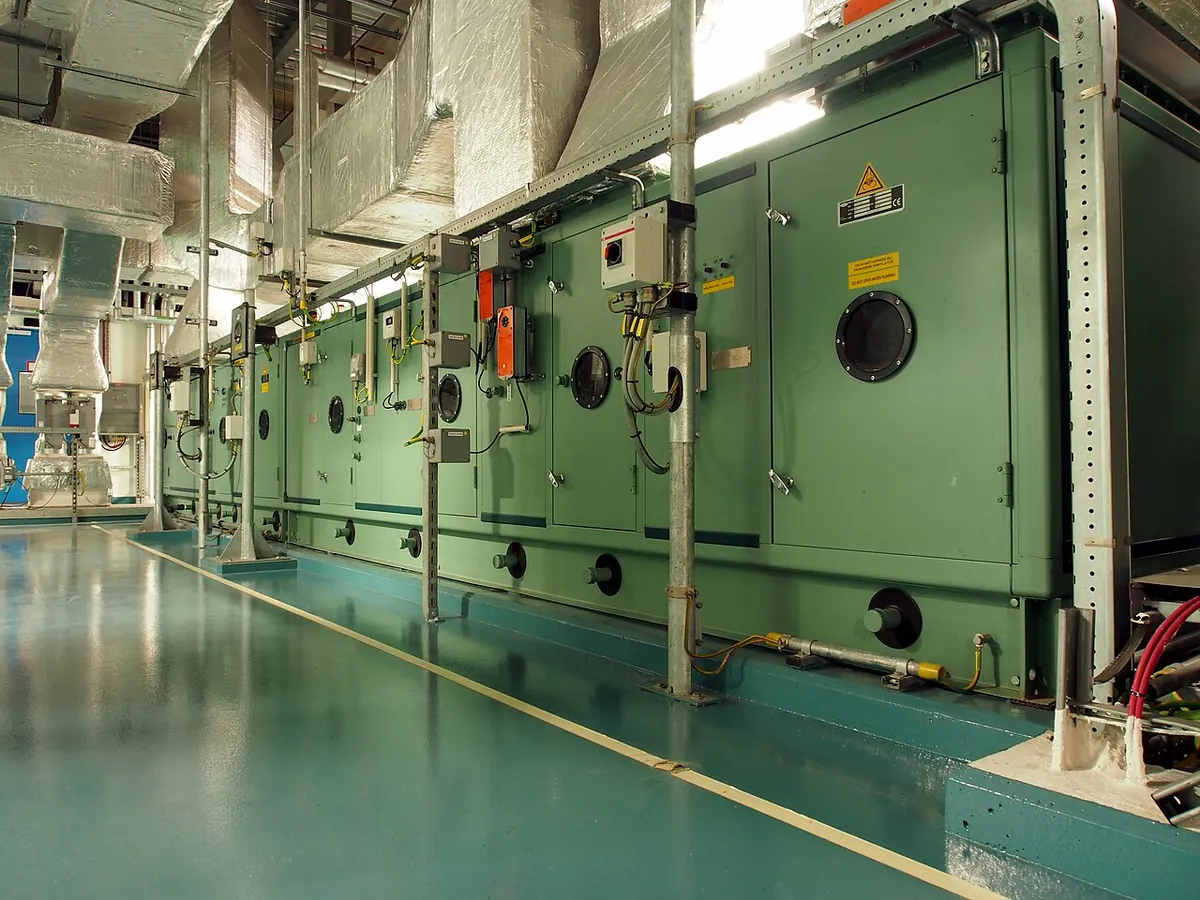
An air handling unit filters, cools, dehumidifies and moves air for a building or a zone, usually through a chilled water coil fed from a chiller. Mixing units blend return air with outside air through dampers; fresh air units treat outside air only and often serve fan coil or VRF systems.

Two units with the same airflow can differ in casing, filters and fan power. As your air handling unit supplier in Bangladesh, Roptan sends one duty schedule to verified sellers, asks for casing classes and coil data on the same basis, and compares the offers. The seller installs and commissions the unit; we deliver it.
Kinds of air handling unit

Mixing (recirculating) units

Return air and outside air blend through dampers that set the ratio. Choose them for offices, malls and halls where most of the air can be recirculated.

Fresh air units

They treat 100 percent outside air, with no recirculation. Choose one where outside air must be handled separately, for example to feed fan coil or VRF systems that bring in none themselves.

Packaged and custom-built units

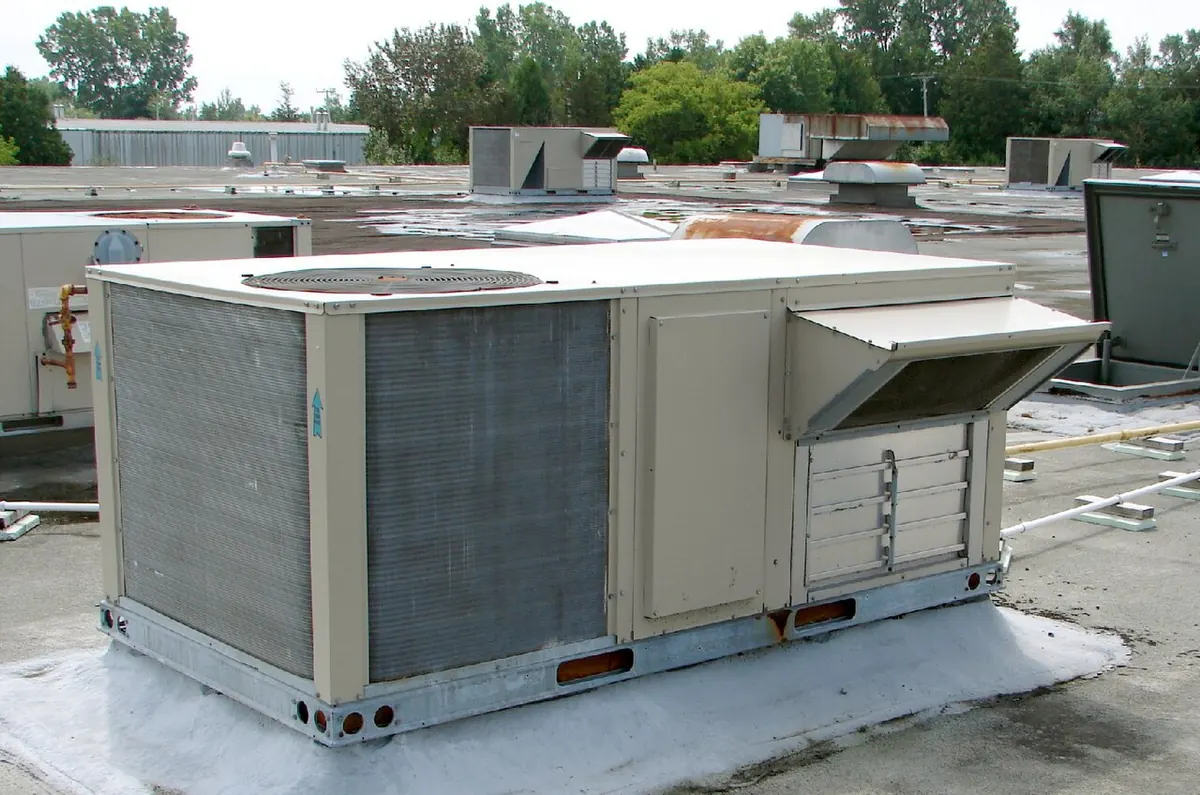
Packaged floor-mounted or suspended units usually cover standard duties; custom-built units suit a non-standard site, section order or capacity. Ask for single-wall, double-wall or double-skin construction.

Units with heat recovery

Run-around coils and plate exchangers keep exhaust and fresh air apart; a heat wheel lets some exhaust air leak into the fresh air. Ask what recovery saves over your operating hours.

How to specify an air handling unit

Airflow and static pressure
Give supply and return airflow in m³/h and the external static pressure the fan must overcome in ducts and filters.
Coil duty
State chilled water entering and leaving temperatures and the air-on dry and wet bulb. Chillers commonly work at 12 °C in and 7 °C out; confirm with your plant.
Moisture removal
Dhaka's relative humidity averages about 82 to 83 percent from June to September, so ask for sensible and latent coil capacity separately.
Filter stages
Name each stage and its class, with a pressure gauge across each bank and an easy change door. Dhaka's dusty air usually loads filters quickly.
Fan and drive
Ask for fan power at the duty point, the drive (single speed, multi-speed, variable-frequency or EC) and a spare-parts list.
Coil and casing finish
Coils are typically copper tube with copper or aluminium fins, in galvanised casings. Near the coast or chemical plants, ask for the coating and finish in writing.
Noise and vibration
Specify sound attenuators, flexible duct connections and isolation from the structure, especially where ducts pass between quiet rooms.

Standards for casings, ratings and filters

EN 1886:2025
Classes casings for strength, air leakage, thermal transmittance, thermal bridging and filter bypass; datasheets usually print them as classes such as D1, L2 and T2. The 2007 edition was withdrawn in July 2025, so ask which edition the classes quoted follow.
EN 13053
Rates AHUs and their sections, packaged or tailor-made, including velocity, power and filter classes; the 2019 edition is current. Ask for these classes for the unit offered.
ISO 16890-1
Classes general ventilation filters by particle efficiency as ePM1, ePM2.5 or ePM10. It replaced EN 779, so G4 or F7 on a datasheet are withdrawn classes.
EN 1822-1 and ISO 14644-1
For operating theatres and cleanrooms: EN 1822-1 classifies HEPA and ULPA filters, ISO 14644-1 the room's cleanliness. Ask how the HEPA seal is leak tested on site.

What moves the price of an air handling unit

  • Airflow, and the static pressure the fan must deliver.
  • Casing build, from single-wall to double-skin insulated panels, and tighter casing classes.
  • Coil rows, and the number and class of filter stages.
  • Fan type and drive, including EC fans or a fan array.
  • A heat recovery section, and whether the unit is packaged or custom-built.

Lead times and delivery

Air handling units are usually built or configured to order, so the time depends on the casing, section order and coil duty, on whether the unit is packaged or custom-built, and on import and clearance at Chattogram. Roptan confirms the dates and any minimum in the quote.

We deliver to site anywhere in Bangladesh. The seller sets and connects the unit, adjusts the fan to the duty point and commissions it, measuring airflow and filter pressure drop. Handover includes the casing test result, commissioning readings, drawings, manuals, warranty papers and a VAT invoice (Mushak 6.3).

What we check for this order

  • Real-unit casing dataWe ask for casing results for the unit offered, since extra doors and penetrations can make it leak more than the model box.
  • Current editionsWe check that casing and filter data cite EN 1886:2025 and ISO 16890, not withdrawn editions.
  • Certification or lab reportWe ask whether the model holds Eurovent certification and, if it does not, for the laboratory test report.
  • Doors, seals and drain panWe confirm the seller will inspect doors, seals and drain pans and record airflow and filter pressure drop at commissioning.

Questions buyers ask

Do I need a mixing unit or a fresh air unit?

It depends on the system around it. A mixing unit recirculates most of the air and adds outside air through dampers. A fresh air unit treats only outside air, which suits buildings cooled by fan coils or VRF, because those recirculate room air and bring in none of their own.

What do casing classes such as L2 or T2 mean?

They are EN 1886 casing classes as datasheets usually print them. D classes cover mechanical strength, L classes air leakage and T classes thermal transmittance; further classes cover thermal bridging and filter bypass. Ask for the classes measured on the real unit, which can be slightly worse than those of the model box, and for the edition they follow.

Are G4 and F7 filter classes still valid?

No. They come from EN 779:2012, withdrawn on 3 January 2017. ISO 16890-1 now classes general ventilation filters by particulate efficiency as ePM1, ePM2.5 or ePM10. Ask the seller for the ePM class of every stage, and for MERV only where a US specification applies.

Is a heat wheel suitable for a hospital?

Ask before you choose one. A heat wheel recovers heat well but lets some exhaust air leak into the fresh air stream, which matters in hospitals and laboratories. Run-around coils and plate exchangers keep the two streams apart. Ask the seller to state the leakage.

How soon will I hear back about HVAC systems?

Within 48 hours of a complete requirement, with a price and a delivery date. A requirement is complete when it has the capacity, where it is needed and by when.

Who do I deal with?

With Roptan, when Roptan manages the order: we buy from the verified seller and deliver to you. With the supplier directly, when you post on the requirement board and choose a quote yourself.

Other HVAC products

Each product type has its own page as it is published; until then its card opens the category form.

All HVAC systems