Buying wall exhaust fans in Bangladesh
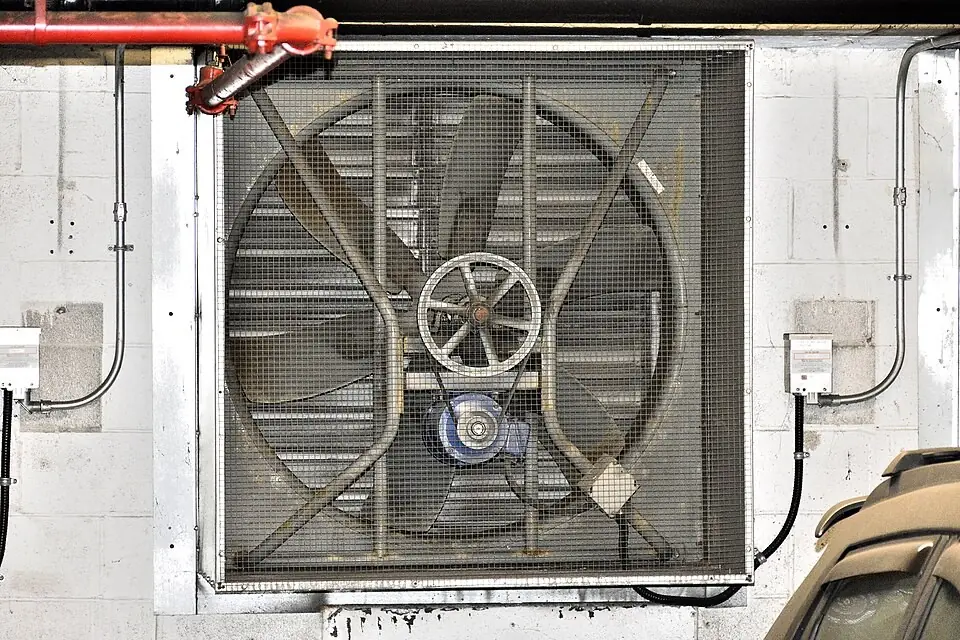
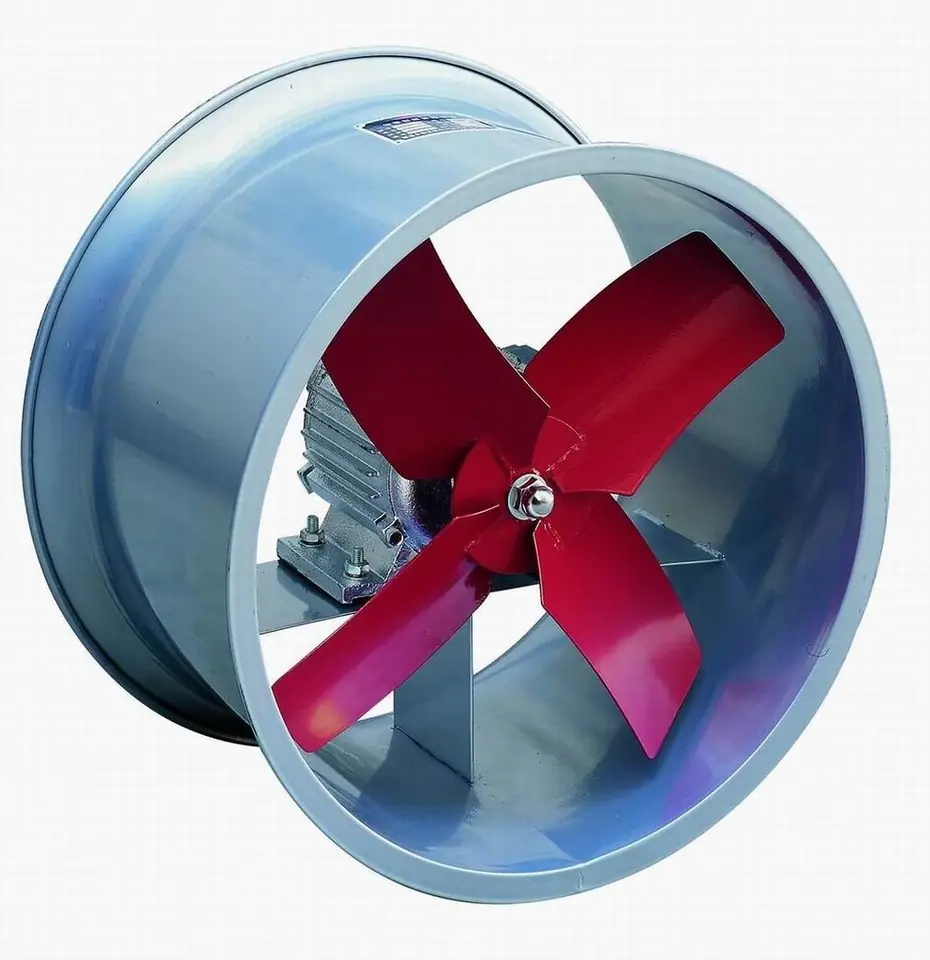
A wall exhaust fan is an axial fan set in an opening in an outside wall. It pulls hot, stale air out while fresh air enters through doors, louvres or cooling pads on the far side. Typical buyers are garment, textile, printing and food plants, which take them in sets, and poultry sheds and stores. Section 52 of the Bangladesh Labour Act 2006 requires adequate ventilation in every work-room.
What usually goes wrong is the duty, not the fan: a fan picked at free air falls short against wet pads and tight louvres. As your wall exhaust fan supplier in Bangladesh, Roptan briefs verified sellers once, compares airflow at your real pressure, checks motor and drive, and arranges fitting through the seller.
What to tell a wall exhaust fan supplier in Bangladesh
- Airflow from air changes
- Multiply the room volume by air changes per hour. Commonly used rates run from 2 to 4 for an ordinary factory to 15 to 20 for a dye house; check them against rules for your site.
- The pressure budget
- Add every loss on the air path in pascals: pads, inlet louvres, shutters. One livestock guide puts the pads at 13 Pa of a 44 Pa total; your building will differ, but adding up is the method.
- Where the air comes in
- Every cubic metre the fans push out must enter somewhere. Mark the doors, louvres or pads, their size and their distance from the fans, so air crosses the whole floor.
- Motor class and enclosure
- Ask for the IE class to the current IEC 60034-30-1 edition. An IP first digit of 5 means dust protected; lint-heavy floors may justify 6, dust-tight.
- Monsoon months
- Average humidity in Dhaka is typically about 82 to 83 per cent from June to September, when pads cool far less. Plan for the fans to carry comfort on air movement alone in those months.
Standards and tests for wall exhaust fans
- ISO 5801:2017
- The test method for airflow, pressure, power and efficiency on a standard airway. Ask which method produced the curve; a curve naming none is a catalogue claim.
- ANSI/AMCA 210
- The North American laboratory method for the same figures. AMCA's Certified Ratings Seal shows a model's air performance was check-tested; ask whether the exact model carries it.
- EN 12101-3:2015
- Covers powered smoke and heat control fans, and applies only where the fan is part of a fire smoke-extract system. Ask for the certificate for that model.
Lead times and delivery
No date can be fixed before the duty is. Stock fans move fastest; large cone fans, stainless frames, higher efficiency motors and big quantities usually take longer, and certified smoke-extract fans longer again. Fitting also waits on the wall openings. Roptan confirms the delivery date and the minimum order in the quote.
We deliver across Bangladesh. Where fitting is in scope, the seller sets each fan in its opening, seals the frame, checks rotation and current draw, and runs the shutters. Ask for a pad cleaning routine at handover, since dirty pads cut airflow. You receive the curve and its test method, motor data, wiring diagram, warranty and a VAT invoice (Mushak 6.3).
Questions buyers ask
How many air changes does a dye house need?
Commonly used rates for textile dye houses are 15 to 20 an hour, against 2 to 4 for an ordinary factory. Multiply the rate by the room volume for the airflow, and check it against any rule for your site.
Does the Labour Act require exhaust fans?
Not by name. Section 52 of the Bangladesh Labour Act 2006 requires adequate ventilation with fresh air and a temperature that does not harm health, and section 53 asks for dust and fume extraction close to the source. Wall fans are one way to meet section 52.
Why do our wall fans move less air after a year?
Usually the pressure has risen or the fans have slowed. Scaled or dirty pads raise the pressure the fans pull against, and a slipping belt can cost several hundred rpm. Clean the pads, check the belts, then compare current draw with the commissioning figure.
Can we slow the fans at night to save power?
Yes, and the saving is large. Power follows the cube of speed, so a fan at 63 per cent speed draws about 25 per cent of full power while moving about 63 per cent of the air. Ask whether the motor suits a drive.
How soon will I hear back about exhaust fans?
Within 48 hours of a complete requirement, with a price and a delivery date. A requirement is complete when it has the capacity, where it is needed and by when.
Who do I deal with?
With Roptan, when Roptan manages the order: we buy from the verified seller and deliver to you. With the supplier directly, when you post on the requirement board and choose a quote yourself.