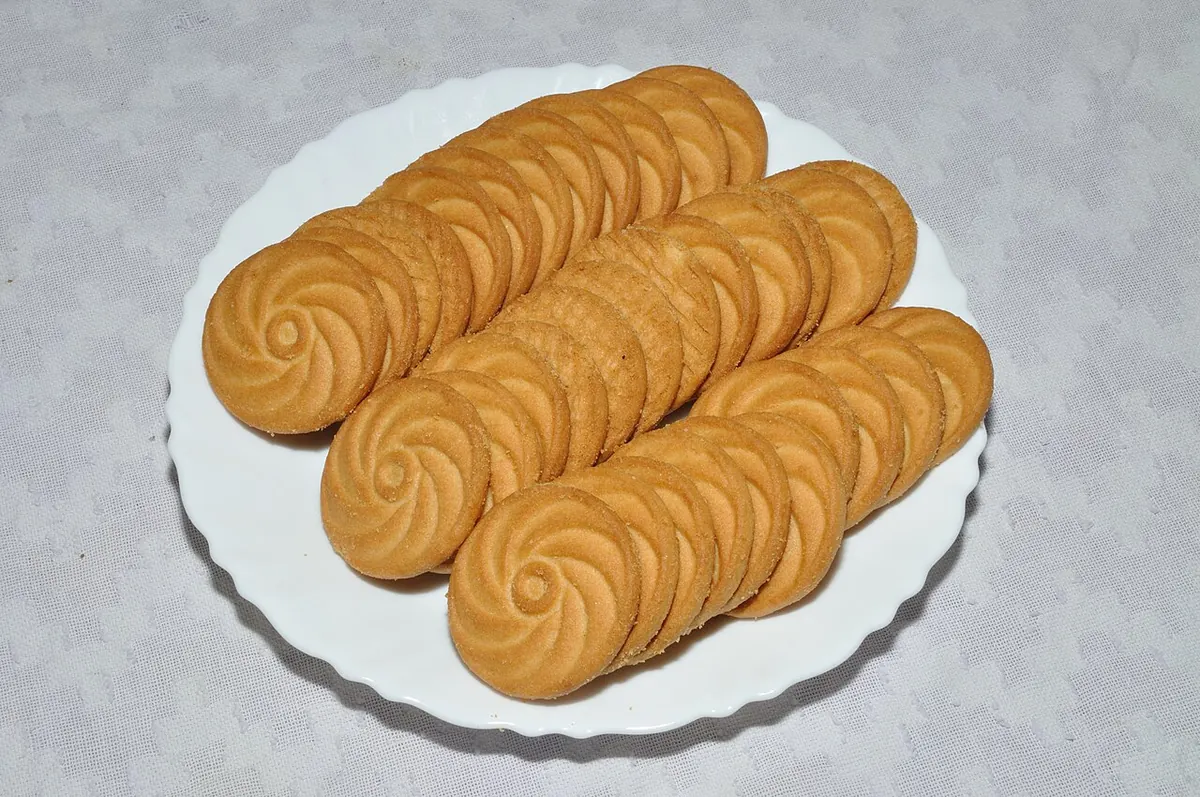
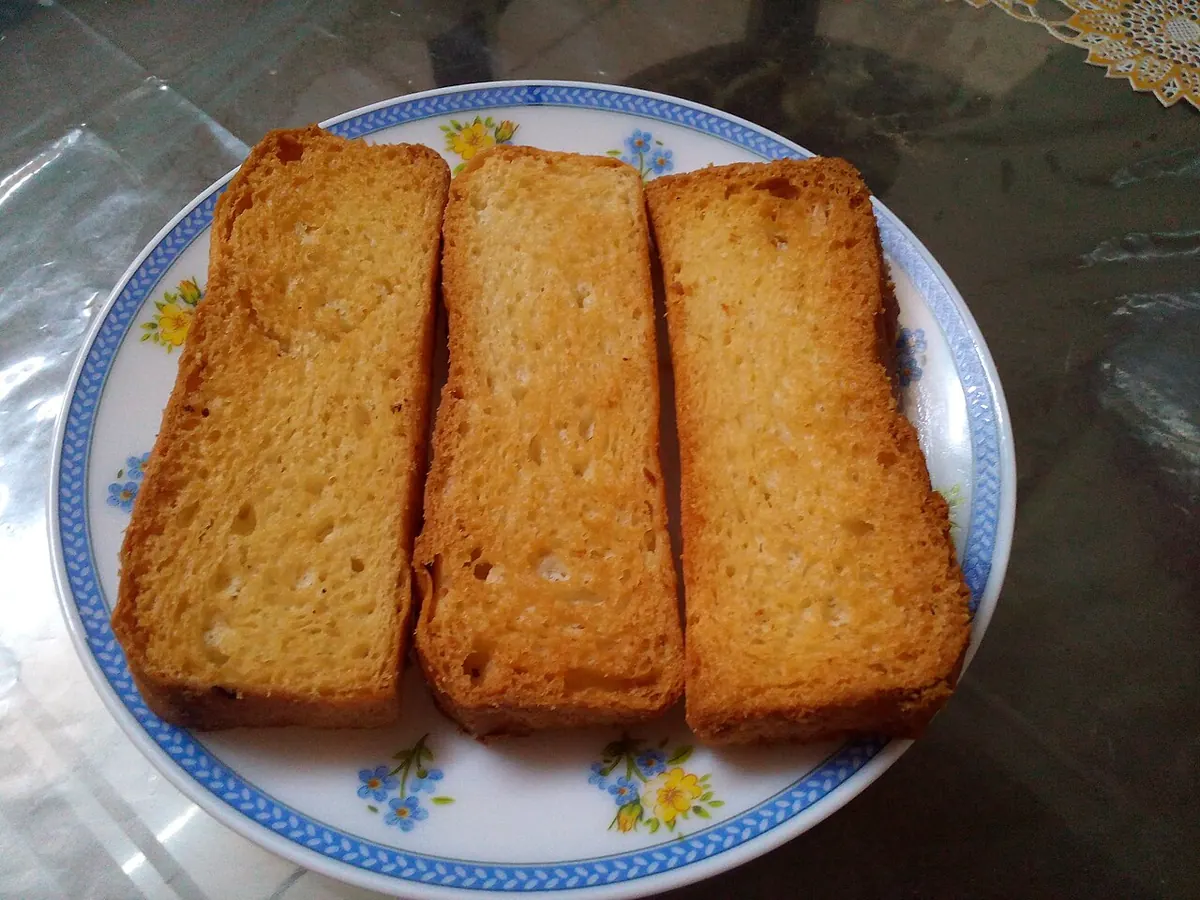
Buying sweet biscuits in Bangladesh
Sweet biscuits are the dry tea biscuits that distributors, shops, offices and importers buy in packs: Marie, glucose and similar types. Most are eaten at home, and they are also exported: sweet biscuits have an HS line of their own, 1905.31, so a customs broker can declare a plain Marie or glucose biscuit without doubt.
Two sweet biscuits that look alike can come from different doughs, fats and bakes. A sweet biscuit manufacturer in Bangladesh should know which you mean before quoting, so Roptan pins down the type, sources from verified plants that run it, and checks fat, colour and moisture against your approved sample.
What to tell a sweet biscuit manufacturer in Bangladesh
- Dough family
- Semi-sweet, short dough or cookie, or a reference sample. Plants use these words differently, and each needs its own mix and bake.
- Forming and face
- Rotary moulded or sheeted and cut, with shape, size and any embossed name. A plant quotes from the line it runs.
- Final moisture
- A target in percent with a tolerance. Hard biscuits soften as they age and take up water, so state moisture with the pack barrier.
- Colour range
- A light and a dark limit on the approved sample. A darker bake usually carries more acrylamide.
- Fat type
- Butter, vegetable fat or a blend, hydrogenated or not. Fat quality also sets how fast the biscuit turns rancid.
- Coatings and inclusions
- The water activity of each part. Moisture moves from the wetter part into the dry biscuit and softens it.
Licences, rules and lab tests for sweet biscuits
- BSTI licence, BDS 383:2001
- Biscuits are on BSTI's mandatory certification list as BDS 383:2001, and BSTI treats selling a listed product without the CM licence as a punishable offence under the BSTI Act 2018.
- Regulation (EU) 2017/2158
- Sets acrylamide mitigation steps and benchmark levels for biscuits sold in the EU. Benchmark levels are not legal limits; they show whether the plant's controls work.
- Regulation (EU) 2019/649
- Caps industrial trans fat in EU food for the final consumer at 2 g per 100 g of fat. Hydrogenated shortening is the main source, so ask for a lab report.
- FSSC 22000 or ISO 22000
- Food safety certificates. FSSC 22000 builds on ISO 22000 and is approved by the Global Food Safety Initiative, which importers often ask for.
Lead times and delivery
Time depends on how much is new. A plant's own biscuit in its own pack moves faster than a private label run, which waits for recipe trials, artwork, printed film and a pre-production sample. Export lab tests and a new emboss mould add time. Roptan confirms the dates and the minimum per item in the quote.
Inside Bangladesh, Roptan delivers by the carton or the truckload to distributors, shops, offices and canteens, with a batch code and expiry date on every carton. Each delivery comes with a copy of the BSTI licence, lab reports where ordered and a VAT invoice (Mushak 6.3).
Buying sweet biscuits for export
For importers Roptan quotes FOB Chattogram or CFR, with the commercial invoice, packing list, certificate of origin and the batch lab reports your market needs. EU buyers usually ask for acrylamide and trans fat results with each shipment. US importers must verify the plant's preventive controls under the Food Safety Modernization Act, so we collect those records before the first order.
Questions buyers ask
What is the difference between a Marie and a glucose biscuit?
A Marie is semi-sweet: a firm, low-sugar, low-fat dough with strong gluten, usually vanilla flavoured. A glucose biscuit is a short-dough type with more sugar and fat and a softer bite. They need different mixes and bakes, so name the type or send a sample.
Why does a plant ask whether I mean a biscuit or a cookie?
Because they are different products. A cookie dough is very soft and rich, often baked straight on a steel band, and may carry chips, nuts or fruit. A biscuit dough is firmer. A plant quotes from the line it has, so a sample removes the doubt.
Do sweet biscuits for the EU need an acrylamide test?
Regulation (EU) 2017/2158 binds the food businesses it covers and sets benchmark levels for biscuits. These are not legal limits, but importers usually want a result. A lighter colour and a lower oven temperature with a longer bake usually reduce acrylamide.
Can a chocolate-coated biscuit go soft in the pack?
Yes. Water moves from the part with the higher water activity to the part with the lower one, so a moist coating slowly softens a dry biscuit. Ask for the water activity of each part and a storage test in the final pack.
How soon will I hear back about biscuits and bakery?
Within 48 hours of a complete requirement, with a price and a delivery date. A requirement is complete when it has the quantity, where it is needed and by when.
Who do I deal with?
With Roptan, when Roptan manages the order: we buy from the verified seller and deliver to you. With the supplier directly, when you post on the requirement board and choose a quote yourself.