Buying stoneware sets in Bangladesh
Stoneware is high-fired pottery, fired at about 1,100 to 1,300 °C: hard and glazed, but more opaque than porcelain, usually only partly vitrified and often grey or brownish in the body. Cafés, restaurants, homeware shops and gift buyers in Bangladesh choose stoneware sets for their weight and colour, usually at a lower cost than porcelain.
Because the body keeps some porosity, absorption and glaze fit decide whether a set survives the dishwasher and microwave. Roptan takes your brief to a verified stoneware set manufacturer in Bangladesh, has those tests run on your glaze, checks the bulk and delivers.
How to brief a stoneware set manufacturer in Bangladesh
- Set make-up
- List each piece, its size and the count per set, for example dinner plate, side plate, bowl and mug for four.
- Water absorption
- Set a limit and the method, ASTM C373. Some stoneware cannot get below about 3%, and industry usually treats 1% as the microwave margin.
- Glaze fit
- Glaze and body must expand alike. A mismatch shows as crazing, a crack network, or shivering, flakes at the edges.
- Unglazed areas
- Keep the foot ring and any bare clay small. A porous body takes in water there and can become water-logged.
- Colours
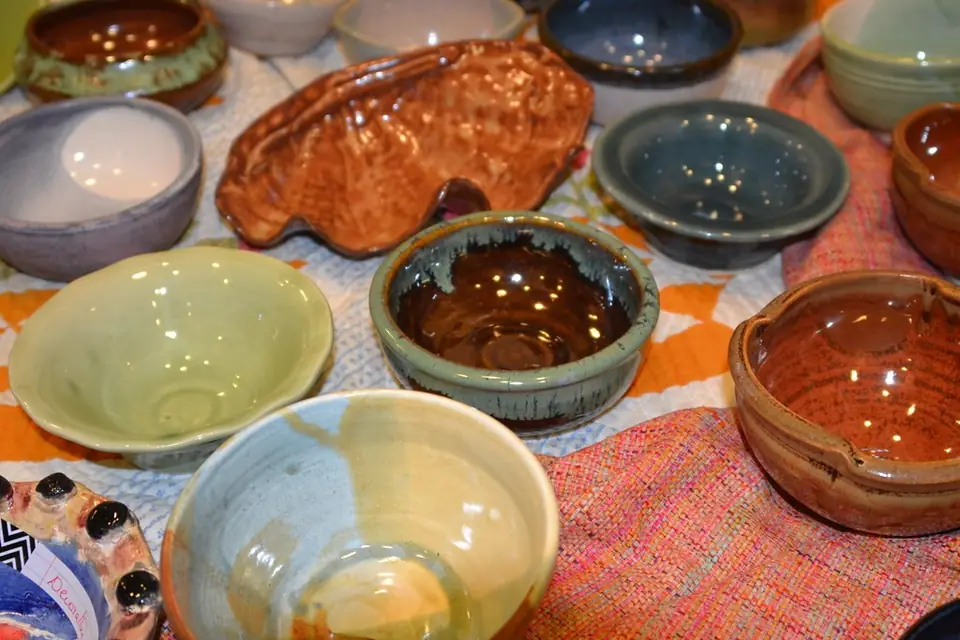
- Send a physical sample for each glaze colour and agree how much variation between pieces you accept.
- Heat use
- State dishwasher, microwave and oven use. A technical source calls stoneware more brittle against thermal shock, so any heat claim needs a test.
Tests for stoneware sets
- ASTM C424
- Crazing by autoclave, caused by moisture expansion. It is the crazing test aimed at non-vitreous and semi-vitreous ware such as stoneware.
- ASTM C373
- Water absorption, bulk density and apparent porosity of fired whiteware: the figure behind any dishwasher or microwave claim.
- EU Directive 84/500/EEC and US FDA
- Lead and cadmium limits: plates judged by area or a six-unit average, bowls and mugs per litre or unit by unit. Test every glaze colour.
- EN 1183 and EN 12875
- Thermal shock and dishwashing resistance. EN 12875 sets no cycle count, so state the temperatures and cycles you need.
Lead times and delivery
A set is ready only when every piece in it is fired, sorted and tested, and a new glaze colour needs trial firings and a lead test first. Kilns need steady gas for about 24 hours and usually 48 to 72 hours to restart after a cut, so ask how a gas cut would move your date. Roptan confirms dates and the minimum per set in the quote.
Roptan delivers stoneware sets to cafés, restaurants and shops anywhere in Bangladesh, packed as complete sets or by piece type, as your brief says. Sets are counted and checked on arrival, and broken pieces are photographed for the claim in the quote. Paperwork: the packing list, absorption and lead reports, and a VAT invoice (Mushak 6.3).
Buying stoneware sets for export
Stoneware and earthenware enter under HS heading 6912, a line in which Bangladesh's recorded tableware exports are very small, so most stoneware sets are bought for the home market. If you do import, Roptan quotes FOB Chattogram with the absorption report, a lead and cadmium report for each glaze colour and, for EU buyers, the declaration of compliance.
Questions buyers ask
Can stoneware go in the dishwasher and microwave?
Only when tested. Stoneware keeps some porosity, and a body that takes up water can weaken in the dishwasher and turn that water to steam in a microwave. Ask for absorption to ASTM C373, a limit near 1% for microwave use, and a dishwashing test on your set.
Why does stoneware craze?
Crazing is a crack network in the glaze. It appears when glaze and body expand differently with heat, or when the body takes up moisture over time. The autoclave test ASTM C424 checks moisture-expansion crazing on stoneware, so ask for it before bulk.
Are coloured glazes safe for food?
They must be tested, not assumed. FDA names bright orange, red and yellow ware as a problem type for lead, and acidic food can release metals from a poorly made or fired glaze. Ask for a lead and cadmium report on every colour.
What is the minimum order for a stoneware set?
It depends on the maker, the number of shapes and whether the glaze is new. A stock shape in an existing glaze needs less set-up than a new colour that needs trial firings. Roptan states the minimum per set and per colour in the quote.
How soon will I hear back about ceramics and tableware?
Within 48 hours of a complete requirement, with a price and a delivery date. A requirement is complete when it has the quantity, where it is needed and by when.
Who do I deal with?
With Roptan, when Roptan manages the order: we buy from the verified seller and deliver to you. With the supplier directly, when you post on the requirement board and choose a quote yourself.