Managed sourcing from Bangladesh, for export and for buyers at home
Get it sourced

Footwear and leather · Rubber products

Rubber glove and apron manufacturer in Bangladesh

Need a rubber glove and apron manufacturer in Bangladesh? Tell Roptan the task, chemicals, sizes and quantity. We source gloves and aprons from verified sellers, check test reports against the standard you name, and deliver to your factory, kitchen or plant.

  • Verified sellers
  • Checked before it ships
  • Delivered by Roptan

Get rubber gloves and aprons sourced

Prefer to deal with suppliers yourself? Post it on the requirement board

Buying rubber gloves and aprons in Bangladesh

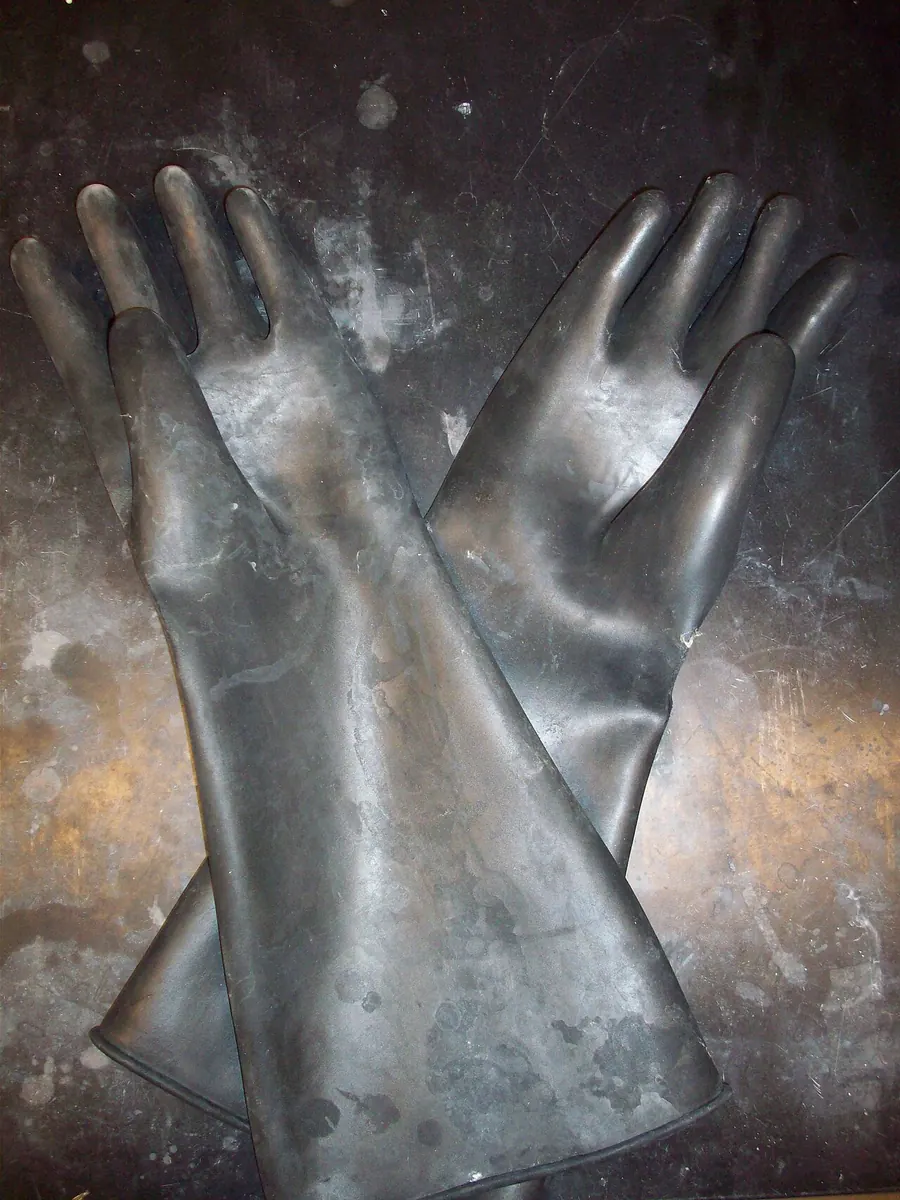
Rubber gloves are dipped from liquid latex or synthetic rubber into a thin glove without seams, with natural latex the most common material and nitrile, neoprene or PVC as alternatives. In Bangladesh factories, chemical plants, kitchens, clinics and cleaning contractors buy them by the carton, often with rubber aprons. The right glove depends on the chemical, the task and the wearer.

A rubber glove and apron manufacturer in Bangladesh can make the product, but the test report decides whether it protects. Roptan sources from verified sellers, asks for the report to the edition you name, checks size, length and marking, and delivers. You deal with Roptan only.

Kinds of rubber glove

Household latex gloves

The familiar washing-up and cleaning glove, usually natural latex. Choose them for general cleaning where no hazardous chemical is involved and no wearer has a latex allergy.

Supported gloves

A rubber coating over a textile glove. Choose them where grip and wear matter more than feel, such as handling wet, rough or heavy items all day.

Nitrile gloves

Nitrile resists tearing and many chemicals better than natural latex, and resists oil and fuel. Choose them for workshops, oil handling, food service and wearers allergic to latex.

Neoprene gloves

Polychloroprene stays flexible over a wide temperature range. Choose them when the breakthrough and degradation data for your substance favours neoprene over nitrile or latex.

Single-use examination gloves

Thin gloves for clinics and labs, covered by ISO 11193-1:2020 for rubber latex or rubber solution, sterile or non-sterile. Choose powder-free, and ask for EN 455 reports.

Electrical insulating gloves

A separate product under EN 60903 for live working, normally worn under leather protector gloves. Choose them only for electrical work, with a test certificate for the lot.

How to specify rubber gloves and aprons

Chemical and task
Name each chemical and how long hands stay in contact. Ask for breakthrough time, permeation rate and degradation data for that chemical, not just the material name.
Thickness and length
Thicker gloves usually protect more, thinner ones allow finer work. State thickness with a tolerance and the length, so the cuff covers the wrist or forearm.
Lining and grip
Say supported or unsupported, lined or unlined, and the grip finish you need for wet or oily handling.
Powder and allergy
Ask for powder-free. For shared workplaces choose nitrile or low-protein latex, and ask which accelerators are used, since their residues can also cause reactions.
Sizes and packing
Give the size split, pairs per bag and bags per carton, and the marking you want on each pack.
Aprons
State the rubber or coating, length, width, thickness, neck and waist ties, colour and what the apron must keep off. For chemical aprons, cite EN 14605. Approve a sample before bulk.

Glove standards and test reports

EN ISO 374-1
Gloves against dangerous chemicals. The 2016 edition is still in the EU catalogue, while ISO 374-1:2024 replaced it at ISO. Name the edition on the order and check which one the report follows.
EN 388:2016+A1:2018
Mechanical risks: abrasion, blade cut, tear, puncture and, where tested, impact. Ask for the test report, not only the pictogram on the pack.
EN ISO 21420:2020+A1:2024
General requirements for design, innocuousness, comfort and marking. It is used together with a specific glove standard, never alone.
EN 455 series
Single-use medical gloves: Part 1 freedom from holes, Part 2 physical properties, Part 3 biological evaluation, which asks for labelling and disclosure of test methods.
EN 60903:2004 and IEC 60903:2014
Insulating gloves and mitts for live working, in the European and the IEC editions. Ask for the test certificate covering the class and lot delivered.

What moves the price of rubber gloves and aprons

  • Material: latex, nitrile, neoprene and PVC are different raw materials with different costs.
  • Thickness and length: a thicker or longer glove or a longer apron uses more rubber.
  • Lining: a supported glove adds a textile glove under the coating.
  • Tests: reports to EN ISO 374-1, EN 388 or EN 455 add lab cost, more so for several chemicals.
  • Packing: individual pairs, printed packs and marked cartons cost more than bulk packing.

Lead times and delivery

No single lead time fits every order. It depends on whether your material, size and length are in stock, on a new colour or printed pack, on chemical or mechanical tests at a lab, and on sample approval for aprons. Roptan confirms the dates and the minimum quantity in the quote.

Roptan delivers gloves and aprons anywhere in Bangladesh, packed by size and marked with material, size and lot, with the packing list, any test reports and a VAT invoice (Mushak 6.3). Store cartons in a cool, shaded place, since sunlight and ozone age natural rubber.

What we check for this order

  • Report matches the gloveWe check that the test report names this glove, its material and thickness, and the edition of the standard on your order.
  • Chemical dataWe ask for breakthrough and degradation data for each chemical you list, not a generic chemical chart.
  • Size, length, thicknessWe measure samples from the lot against your sizes and stated thickness and length tolerances.
  • Marking and allergy labelsWe check pack marking and, for latex, the allergy information, against your order before delivery.

Questions buyers ask

Should I choose latex or nitrile gloves?

For oil, fuel and many chemicals, nitrile usually performs better, and it avoids latex protein allergy, estimated at about 4.3 percent of people worldwide. Latex gives good feel for general cleaning. For a named chemical, follow the breakthrough and degradation data, not the material name.

Which EN ISO 374-1 edition should the report follow?

Name it on the order. The 2016 edition with its 2018 amendment is still listed in the EU catalogue, while ISO 374-1:2024 replaced it at ISO level in July 2024. Ask the seller which edition the report follows and keep it with your safety file.

Are powdered gloves still acceptable?

The US FDA issued a rule in December 2016 banning powdered gloves for medical use, in force from January 2017. Powdered gloves are still made for other uses, but powder-free is the safer default, especially for gloves that may end up in clinics or in the US.

Can a nitrile glove still cause a skin reaction?

Yes. Some reactions come from residues of the chemicals used to speed up cross-linking, not from latex proteins. If staff react to nitrile gloves, ask the seller which accelerators are used and test an alternative on a few wearers first.

Is there a standard for rubber aprons?

Yes, for chemical aprons. EN 14605:2005+A1:2009 covers partial body protection against liquid chemicals and names aprons among its garments, setting requirements for the material and seams only. EN ISO 13688:2013+A1:2021 adds general requirements such as sizing, innocuousness and marking. Ask for the material test data for your chemical and approve a sample.

How soon will I hear back about rubber products?

Within 48 hours of a complete requirement, with a price and a delivery date. A requirement is complete when it has the quantity, where it is needed and by when.

Who do I deal with?

With Roptan, when Roptan manages the order: we buy from the verified seller and deliver to you. With the supplier directly, when you post on the requirement board and choose a quote yourself.

Other rubber product products

Each product type has its own page as it is published; until then its card opens the category form.

All rubber products