Buying powdered activated carbon in Bangladesh
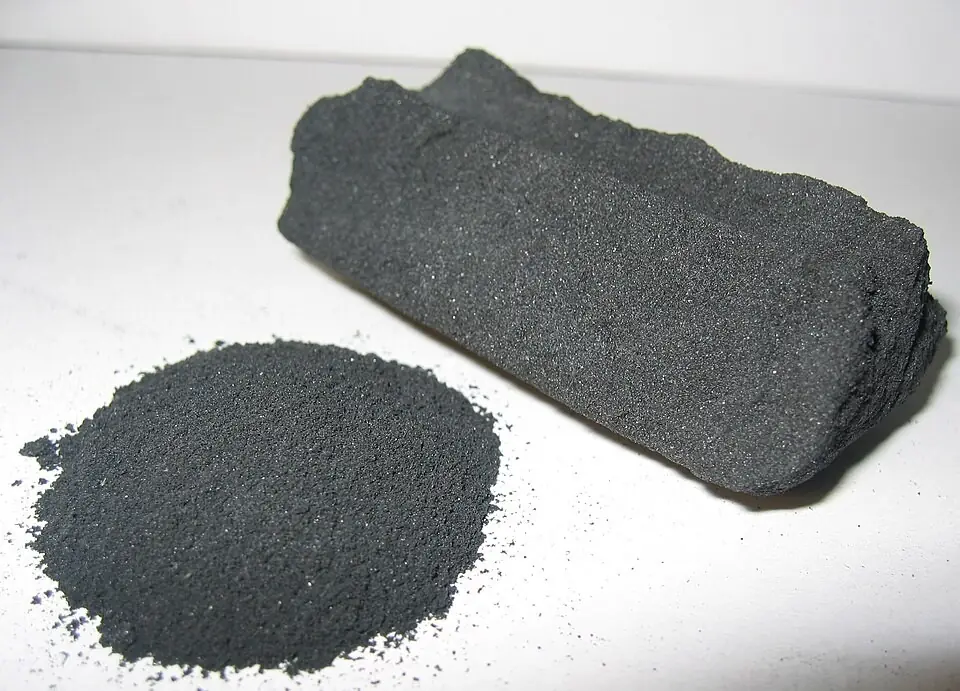
Powdered activated carbon, or PAC, is carbon ground fine enough to be predominantly smaller than 80 mesh. It does not sit in a vessel of its own. Plants dose it into the raw water intake, the rapid mix, a clarifier or the aeration tank of an effluent plant, and it leaves with the sludge. Water works and effluent plants use it against taste, odour and colour.
Because PAC is used up with every dose, the dose needed for the result matters as much as the price per kg. As your powdered activated carbon supplier in Bangladesh, Roptan gets quotes from verified sellers on one written specification, arranges a sample for a jar test and checks the lot certificate before each delivery.
How to specify powdered activated carbon
- Duty and dosing point
- Say what the carbon must remove and where it is dosed: intake, rapid mix, clarifier, filter or aeration tank.
- Fineness
- Give the fineness limit with its test method, usually air-jet sieving to ASTM D5158. Particle size is often used to judge filter cake filtration rates and filter penetration.
- Adsorption value
- Iodine number for general duty, molasses number or methylene blue for colour. Water-treatment carbons typically have iodine numbers of 600 to 1,100 mg/g.
- Ash and moisture
- Set both as limits. Moisture usually rises in transport and storage, so agree the limit as packed.
- Jar test
- Iodine number alone does not rank carbons for a specific job. Jar test a sample on your own water or effluent before you commit to a grade.
- Packing and dust
- Fine powder raises dust. Ask for dust-tight bags or drums sized to how you charge the dosing tank, and the safety data sheet.
Tests to ask a powdered activated carbon supplier in Bangladesh for
- ASTM D5158
- Particle size of PAC by air-jet sieving. Relative humidity can affect the result, so the test should run in controlled conditions, which matters in a humid climate.
- ASTM D4607
- Iodine number. Treat it as a figure for comparing carbons: ASTM notes it does not necessarily show how well a carbon adsorbs other substances.
- ASTM D2866 and ASTM D2867
- Total ash and moisture. Some activated carbons can self-ignite at temperatures as low as 150 degrees Celsius, so keep stock away from heat.
- EN 12903
- The European standard for powdered activated carbon that treats water for human consumption. Ask for a conformity statement when the dose goes into drinking water.
Lead times and delivery
A grade held in stock in Bangladesh usually arrives quickest. A grade brought in to order usually takes several weeks, as sea freight to Chattogram and customs clearance come before delivery, and a jar test or lab test adds days. Minimums depend on stock or import, and regular users can often agree call-offs. Roptan confirms the date and the minimum in the quote.
We deliver to your plant anywhere in Bangladesh in sealed, dust-tight packing, with the lot number on each bag matching the certificate of analysis. The safety data sheet to GHS and a VAT invoice (Mushak 6.3) come with the goods. Store the bags dry, closed and away from heat, and open them only for each charge of the dosing tank.
Questions buyers ask
When should I use PAC instead of a granular carbon bed?
Usually when the problem comes and goes, such as a seasonal taste, odour or colour spike, or when the carbon has to go into an existing clarifier or aeration tank. A fixed bed suits a steady load. PAC is not run in its own vessel, because the head loss would be high.
How much PAC will I need?
That depends on your water and the result you need, so no fixed dose applies. Run a jar test with the offered grade on your own water or effluent, then multiply the dose that works by your flow to get your monthly use. Send us that figure and we quote on it.
Can PAC go into the aeration tank of our ETP?
Yes, that is an established use. There it helps the biology cope with shock loads, and the carbon-biomass sludge usually settles, thickens and dewaters better than ordinary sludge. Some carbon leaves with every batch of wasted sludge, so plan for a steady supply.
Which carbon tests apply to PAC?
Iodine number (ASTM D4607), ash (D2866), moisture (D2867) and fineness by air-jet sieve (D5158). The density and particle size methods ASTM D2854 and D2862 are written for granular carbon, so they do not fit a PAC certificate; ask for the D5158 fineness result instead.
How soon will I hear back about filter media?
Within 48 hours of a complete requirement, with a price and a delivery date. A requirement is complete when it has the quantity, where it is needed and by when.
Who do I deal with?
With Roptan, when Roptan manages the order: we buy from the verified seller and deliver to you. With the supplier directly, when you post on the requirement board and choose a quote yourself.