Managed sourcing from Bangladesh, for export and for buyers at home
Get it sourced

Home and lifestyle · Charcoal and wood products

Particle board exporter in Bangladesh

Sourcing from a particle board exporter in Bangladesh? Tell Roptan the board type, thickness, sheet size, face and emission class. We source raw or melamine-faced board from verified sellers, check the test report per lot and deliver or ship FOB Chattogram.

  • Verified sellers
  • Checked before it ships
  • Delivered by Roptan

Get particle board sourced

Prefer to deal with suppliers yourself? Post it on the requirement board

Buying particle board in Bangladesh

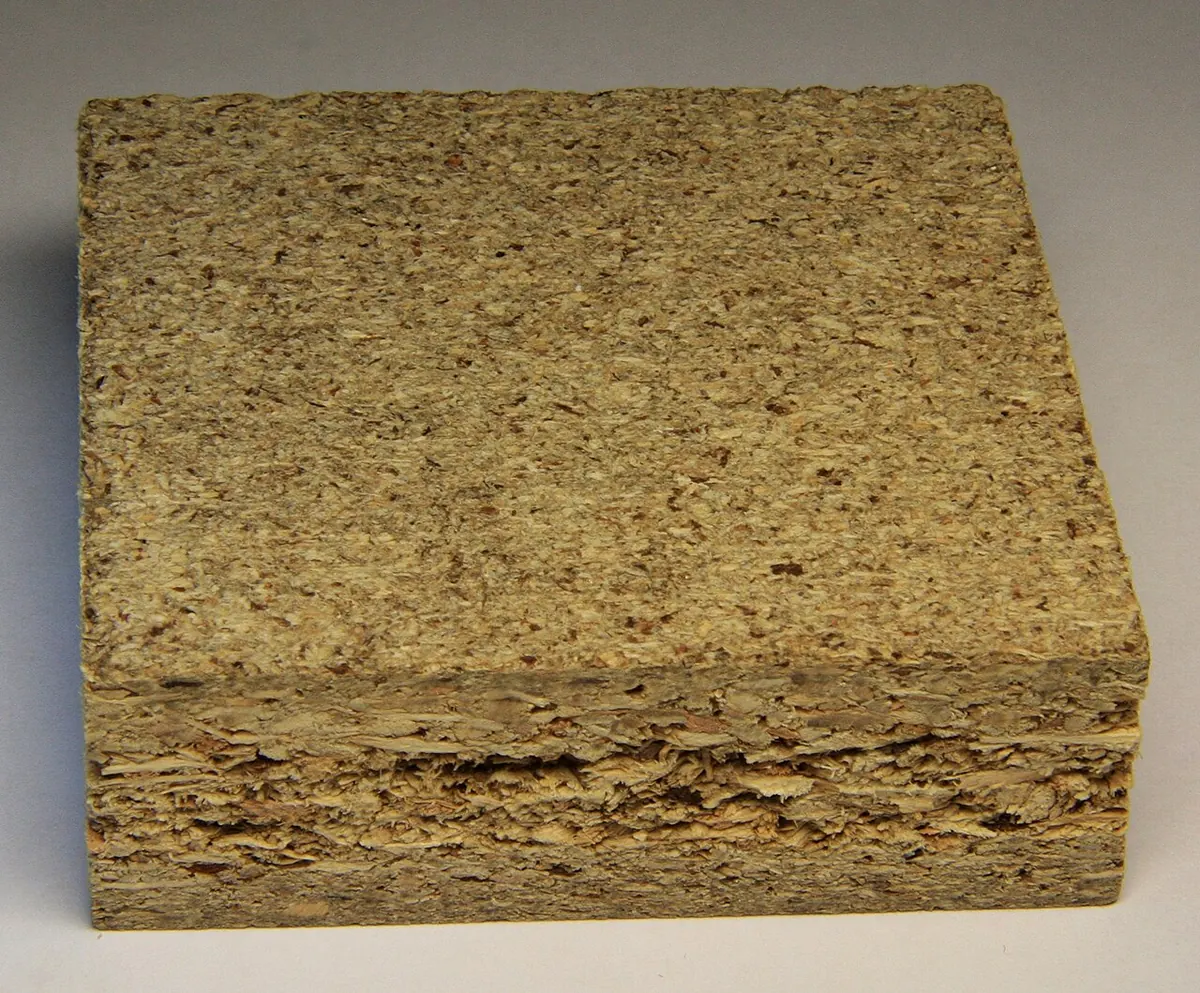
Particle board is an engineered panel of wood chips bonded with a resin, mostly formaldehyde-based, and pressed under heat. It is usually made in three layers, with fine particles on the faces for a smooth surface and coarser material in the core. Furniture makers and interior contractors buy it raw or faced. It is not OSB, which uses larger flakes and is stronger.

Moisture is the board's weak point, and the monsoon tests it in transit and in storage. A particle board exporter in Bangladesh should quote to a named EN 312 type and an emission class. Roptan matches your specification to verified sellers, checks the test report for each lot and checks the sheets on delivery.
Kinds of particle board

Raw three-layer board

Unfaced board with fine faces and a coarse core, ready for laminating, painting or veneering. Choose it when your own plant applies the face.

Melamine-faced board

Board with a melamine paper face for furniture and interiors, to EN 14322:2021, which replaced the withdrawn 2017 edition. Choose it for panels that need no further finish.

Moisture-resistant board

EN 312 type P3, non-load-bearing board for humid conditions. Choose it for kitchens, bathrooms and laundries, with sealed edges and the board kept under a continuous cover.

Load-bearing board

Types P4 to P7, for load-bearing or stiffening building elements in dry or humid conditions. Choose it for building and heavy-duty uses, and name the exact type.

No-added-formaldehyde board

Bonded only with pure pMDI resin and marketed as no-added-formaldehyde (NAF) board. Choose it when your market's emission rules are strict.

How to specify particle board

EN 312 type
P1 general purpose and P2 interior fitments including furniture, both for dry conditions; P3 non-load-bearing for humid conditions; P4 to P7 load-bearing or heavy-duty, dry or humid.
Thickness and sheet size
Thickness in mm, sheet length and width with tolerances, and the number of sheets.
Density and bond
Density in kg/m³ and the internal bond result. Denser grades are usually stronger and hold screws better.
Face and edges
Raw, melamine or veneer, the decor and the edge treatment. EN 312 covers unfaced board only, so a faced board needs its own face specification.
Resin and emission class
Urea-formaldehyde and melamine-urea-formaldehyde are the usual binders and the main source of formaldehyde. State the class: E1 for the EU, or TSCA Title VI for the US.
Use and climate
Where the board will go. For kitchens and bathrooms through Bangladesh's humid months, a humid type, P3 or higher, and sealed edges.

Standards and tests for particle board

EN 312:2010 and EN 309:2005
EN 312 sets requirements for unfaced flat-pressed particleboards, types P1 to P7, and replaced its 2003 edition; EN 309 defines and classifies particleboards.
EN 717-1 and the E1 class
EN 717-1:2004 is the chamber method for formaldehyde release from wood-based panels. E1 is the EU class for construction panels under EN 13986; ask for the class and the report.
TSCA Title VI
Particleboard sold or imported into the US must be certified by an EPA-recognised third-party certifier and labelled TSCA Title VI compliant under 40 CFR Part 770.
ASTM D1037
Test methods for particle panels: bending, tension, screw and nail holding, hardness, water absorption and thickness swelling among them.

What moves the price of particle board

  • Thickness and sheet size: more board means more wood and resin in each sheet.
  • Density: a denser board uses more material for the same sheet.
  • Face: a melamine or veneer face adds a pressing step to the raw board.
  • Resin and emission class: the binder chosen to meet a low emission class, or a pMDI bond for NAF board, changes the cost.
  • Tests: a report for each lot against the EN 312 type and the emission class.

Lead times and delivery

No fixed lead time applies. Board from stock moves faster than board pressed or faced to order. A particular decor, an emission class, a test report for each lot and a large sheet count all add time. Roptan confirms the dates and the minimum quantity in the quote.

Inside Bangladesh we deliver to factories, workshops and sites, counted by sheet against the order, with the test report and a VAT invoice (Mushak 6.3). Sheets should arrive flat, wrapped and stacked off the ground: board that has sat wet in a monsoon yard will not recover.

Buying particle board for export

We quote FOB Chattogram (Chittagong). Plain particle board sits under HS subheading 441011, apart from OSB; your customs broker confirms the line. The board is processed wood and needs no ISPM 15 mark itself. Heading 4410 is in Annex I of the EU Deforestation Regulation, so EU importers of board made from wood will need due diligence from the dates the Commission sets, now 30 December 2026 for large and medium operators.

What we check for this order

  • Test report per lotDensity, internal bond, thickness swelling and formaldehyde class against the EN 312 type you ordered.
  • The board you orderedParticle board, not OSB or fibreboard, in the type, thickness and face on the order.
  • Edges and cornersA visual check for chipping and swelling at edges and corners when the sheets arrive.
  • Flat and drySheets wrapped, flat and stored off the ground, since moisture swells particle board.

Questions buyers ask

Can particle board be used in a kitchen?

Yes, with care. Particle board swells and discolours when it takes up moisture, especially unsealed, so it is rarely used where moisture is high unless shielded under a continuous sheet. Order a humid type, P3 or higher, seal every cut edge, and keep it off wet floors.

What is the difference between particle board and OSB?

Particle board is pressed from small chips with a resin; OSB uses larger flakes and is stronger. EPB also records plain particle board on its own line, 441011, apart from the line that includes OSB. Name the board you want, so a quote is not for the other one.

Which formaldehyde papers do I need?

For the EU, the E1 class with a report, for example by the EN 717-1 chamber method. For the US, certification by an EPA-recognised third-party certifier and the TSCA Title VI compliant label. Tell us the market and we check the papers before shipping.

Does particle board need ISPM 15 treatment?

No. ISPM 15 exempts wood packaging made wholly of processed wood such as particle board, plywood or OSB. Solid-wood pallets or crates used to ship the board still need heat treatment and the mark.

How soon will I hear back about charcoal and wood products?

Within 48 hours of a complete requirement, with a price and a delivery date. A requirement is complete when it has the quantity, where it is needed and by when.

Who do I deal with?

With Roptan, when Roptan manages the order: we buy from the verified seller and deliver to you. With the supplier directly, when you post on the requirement board and choose a quote yourself.

Other charcoal products

Each product type has its own page as it is published; until then its card opens the category form.

All charcoal and wood products