Buying melamine tableware in Bangladesh
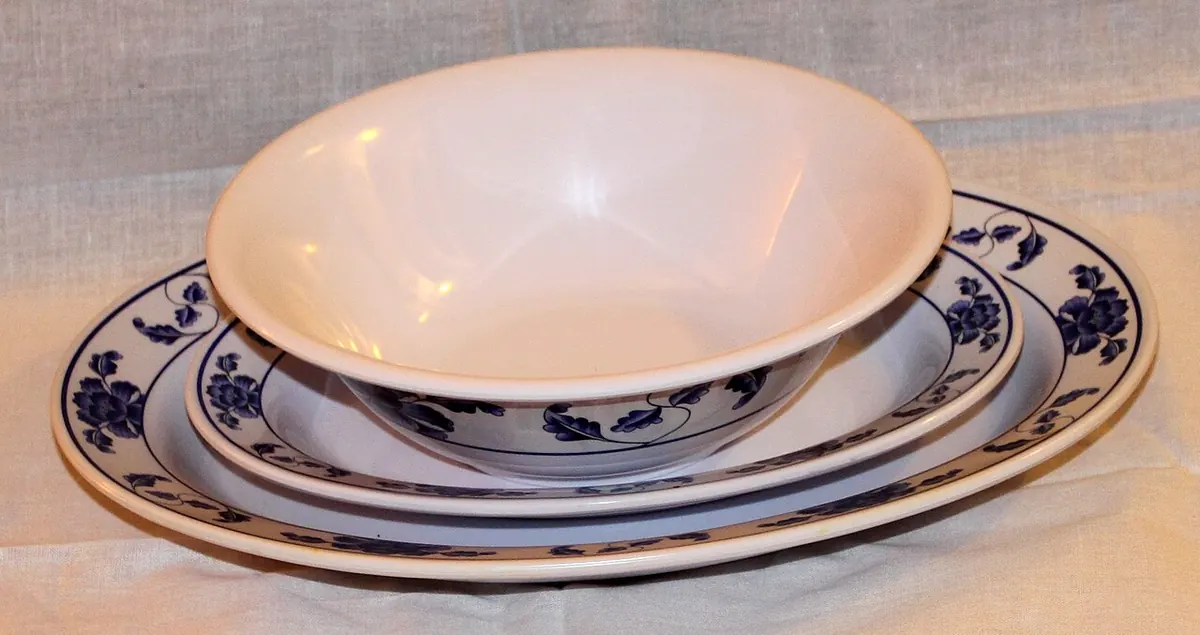
Melamine tableware is pressed, not injection moulded: melamine resin powder goes into a mould, the press closes under high pressure, and the resin sets hard. The result is a hard plate, bowl or cup that does not re-melt. Hotels, canteens, schools, caterers and households buy it in Bangladesh, and importers buy printed sets for retail.
The risk sits in what the plate releases into food, and that changes with each colour and decal. A melamine tableware manufacturer in Bangladesh should test every design, not one resin. Roptan sources from verified, licensed moulders, asks for the reports per design, and checks the bulk against the approved samples.
How to brief a melamine tableware manufacturer in Bangladesh
- Compound and filler
- Name melamine or urea moulding compound, and ask for a written statement that no bamboo or other plant fibre is in the resin.
- Hottest use
- Melamine is usually described as not microwave safe. State the hottest realistic use, such as hot soup, acid food or a hot wash, and test at it.
- Migration per design
- Ask for melamine and formaldehyde results on every design, colour and decal. Reusable ware is tested three times with fresh simulant; the third result counts and must not exceed the earlier ones.
- Acid foods
- If the ware will hold pickles, tomato or citrus, the test uses 3 % acetic acid, the EU simulant for foods below pH 4.5.
- Decals and colours
- Say where the decal sits, on the food side or not. For the EU, cadmium in melamine-formaldehyde must stay below 0.01 % by weight; ask for heavy-metal results.
- Dishwasher claim
- A 'dishwasher safe' claim needs a report to EN 12875-1, which tests domestic articles under a domestic dishwasher's heat, chemicals and movement.
Standards and limits for melamine ware
- BDS 1425:2009
- Tableware made of melamine moulding compound. It is on BSTI's mandatory certification list, so ware sold in Bangladesh should carry the BSTI mark under licence.
- EU limits under Regulation (EU) 10/2011, as amended
- Melamine migration of no more than 2.5 mg/kg of food; formaldehyde and hexamethylenetetramine together no more than 15 mg/kg, expressed as formaldehyde.
- 21 CFR 177.1460
- The US section for melamine-formaldehyde moulded articles: chloroform-soluble extractives of no more than 0.5 mg per square inch of food-contact surface.
- BDS 1976:2020
- BSTI's method for overall migration of constituents of plastics, which a local lab can cite in a report for the home market.
Lead times and delivery
Dates depend on whether moulds exist for your shapes, on decal printing and approval, and on lab time: each design needs its own migration report, run three times. New shapes need new compression moulds. Roptan confirms the dates and the minimum order per design in the quote.
Inside Bangladesh, Roptan delivers to hotels, canteens, caterers, shops and warehouses in Dhaka, Chattogram and elsewhere, in sets or by piece. Each lot comes with the packing list, the BSTI licence details, the migration reports per design and a VAT invoice (Mushak 6.3).
Buying melamine tableware for export
For importers Roptan quotes FOB Chattogram (Chittagong). Melamine kitchenware usually sits under tariff subheading 3924.10; your broker confirms the line. The EU's special import checks on melamine kitchenware cover goods from China and Hong Kong, not Bangladesh, but the same limits apply. For Japan, resin and additive records should match its Positive List. Documents include the declaration of compliance, reports, certificate of origin and the seller's ERC.
Questions buyers ask
Can a Bangladeshi maker supply bamboo melamine plates for Europe?
No, not as a plastic with plant fibre. EU authorities treat bamboo powder in plastic as unauthorised; a campaign across 21 Member States reported 748 cases of such products. A 2025 study also found melamine in 20 of 21 samples labelled bamboo.
Does every design need its own migration test?
Yes. The decal, the colour and the finish change what a plate releases, so ask for melamine and formaldehyde results per design, with the three repeat runs the EU sets for reusable ware. A report on one plain plate does not cover a printed range.
Do we need a BSTI licence to sell melamine plates in Bangladesh?
Yes. Tableware made of melamine moulding compound, BDS 1425:2009, is on BSTI's list of products under mandatory certification marks, as is urea tableware under BDS 1825:2011. Roptan checks the seller's licence before the order and that the mark appears on the ware.
How is the US rule different from the EU one?
The US sets an extractives limit on the finished article: 0.5 mg of chloroform-soluble extractives per square inch of food-contact surface under 21 CFR 177.1460. The EU instead limits melamine and formaldehyde migration per kg of food. Export ranges for both markets need both reports.
How soon will I hear back about plastic household goods?
Within 48 hours of a complete requirement, with a price and a delivery date. A requirement is complete when it has the quantity, where it is needed and by when.
Who do I deal with?
With Roptan, when Roptan manages the order: we buy from the verified seller and deliver to you. With the supplier directly, when you post on the requirement board and choose a quote yourself.