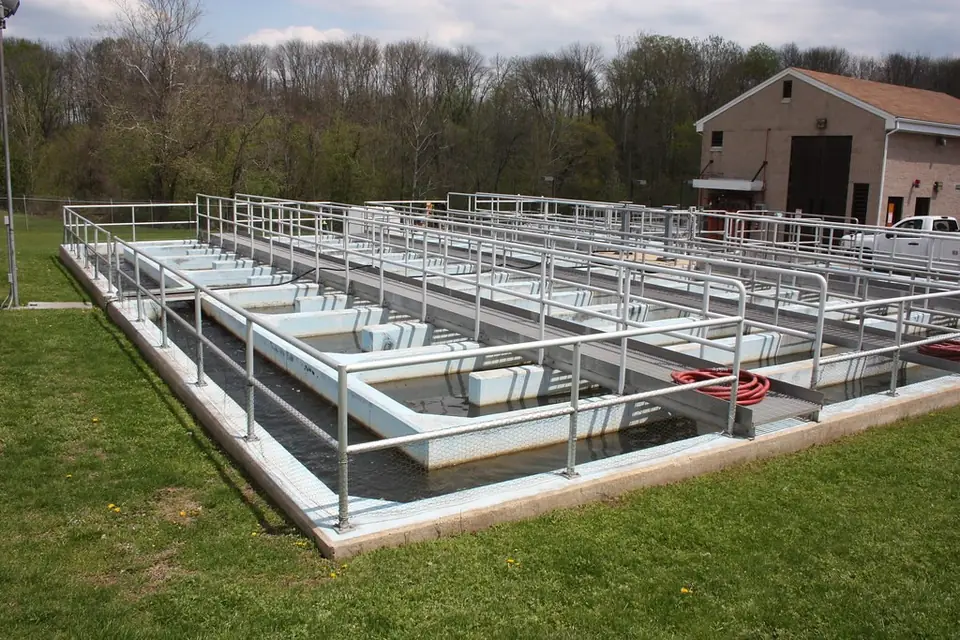
Buying MBBR STP in Bangladesh
An MBBR STP treats sewage in an aerated tank holding small plastic carriers. Bacteria grow on them as a biofilm, and the carriers move freely as air is blown in. The process came out of Norway in the late 1980s and is used for municipal, industrial and decentralised treatment. Biofilm needs less space than activated sludge, which suits hospitals, hotels and apartment buildings in Bangladesh with small plant rooms.
An MBBR STP supplier in Bangladesh should state exactly what is in the tank: carrier type, protected surface area and fill. We have verified sellers quote those to one design basis, compare them line by line, check a working plant and deliver yours. The seller installs and commissions it, or post on our board.
How to specify an MBBR STP
- Carrier type and material
- Carriers vary in shape and surface area. High-density polyethylene is the most preferred carrier material. Ask for the protected surface area per m³ of carrier.
- Fill fraction
- Carriers can take up to 70 percent of the tank, and the fill can be adjusted. Ask for the design fill and the spare room left for growth.
- Aeration grid and sieve
- The aeration grid moves the carriers and supplies oxygen; the sieve keeps them in the tank. Ask for the sieve size, material and how it is cleaned.
- Nitrogen target
- Say whether the outlet must remove nitrogen as well as BOD and COD. That decides between continuous and intermittent aeration and the tank count.
- Settling after the reactor
- The plant still makes some sludge, less than activated sludge but not none. Ask how the plant settles or filters it out and where the waste sludge goes.
Standards and tests for MBBR plants
- ECR 2023 discharge limits
- The plant must meet the ECR 2023 limits of the Environment Conservation Rules 2023, and the design basis should state the limits the seller guarantees.
- EN 12255-7
- The European part on biological fixed-film reactors, the nearest design reference for a biofilm process. A seller may cite it voluntarily; it is not a Bangladesh rule.
- ISO/IEC 17025 and ISO 5815-1
- Outlet samples go to an accredited lab and BOD is measured to ISO 5815-1. The result takes five days, so allow for it in the test plan.
Lead times and delivery
Time depends on the plant, so Roptan quotes dates for each order rather than a standard figure. An imported unit takes longer for sea freight and customs clearance at Chattogram. A retrofit into existing tanks depends on when the old plant can be taken out of service. Start-up waits for biofilm to grow on the carriers. Roptan confirms the dates and any minimum in the quote.
We deliver the tanks, carriers and equipment to your site anywhere in Bangladesh. The seller installs them, fills the carriers to the design fraction, seeds the plant and runs it until the outlet meets the agreed limits. Handover includes the carrier data sheet, drawings, lab reports, operating manual and a VAT invoice (Mushak 6.3).
Questions buyers ask
Does an MBBR STP produce sludge?
Yes, though lower sludge production is listed among its advantages. Excess solids leave the reactor with the water and must be separated and removed. An MBBR needs no sludge return line, but it still needs a settling or filtering stage and a sludge outlet.
Can MBBR upgrade our existing STP?
Often. MBBR is often installed as a retrofit of activated sludge tanks, adding carriers to raise capacity without a larger footprint. The seller has to check the tank, the aeration and the sieves, and show the new design load before you order.
How does an MBBR handle flows that change through the day?
It is built for them. Its listed advantages include a response to load swings without operator action and resilience to toxic shock. That does not remove the need for service: blowers, sieves and carriers still need regular checks, and the settling stage needs its sludge removed.
What usually goes wrong with an MBBR plant?
Named problems are bioclogging and head loss, a blocked feed pipe or outlet sieve, uneven mixing, carriers overflowing and carriers breaking up. Ask the seller how the design prevents each one, and what each service visit checks and writes down.
How soon will I hear back about STP?
Within 48 hours of a complete requirement, with a price and a delivery date. A requirement is complete when it has the capacity, where it is needed and by when.
Who do I deal with?
With Roptan, when Roptan manages the order: we buy from the verified seller and deliver to you. With the supplier directly, when you post on the requirement board and choose a quote yourself.