Buying kilims and dhurries in Bangladesh
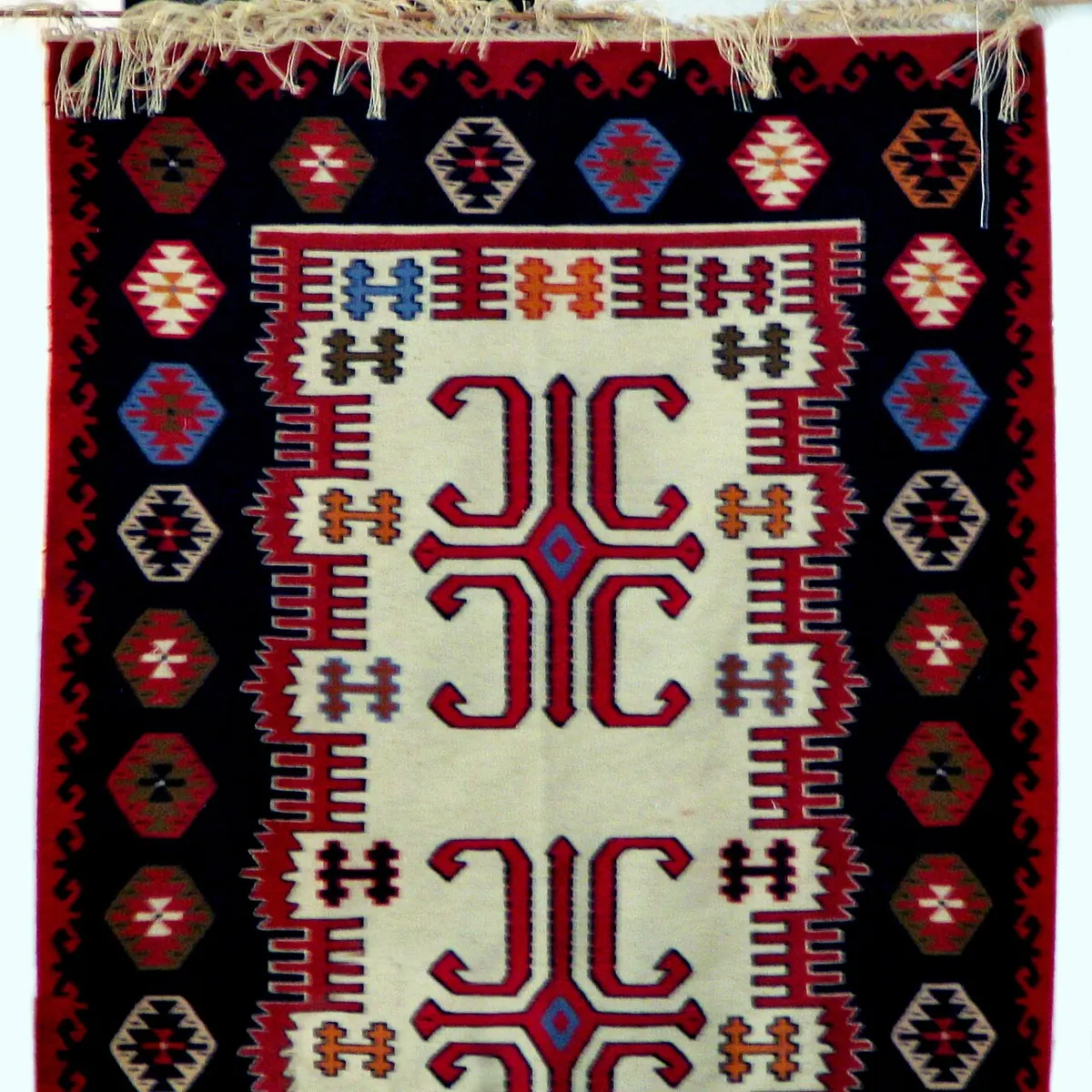
Kilims and dhurries are flatwoven rugs with no pile. A kilim is a tapestry weave traditionally from Iran, Turkey and nearby regions, its design carried by the weft; a dhurrie is the thin, foldable flat rug of the Indian subcontinent, in cotton, wool, jute or silk. Bangladesh has its own: Rangpur's shataranji, a geographical indication held by BSCIC. Homes, hotels and importers buy all three.
Flatweaves can go wrong in three places: dark wefts that bleed into pale ones, fringes that loosen and rugs that will not lie square. Roptan finds a kilim and dhurrie manufacturer in Bangladesh for your weave, writes the ends and picks, yarn and colour tests into the order, checks the bulk, and delivers or ships it.
How to brief a kilim and dhurrie manufacturer in Bangladesh
- Ends and picks
- Threads per centimetre in warp and weft, often stated per 10 cm, counted to ISO 7211-2; in a dispute its dissection method takes precedence.
- Slits or interlock
- Say whether slits are acceptable at colour boundaries or whether the wefts must interlock, and mark it on the artwork.
- Warp and weft yarn
- Fibre, count and ply for both. The weft carries the design, so give the weft colour sequence with the artwork.
- Fringe and ends
- Warp ends usually form the fringe and are tied in bunches so the weave does not loosen. State fringe length, knotting and any binding.
- Weight and size change
- Mass in g/m² to ISO 8543, and a limit on size change and distortion out of plane after water and heat, tested to ISO 2551.
- Packing fold
- Dhurries are light and foldable, which helps packing and freight. Say whether you want them folded or rolled, and the fold size.
Tests and labels for kilims and dhurries
- ISO 105-X12 and ISO 105-C06
- Rubbing, dry and wet, and washing fastness, which matter where dark wefts sit beside pale ones in borders and motifs.
- US 16 CFR 1630 and 1631
- The pill test splits at 6 ft and 24 sq ft and applies whatever the fibre or the method of making, so hand-loomed flatweaves are tested too.
- Fibre labels, US and EU
- Rugs are floor coverings under 16 CFR 303, and Regulation (EU) No 1007/2011 does not exempt them, so fibre names and percentages go on the label.
- REACH azo dyes
- Entry 43 restricts azo dyes that release listed amines above 30 mg/kg in textiles in direct and prolonged skin contact. Rugs are not named, so an azo report is usually a contract term.
Lead times and delivery
Weaving time grows with size and with the number of colours, so a large, detailed kilim takes longer than a plain striped dhurrie. Custom shades add yarn dyeing and drying before the loom, slower in the monsoon, and fringe tying and finishing come last. Roptan confirms the dates and the minimum per design in the quote.
Inside Bangladesh we deliver dhurries folded and kilims folded or rolled, wrapped against damp, to homes, hotels, offices and showrooms anywhere in the country, with a packing list by design and size, any test reports ordered and a VAT invoice (Mushak 6.3).
Buying kilims and dhurries for export
For importers we quote FOB Chattogram. Customs classify flatweaves by how the weft is woven, not by the names kilim or dhurrie, so describe the weave on the proforma. Papers: commercial invoice, packing list by design and size, certificate of origin and the lab reports your market asks for, after an AQL inspection under ISO 2859-1.
Questions buyers ask
What is the difference between a kilim and a dhurrie?
Both are flatwoven rugs without pile. Kilim is the name from Iran, Turkey and nearby regions, usually a tapestry weave with a wool weft; dhurrie is the subcontinent's flat rug in cotton, wool, jute or silk. The names overlap in trade, so specify the weave itself.
Are slits in a kilim a fault?
No. In a slit-woven kilim the weft turns back at each colour boundary, so straight vertical edges leave small slits by design. If you do not want them, ask for interlocked wefts, which close the gap and give a softer outline, and mark it on the order.
Does a handmade kilim avoid the US flammability test?
Usually not. A one-of-a-kind antique or Oriental rug may be excluded under conditions set by the CPSC, but a production run of one design is not one of a kind. Large rugs follow 16 CFR 1630 and small ones 1631, tested on the construction you buy.
Why are dhurries folded rather than rolled?
They are thin, light and foldable, which saves space in packing and freight. Rolling is still an option for large or stiff pieces; say which you want, and the fold size, in the order so the cartons are planned from the start.
How soon will I hear back about carpets and rugs?
Within 48 hours of a complete requirement, with a price and a delivery date. A requirement is complete when it has the quantity, where it is needed and by when.
Who do I deal with?
With Roptan, when Roptan manages the order: we buy from the verified seller and deliver to you. With the supplier directly, when you post on the requirement board and choose a quote yourself.