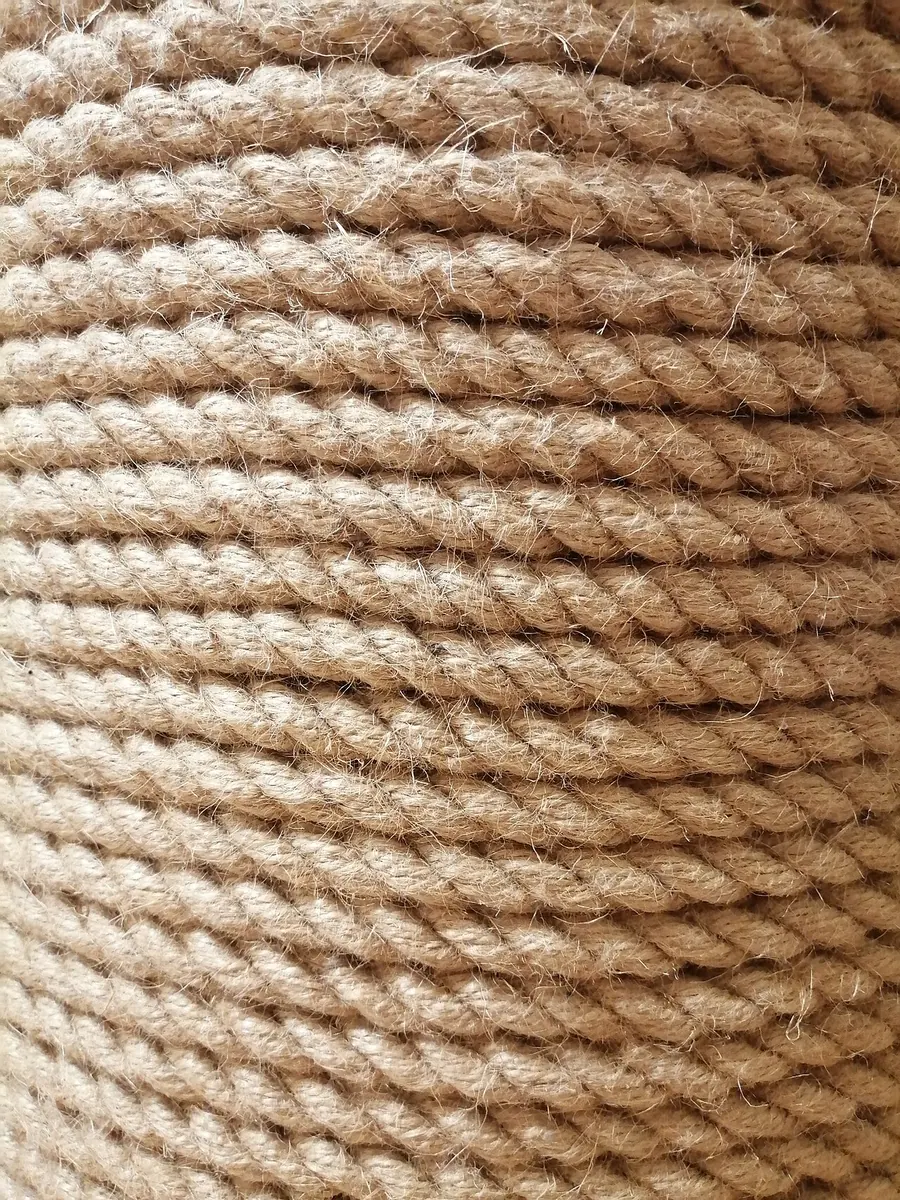
Buying jute twine in Bangladesh
Jute twine is two or more jute yarns, each twisted, then plied together in the opposite direction: thicker than thread, thinner than rope. It ties plants and saplings, stitches sacks, binds bales, and goes into craft and packaging work. A jute twine manufacturer in Bangladesh usually sells it by base count and ply on spools for industry, and by diameter and length on balls for shops.
Roptan sources jute twine from verified mills. We get the base count, ply, finish and pack written into the quote, check the twine against it, ask for a breaking force test on the size you buy, and deliver in Bangladesh or ship it. You deal with Roptan only.
What a jute twine manufacturer in Bangladesh needs from you
- Base count and ply
- The base yarn count in lb per spyndle, usually 6 to 28 lb, and the ply, single up to 8. One spyndle is 14,400 yards; 8 lb is about 276 tex.
- Diameter and length
- For balls and retail spools, the diameter in millimetres and the length per ball, such as 2 mm by 100 m, with a length tolerance.
- Breaking force
- Minimum breaking force of the finished twine, measured by the ISO 2307 method on the size you buy, from a named lab.
- Finish and colour
- Natural, bright, bleached or dyed, polished or not. For dyed twine, ask for an azo amine test such as ISO 14362-1.
- Fibre and oil
- The jute grades and any mesta share, which Bangladeshi law counts as jute, and whether the batching oil is mineral or vegetable.
- Pack
- Balls, spools of about 0.5 to 15 kg with or without a core, or hanks; outer packing such as 50 kg bags or cartons, and retail labels.
Tests and standards for jute twine
- ISO 2307
- The test method for fibre ropes: linear density, diameter, elongation and breaking force. With no ISO jute twine standard, it is the nearest method to name, by agreement.
- ISO 4167 and ISO 5080
- Agricultural twine standards for polyolefin and for sisal. They show what a twine specification covers; for jute, your order carries those requirements.
- ISO 2060
- Count of the base yarn by the skein method, for single and plied yarns up to 2,000 tex. Use it to check the lb figure before plying.
Lead times and delivery
Twine from a running count and ply on standard spools usually ships sooner than dyed, bleached or polished twine, labelled retail balls, or a lot held for a breaking force test, and a poor raw jute crop can tighten supply. Roptan confirms the dates and the minimum for your pack, spools or balls, in the quote.
Inside Bangladesh, we deliver spools in bags or cartons, or retail balls in cartons, by covered truck to your sack mill, nursery, packing line or store, with the packing list, the lot test report and a VAT invoice (Mushak 6.3).
Buying jute twine for export
We quote FOB Chattogram, or FOB Mongla for mills near Khulna. Plied jute yarn usually falls under HS 5307.20, while heavier cordage above 2,000 tex falls under 5607.90; a customs broker settles the code. Documents usually cover the commercial invoice, packing list, bill of lading, certificate of origin and the test report, with a REX statement on origin for EU GSP.
Questions buyers ask
What is the difference between jute twine and jute yarn?
Twine is plied: two or more twisted yarns are twisted together in the opposite direction. Single jute yarn goes to weavers, while twine is sold for tying, stitching, binding and craft. Both use the same lb per spyndle count for the base yarn.
How do I specify twine for retail balls?
By diameter and length, for example a 2 mm by 100 m ball of 2-ply natural twine, plus colour, ball weight, label and balls per carton. Approve a sample ball before bulk, since diameter alone does not fix the weight per metre.
Is there a standard for jute twine?
ISO's rope list has no jute twine product standard; it covers polyolefin and sisal agricultural twines. So the order is the standard: base count, ply, diameter, length and breaking force, with ISO 2307 named as the test method, agreed in writing.
Can you supply both bulk spools and retail balls?
Yes. Industrial twine on spools of about 0.5 to 15 kg is ordered by count and ply; retail balls by diameter and length, with your own labels. Roptan states the minimum and the dates for each pack, spools or balls, in the quote.
How soon will I hear back about jute yarn and twine?
Within 48 hours of a complete requirement, with a price and a delivery date. A requirement is complete when it has the quantity, where it is needed and by when.
Who do I deal with?
With Roptan, when Roptan manages the order: we buy from the verified seller and deliver to you. With the supplier directly, when you post on the requirement board and choose a quote yourself.