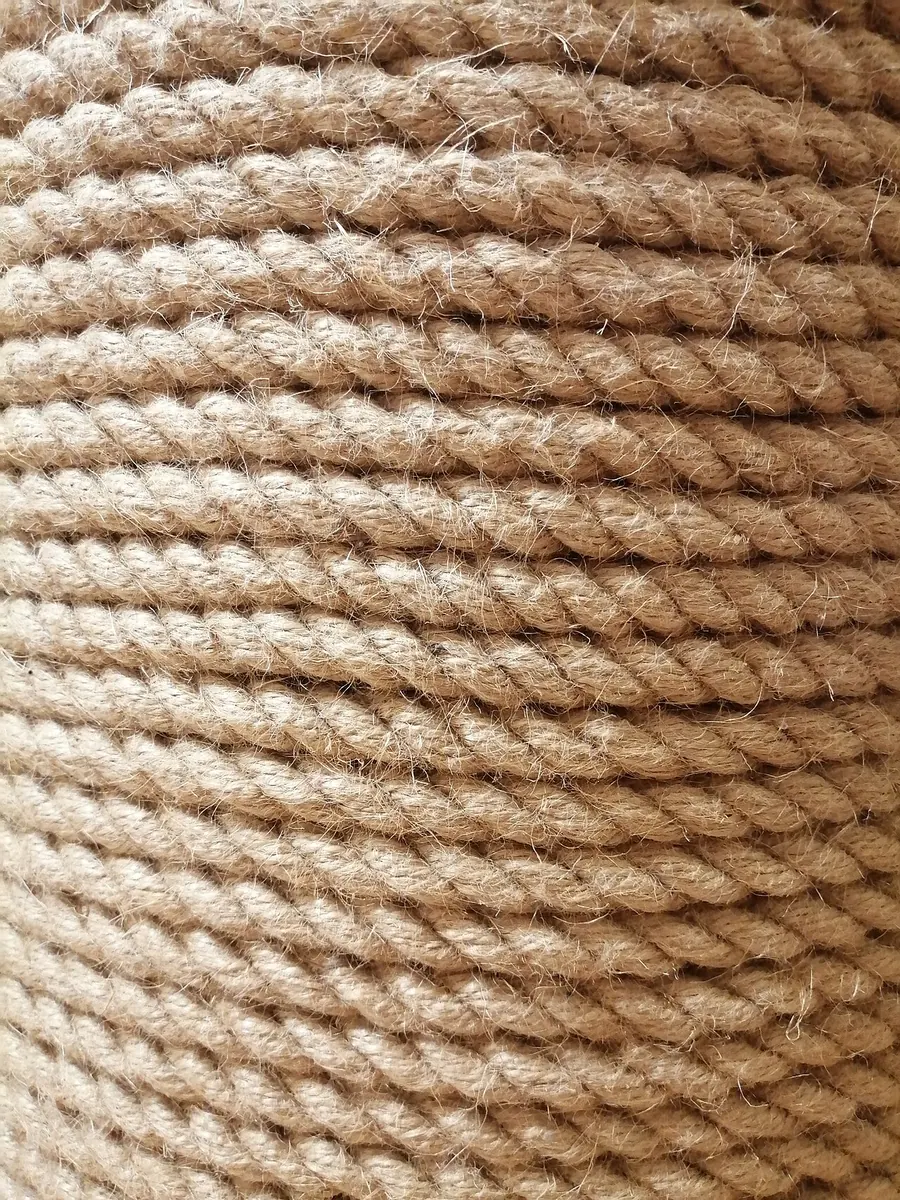
Buying hessian yarn in Bangladesh
Hessian yarn is the medium-coarse jute yarn woven into hessian, a cloth lighter than sacking that becomes bags, wrappers, wall coverings, upholstery and home furnishings. Hessian weavers in Bangladesh and abroad buy it as separate warp and weft yarns. A hessian yarn manufacturer in Bangladesh, usually a spinning mill around Narayanganj or Khulna, quotes it by count, fibre mix and batching oil.
A lot spun heavier than agreed changes the weight of your cloth. Roptan sources hessian yarn from verified mills, writes both counts, the fibre mix and the oil into the order, checks the lot report, and delivers to your mill or ships it. You deal with Roptan only.
Briefing a hessian yarn manufacturer in Bangladesh
- Warp and weft counts
- Both counts in lb per spyndle, pounds per 14,400 yards, with tex beside each: 1 lb is about 34.45 tex. Add a tolerance; a higher number means a heavier yarn.
- Fibre mix
- The Tossa and white grades and any mesta share. Bangladeshi law counts mesta, or kenaf, as jute, so write the mix into the order.
- Batching oil
- Jute is softened with an oil emulsion before carding, usually mineral oil. Name the oil in the order; for food bags, name vegetable oil.
- Strength
- Breaking load and the spinners' quality ratio: strength in pounds over count in lb per spyndle, times 100. Ask for both per lot.
- Moisture regain
- Jute is usually invoiced at a contract regain. An Indian hessian cloth standard uses 16 percent; for yarn, put your own figure in the order.
Tests and papers for hessian yarn
- ISO 2060 count, ISO 2062 strength
- Count by the skein method, for yarns up to 2,000 tex, and breaking force on a constant-rate-of-extension tester, dry or wetted. Ask which method each mill used.
- ISO 139
- The standard atmosphere for conditioning and testing textiles. Jute gains and loses moisture with the air, so name the test atmosphere in the contract.
- IJO Standard 98/01
- The food-grade jute standard the cocoa trade names, based on vegetable batching oil. Ask for a test report to IJO Standard 98/01 on your lot.
Lead times and delivery
Running counts from a mill's regular batch usually load sooner than a new count, vegetable-oil batching, bleached or dyed yarn, or a lot held for a lab test. A poor raw jute crop can tighten fibre supply. For export, the minimum is usually one 20-foot container. Roptan confirms the dates and the minimum in the quote.
Inside Bangladesh, we deliver spools from about 100 g to about 25 kg, cops or hanks, by covered truck to your mill. Jute takes up moisture from the air, so the packing list shows measured regain and corrected net weight, with the lot test report and a VAT invoice (Mushak 6.3).
Buying hessian yarn for export
We quote FOB Chattogram, or FOB Mongla for mills on the Khulna side. The yarn ships under HS 5307: single yarn at 5307.10, plied yarn at 5307.20. Documents usually include the commercial invoice, packing list with lot numbers and corrected net weights, bill of lading, certificate of origin, the lot test report and, for EU GSP, a REX statement on origin.
Questions buyers ask
What count is hessian yarn?
Usually 7 to 9 lb per spyndle for warp and 7 to 12 lb for weft, about 241 to 310 and 241 to 414 tex. Mills differ, so give both counts with a tolerance. A higher lb figure is a heavier yarn, the reverse of cotton counts.
Is hessian yarn spun from Tossa or white jute?
Usually from a blend. Tossa is generally softer, silkier and stronger than white jute, and mills batch several grades to reach a count. One teaching batch for an 8.25 lb warp is 60 percent Tossa, 30 percent white and 10 percent mesta. State your mix.
Can hessian yarn be used for food bags?
Yes, if it is ordered for it. Ask for vegetable batching oil and a test report to IJO Standard 98/01 on the lot. A 2024 cocoa-industry study still found mineral oil hydrocarbons in some jute bags, so also ask for a MOSH and MOAH analysis.
Why does invoice weight differ from scale weight?
Jute is usually invoiced at a contract moisture regain: net weight times (100 plus contract regain), divided by (100 plus measured regain). Damp yarn weighs more, so the correction stops you paying for water. Agree the regain figure before you order.
How soon will I hear back about jute yarn and twine?
Within 48 hours of a complete requirement, with a price and a delivery date. A requirement is complete when it has the quantity, where it is needed and by when.
Who do I deal with?
With Roptan, when Roptan manages the order: we buy from the verified seller and deliver to you. With the supplier directly, when you post on the requirement board and choose a quote yourself.