Buying jelly sweets in Bangladesh
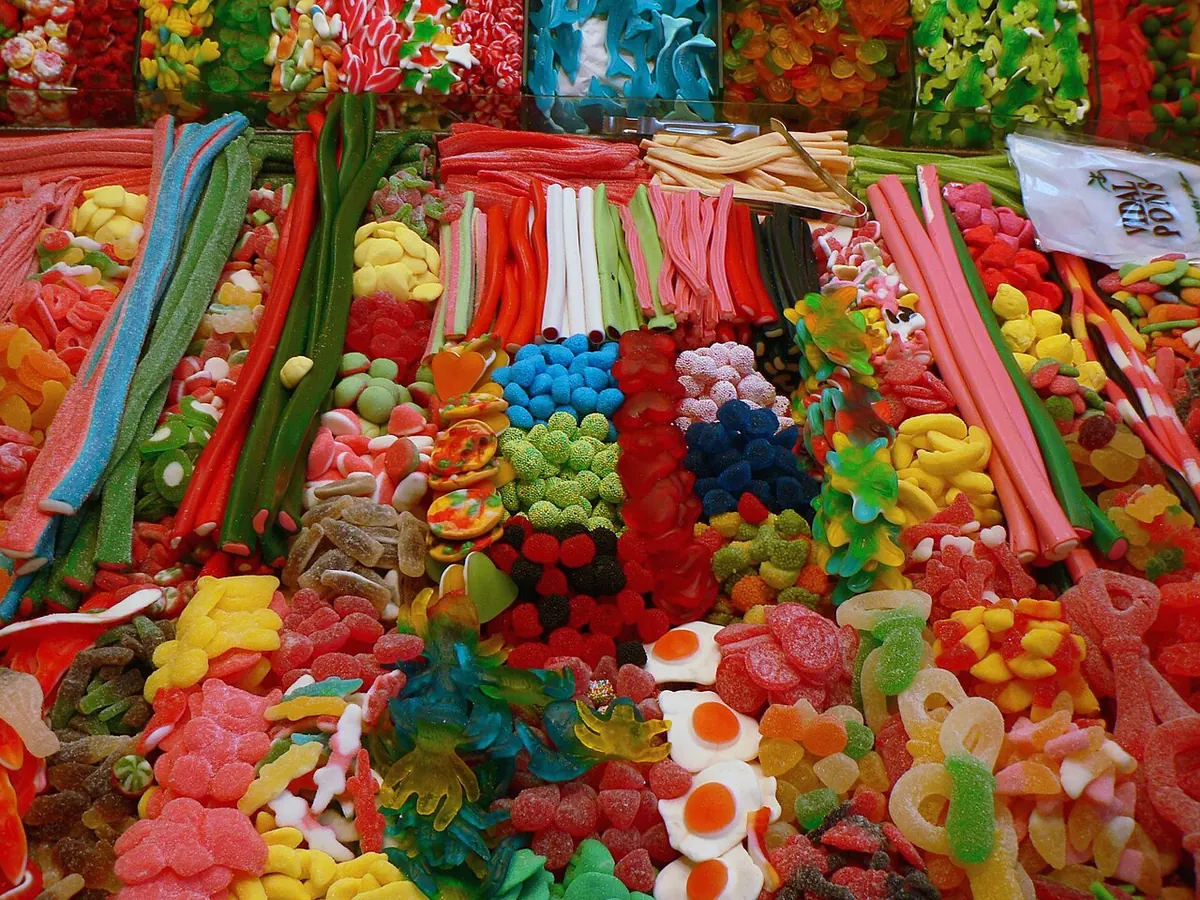
Jelly sweets, also called gummies or gums, are chewy sweets set with gelatine or a plant gum, made mostly from glucose syrup, sugar, the gelling agent and water. Bears, rings and worms are common shapes. Shops, distributors and brands in Bangladesh buy them in pouches and jars, and importers buy them for resale.
The gelling agent decides the chew, the heat tolerance and who can eat the sweet, so a jelly sweet manufacturer in Bangladesh should be chosen around it. Roptan sources from verified plants, puts the gelling agent and its papers into the order, checks a sample after warm storage and inspects the bulk.
How to specify a jelly sweet
- Gelling agent
- Gelatine with its source and Bloom grade, or pectin, agar or starch. A higher Bloom grade gives a firmer gel at the same dose, so ask for grade and dose.
- Shape, weight and count
- Mould shape, piece weight with a tolerance and count per pack; the mould sets the piece weight.
- Heat
- The temperature the pack must survive in store and in transit. Gelatine gels melt below body temperature, and fish gelatine melts lower than beef or pork.
- Humidity
- Water activity and a moisture-proof pack. Damp air makes jellies sticky, turns sugar grainy, lets flavour fade and can allow mould.
- Colours
- Each colour by E or INS number; Bangladesh's Food Additives Usage Regulations 2017 cite the Codex additives standard.
- Children
- Piece size and shape for the age group, and an age line on the pack where your market expects one.
Rules, certificates and papers for jelly sweets
- Halal certificate
- Must name the gelatine source and supplier, or show a plant-based gelling agent. Ask for the plant's certificate and the gelatine supplier's, and check both cover this batch.
- Annex II of Regulation (EC) No 1333/2008
- As set by Regulation (EU) No 1129/2011, it bars konjac (E 425) from jelly confectionery and bars listed gelling agents from jelly mini-cups. Confirm the current text.
- EU colour warning
- Six colours, among them tartrazine (E 102) and allura red (E 129), need a warning about activity and attention in children; titanium dioxide (E 171) is no longer permitted.
- Bangladesh food law
- The Safe Food Act 2013, enforced by the Bangladesh Food Safety Authority through mobile courts, and BSTI certification for listed products. We found no BSTI standard written for jelly sweets.
Lead times and delivery
Lead time is usually shorter for standard shapes in the plant's own pack, and longer for a new mould, a change of gelling agent, a new gelatine supplier's halal papers, colours for your market or printed pouches. Roptan confirms the dates and the minimum order in the quote.
Inside Bangladesh we deliver by the carton or pouch, with batch codes, halal and lab papers where ordered and a VAT invoice (Mushak 6.3). Keep gelatine jellies out of hot stores; if they arrive soft or fused, we take it up with the seller.
Buying jelly sweets for export
For importers we quote FOB Chattogram (Chittagong); jelly sweets ship under HS 170490 with other sugar confectionery. EU labels must show storage conditions the food needs, such as keep cool and dry. For the United States, a red jelly needs a red other than erythrosine, whose ban is enforced from 15 January 2027.
Questions buyers ask
Is the gelatine in jelly sweets halal?
It depends on the source and on who certifies it. Most gelatine comes from pork skin, pork and cattle bones or cattle hides; halal customs generally require a non-pig source, and scholars differ on whether processing changes this. Ask for a certificate from a body your market accepts, or choose a plant-based gel.
Which jelly sweets suit hot routes?
Gelatine gels melt below body temperature, and fish gelatine melts lower still, so gelatine jellies need cool handling on hot routes. Pectin, agar and starch jellies are the alternatives to try. Test samples of each at the temperature your route reaches, and choose on the result.
Can you supply jelly cups with konjac?
Not for the EU. Annex II of Regulation (EC) No 1333/2008 bars konjac (E 425) from jelly confectionery, and bars the listed gelling agents from jelly mini-cups meant to be swallowed in one bite. For other markets, send us the rules and we check the recipe against them.
Why is gelatine not shown as an E number?
In EU law edible gelatine is not a food additive, so it has no E number and is listed by name among the ingredients. Pectin, agar and similar gelling agents are additives, listed by name or E number.
How soon will I hear back about confectionery and chocolate?
Within 48 hours of a complete requirement, with a price and a delivery date. A requirement is complete when it has the quantity, where it is needed and by when.
Who do I deal with?
With Roptan, when Roptan manages the order: we buy from the verified seller and deliver to you. With the supplier directly, when you post on the requirement board and choose a quote yourself.