Buying instant noodles in Bangladesh
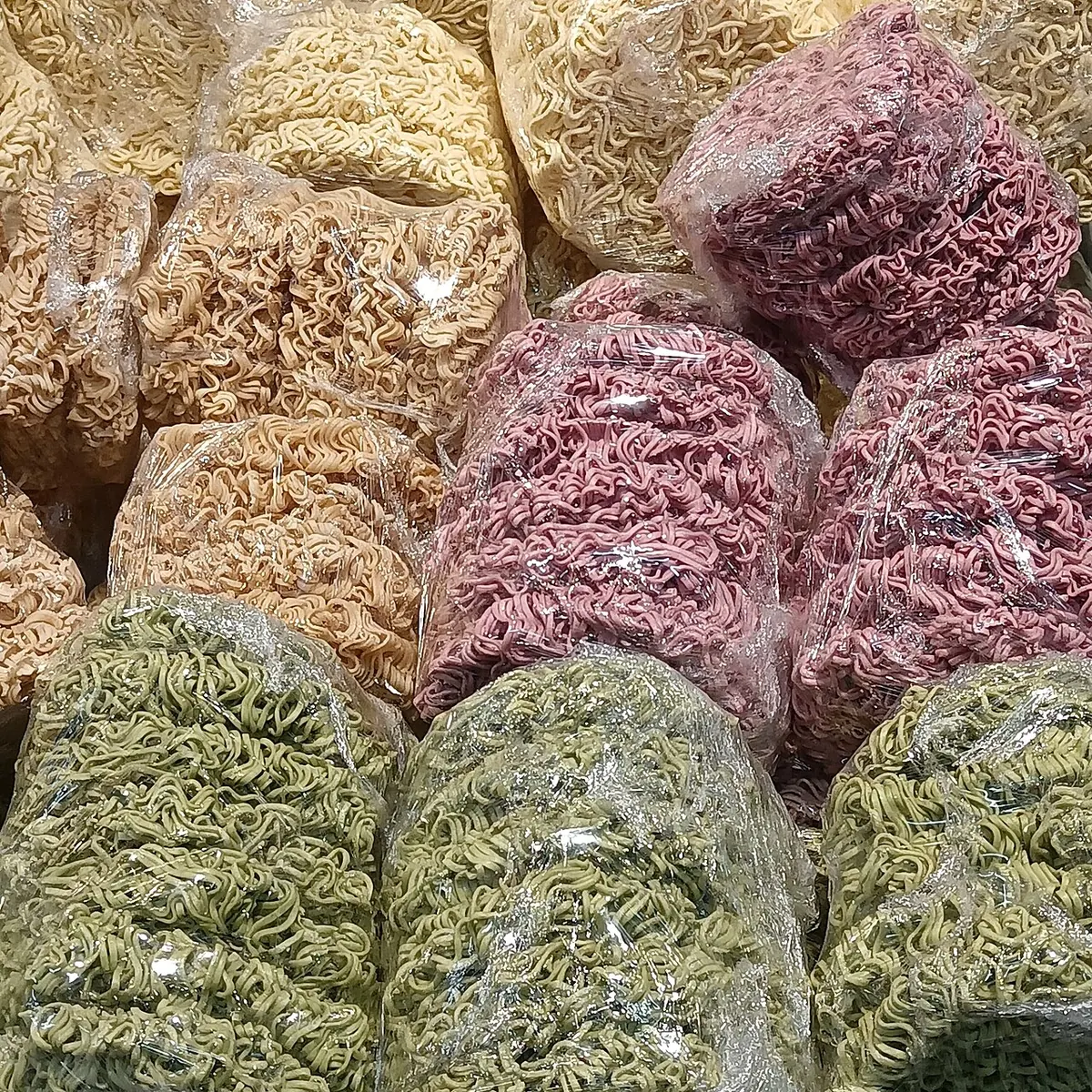
Instant noodles are steamed noodles dried by frying or hot air and sold as a dry block, with the seasoning in sachets or spread over the noodles. Wheat flour, water and salt are the usual base. Distributors, shops and canteens buy them for the home market, and importers for shops abroad.
The oil needs as much attention as the block: it oxidises over the shelf life, and the trans fat limit is set per 100 g of fat, so it is measured on the frying oil. An instant noodle manufacturer in Bangladesh also needs a BSTI licence for the product. Roptan sources from verified, licensed plants, sets fat, moisture and trans fat limits and has the lot tested.
How to brief an instant noodle manufacturer in Bangladesh
- Drying route and moisture
- Fried or air-dried, with a moisture maximum for the finished block. Codex sets separate moisture maxima for fried and non-fried noodles.
- Flour
- Protein typically about 8.5 to 12.5 per cent: stronger dough keeps the block whole and takes up less fat. Ask for the flour specification sheet.
- Fat and frying oil
- A fat maximum per block, the frying oil (palm oil or palm olein is usual in Asia), any antioxidant and how often fryer oil is changed.
- Seasoning and sachets
- The recipe, a sodium figure per pack and the sachet count. Each extra sachet adds a film type and a seal that can leak or be missed.
- Film and shelf life
- The film, from OPP/CPP to metallised laminates, a seal-leak test, and the shelf life you need, typically 4 to 12 months by method and storage.
Licences, rules and tests for instant noodles
- BSTI licence, BDS 1552:2015
- Instant noodles are on BSTI's mandatory certification list under BDS 1552:2015, separate from plain noodles (BDS 1106:2015). The licence must name the right line.
- Codex CXS 249-2006
- Covers fried and non-fried instant noodles, with a moisture maximum for each and an acid value limit for the oil in fried noodles. Ask for both results.
- Trans fat, S.R.O. 332-Law/2021
- Since 31 December 2022, foods and fats in Bangladesh may carry no more than 2 g of industrial trans fat per 100 g of total fat.
- Labelling rules
- The Packaged Food Labelling Regulations 2017 are in force; BFSA's 2026 rule is still a draft. EU labels follow Regulation (EU) No 1169/2011, allergens emphasised.
Lead times and delivery
Time depends on what is new. A plant's own noodle in its own pack moves fastest; a new flavour adds seasoning trials and sample approval, private label adds artwork and printed film, and export adds the lab panel. Roptan confirms the dates and the minimum per flavour in the quote.
Roptan delivers anywhere in Bangladesh by the carton or truckload, with batch codes and expiry dates on every carton, the lab reports you ordered and a VAT invoice (Mushak 6.3). In the monsoon, cartons travel covered and stay off the floor: damp gets in through a weak seal.
Buying instant noodles for export
A 2025 Centre for Policy Dialogue note named noodles next after biscuits among Bangladesh's packaged-food exports; EPB records them under the pasta heading. Roptan quotes FOB Chattogram, and BFSA issues health certificates online. US importers must verify suppliers under the FDA's FSVP rule, allergen labelling included, so expect requests for a food safety plan.
Questions buyers ask
How much oil is in a fried instant noodle block?
Usually about 15 to 20 per cent, against about 3 per cent or less in a hot-air dried block. The oil shortens shelf life as it oxidises, so set a fat maximum per block and ask for the fat figure on each lot report.
Does a noodle licence cover instant noodles?
Not necessarily. BSTI lists instant noodles (BDS 1552:2015) and noodles (BDS 1106:2015) as separate mandatory lines. Ask for the licence number and check it: in August 2026, BSS reported, a BSTI mobile court fined a food maker for falsely claiming a BSTI certificate.
Why test the seasoning for heavy metals?
A regulator in India reported lead in one maker's instant noodles at about seven times the allowed limit, and several Indian states and Nepal banned the product. Lead can enter with any ingredient, so test the seasoning and finished noodles too.
How long do instant noodles keep?
Typically 4 to 12 months, by method and storage. Low moisture, low water activity and high sodium keep them stable, while the oil in fried blocks slowly oxidises. In humid storage the film and seals matter as much as the recipe.
How soon will I hear back about noodles and snacks?
Within 48 hours of a complete requirement, with a price and a delivery date. A requirement is complete when it has the quantity, where it is needed and by when.
Who do I deal with?
With Roptan, when Roptan manages the order: we buy from the verified seller and deliver to you. With the supplier directly, when you post on the requirement board and choose a quote yourself.