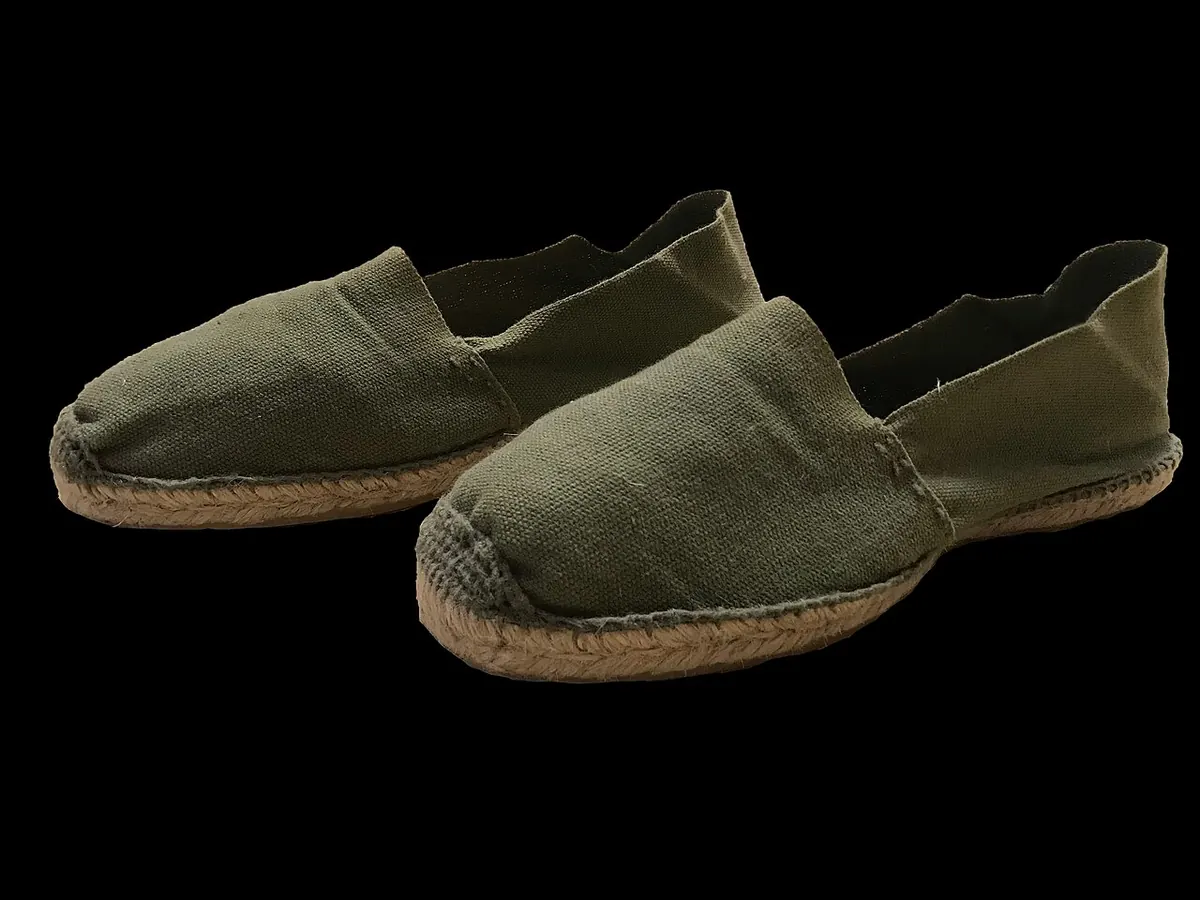
Buying espadrilles in Bangladesh
An espadrille is a shoe with a sole of braided jute rope, or less often hemp, and usually a canvas or cotton upper. A footwear technology body reported in 2023 that many espadrilles are now made in Bangladesh, an important jute producer, and that shoemakers in France, Italy and Spain import jute soles from Bangladesh to finish their own.
The join is what sets it apart from a sneaker: the upper is stitched to the rope sole, and a thin rubber layer goes underneath for grip and wear. An espadrilles manufacturer in Bangladesh is judged on that stitching and that layer, so Roptan agrees both in the order and checks them on bulk pairs.
How to specify an espadrille
- Sole fibre and height
- Jute or hemp, the braid colour, and the sole height in mm at heel and toe, or the wedge height.
- Rubber layer
- Thickness, colour and tread of the rubber under the rope. A rope sole alone is not suited to wet use, so do not drop it for street wear in the rains.
- Wedge core
- EVA foam or wood for a raised heel, covered by the jute wrap.
- Upper
- Canvas or cotton by weight and colour for each colourway, or another material, with the toe and back shape.
- Stitching
- Stitch count, thread type and colour where the upper meets the sole, and a pull check you agree with the maker.
- Size system and run
- One system, EU, UK, US or Mondopoint (foot length in mm), with the run and pairs per size.
Tests and rules for espadrilles
- ISO 17708:2018
- Whole-shoe upper and sole adhesion. Its scope says the test need not be run where the bond is made by stitching, so a stitched espadrille needs an agreed pull check instead.
- ISO 20871:2018
- Outsole abrasion for any sole material, which makes it usable on the rubber layer. Write the pass value into the order.
- REACH Annex XVII entries 50 and 72
- For the EU. Entry 50 limits eight PAHs in rubber and plastic parts touching the skin; entry 72, from November 2020, limits 33 CMR substances in footwear.
- OEKO-TEX Standard 100
- Tests textile parts for harmful substances. Use it on the canvas or cotton upper, the part in contact with the foot.
Lead times and delivery
Roptan publishes no standard figure, because the time depends on the order. A new wedge height, a non-standard braid colour, extra sample rounds and lab tests for each material and colour add time; stock soles, standard rubber and fewer colourways shorten it. Roptan confirms the sample date, the bulk date and the minimum per colour in the quote.
Inside Bangladesh, Roptan delivers to your warehouse or shops in cartons packed by size and colour, with the packing list, the test and inspection reports and a VAT invoice (Mushak 6.3). The final check samples the lot to ISO 2859-1 at an AQL written into the order.
Buying espadrilles for export
The tariff line for an espadrille depends on what its outer sole is made of, so a customs broker should confirm it before you plan duty. Roptan quotes FOB Chattogram, with a REX origin statement for EU GSP or UK DCTS papers, the test reports and the inspection report. Most Bangladeshi non-leather footwear producers sell mainly to EU countries.
Questions buyers ask
Why source espadrilles from Bangladesh?
Bangladesh is an important jute producer, and a footwear technology body reported in 2023 that many espadrilles are now made there. Shoemakers in France, Italy and Spain also import jute soles from Bangladesh to finish their own espadrilles.
Do espadrilles need a rubber sole?
For most uses, yes. A jute rope sole on its own is not suited to wet conditions, so a thin rubber outer sole is bonded under the rope for grip and wear. In Bangladesh's monsoon or any wet market, specify the rubber layer and its thickness.
Can we buy only the jute soles?
Yes. Braided jute soles with their rubber layer are a product in their own right; shoemakers in Europe buy them to add their own uppers. Give the size run, sole height and rubber thickness, and Roptan sources them like a finished shoe.
Which HS code do espadrilles use?
It depends on what the outer sole is made of: textile-upper shoes on rubber soles and those on other sole materials are classed differently. Have a customs broker classify your style before you quote duty to customers.
How soon will I hear back about sneakers and sports shoes?
Within 48 hours of a complete requirement, with a price and a delivery date. A requirement is complete when it has the quantity, where it is needed and by when.
Who do I deal with?
With Roptan, when Roptan manages the order: we buy from the verified seller and deliver to you. With the supplier directly, when you post on the requirement board and choose a quote yourself.