Managed sourcing from Bangladesh, for export and for buyers at home
Get it sourced

Machinery and handling · Valves

Control valve supplier in Bangladesh

Roptan works as your control valve supplier in Bangladesh: send the process data, the signal and the fail action, and we source a sized valve with its actuator and positioner from a verified seller, check the test record and deliver.

  • Verified sellers
  • Checked before it ships
  • Delivered by Roptan

Get control valves sourced

Prefer to deal with suppliers yourself? Post it on the requirement board

Buying control valves in Bangladesh

A control valve changes its opening on a signal from a controller, so a flow, pressure, level or temperature stays where the process needs it. It comes as a body, an actuator that moves it and usually a positioner. Factories, boiler houses, chilled water plants and utilities in Bangladesh buy them for new lines and as replacements.

A control valve supplier in Bangladesh should start from your process data, not your pipe size. Send the duty and the signal. We source from verified sellers, get the sizing sheet with each quote, compare offers on the same duty and check the test record; the seller mounts, calibrates and strokes the valve on site.
Kinds of control valve

Globe control valves

A sliding stem moves a plug against a fixed ring seat. Bodies come straight, angle or Y-pattern; in an angle body the outlet is set at an angle to the inlet, usually 90 degrees.

Cage-guided globe valves

A cage around the plug shapes how flow passes as the valve opens, and largely sets its flow behaviour. The seller picks the cage from your sizing data.

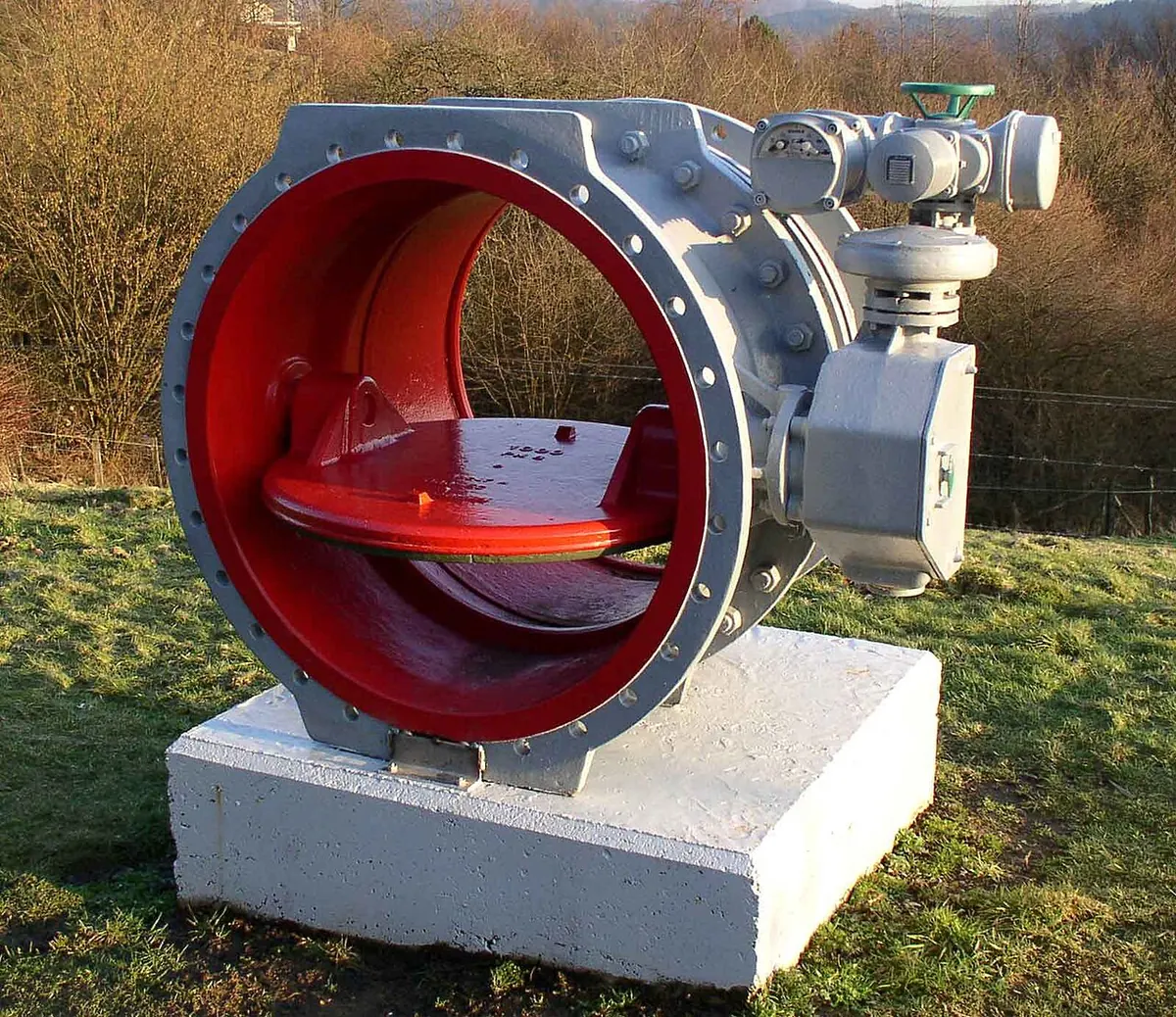
Butterfly control valves

A rotary valve whose disc turns to regulate flow, driven by a part-turn actuator. State the ISO 5211 mounting flange so the actuator bolts straight on.

V-port ball control valves

A rotary valve with a shaped port in the ball, turned part of a revolution to regulate flow, also with a part-turn actuator.

Pneumatic or electric actuation

Air-driven actuators are the common choice because they need only a compressed air supply; a positioner feeds them air to match the signal. Electric motor and hydraulic actuators are the alternatives.

How to specify a control valve

Process data
Fluid, inlet and outlet pressure, temperature and flow at minimum, normal and maximum duty. The valve is sized from these, not from the line size.
Flow coefficient
Cv or Kv at each duty point, from the sizing sheet. Check which unit a datasheet uses before comparing quotes.
Control signal
The signal your controller sends, usually 4 to 20 mA DC, so the positioner is matched to it.
Fail action
Fail closed or fail open on loss of air or signal, set by your plant's safety design. The seller sets the actuator to match.
Seat leakage class
The ANSI/FCI 70-2 class you accept, from Class I, agreed without a shop test, to Class VI. Class IV is the metal-to-metal seat class, Class VI the soft seat class.
Rating, ends and length
Pressure class read at temperature from ASME B16.34, flange standard of your pipe, and face-to-face to IEC 60534-3-1 for flanged globe valves.

Standards, sizing and tests for control valves

IEC 60534-2-1
Sizing equations for control valve flow capacity under installed conditions. Ask the seller to state that the sizing sheet follows it.
IEC 60534-4
Inspection and routine testing. Ask which tests the record covers, such as shell, seat leakage and stroke with the actuator, and for a signed record per serial number.
ANSI/FCI 70-2
Seat leakage classes for control valves only. Isolation valves are tested to other standards, such as API 598:2023 or ISO 5208.
IEC 60534-8 parts
Noise: Part 8-3 predicts aerodynamic noise from gas and steam, Parts 8-2 and 8-4 cover hydrodynamic noise from liquids. Ask for a prediction where the sizing flags noise.

What moves the price of a control valve

  • Body family: a globe body against a rotary butterfly or ball design for the same duty.
  • Materials of body and trim, chosen for the fluid, pressure and temperature.
  • Seat leakage class: a tighter class and the test that proves it.
  • Actuator and positioner: pneumatic, electric or hydraulic, and the accessories around them.
  • Noise trim, where the sizing shows a high pressure drop.

Lead times and delivery

We found no published lead time for control valves, so we give no figure. Most are built to your sizing and imported to order. Approval of the sizing sheet, a special trim or material, the actuator and positioner assembly, and tests witnessed at the maker all add time. Roptan confirms the dates and any minimum in the quote.

Each valve arrives tagged to its loop with the actuator and positioner fitted. On import, control valves usually fall in HS 848180 among other valves. The seller calibrates the positioner and strokes the valve on site against your signal. Handover papers: the sizing sheet, test record per serial number, actuator wiring diagram, material certificates and a VAT invoice (Mushak 6.3).

What we check for this order

  • Sizing sheetWe check the sheet covers minimum, normal and maximum flow from your data, with the Cv or Kv and the valve opening at each.
  • Test record per serialWe check the record lists the tests made to IEC 60534-4 and the seat leakage class reached, signed for each serial number.
  • Signal and fail actionWe confirm the positioner input matches your signal and that the valve moves to its stated fail position on loss of air or signal.
  • Markings and materialWe match body markings to the EN 10204 type 3.1 certificate, and ask for PMI on stainless bodies and trim.

Questions buyers ask

Should a control valve be the same size as the pipe?

Not by default. A control valve is chosen from the flow coefficient it needs at minimum, normal and maximum flow. Send the process data and ask for the sizing sheet with the quote, so you can see the valve opening at each duty.

What is the difference between Cv and Kv?

Both measure capacity. Cv is the US gallons per minute of water at 60 °F that pass with a 1 psi pressure drop; Kv is the cubic metres per hour of water at a 1 bar drop. Cv is about 1.156 times Kv, so check which one a datasheet uses before comparing quotes.

Pneumatic or electric actuator?

An air-driven actuator needs a compressed air supply and a positioner that turns the signal into air pressure. An electric actuator is driven by a motor, so it needs an electrical supply instead. Tell us what your site has, compressed air or single or three phase power at 50 Hz, and the seller matches the actuator.

Which leakage class do I need?

It depends on how tightly the valve must close in service. ANSI/FCI 70-2 sets six classes, I to VI; Class I is agreed without a shop test, Class IV is the metal-to-metal seat class and Class VI the soft seat class. Ask for the tested result. Where the line must be isolated, fit a separate valve tested to API 598 or ISO 5208.

How soon will I hear back about valves?

Within 48 hours of a complete requirement, with a price and a delivery date. A requirement is complete when it has the model or specification, where it is needed and by when.

Who do I deal with?

With Roptan, when Roptan manages the order: we buy from the verified seller and deliver to you. With the supplier directly, when you post on the requirement board and choose a quote yourself.

Other valve products

Each product type has its own page as it is published; until then its card opens the category form.

All valves