Managed sourcing from Bangladesh, for export and for buyers at home
Get it sourced

Water and wastewater · ETP plant

Biological ETP supplier in Bangladesh

Roptan works as your biological ETP supplier in Bangladesh. Send your flow, effluent analysis and outlet target: we source an activated sludge, MBBR or SBR stage from verified sellers, check how it will be fed and aerated, and deliver it.

  • Verified sellers
  • Checked before it ships
  • Delivered by Roptan

Get biological ETP sourced

Prefer to deal with suppliers yourself? Post it on the requirement board

Buying biological ETP in Bangladesh

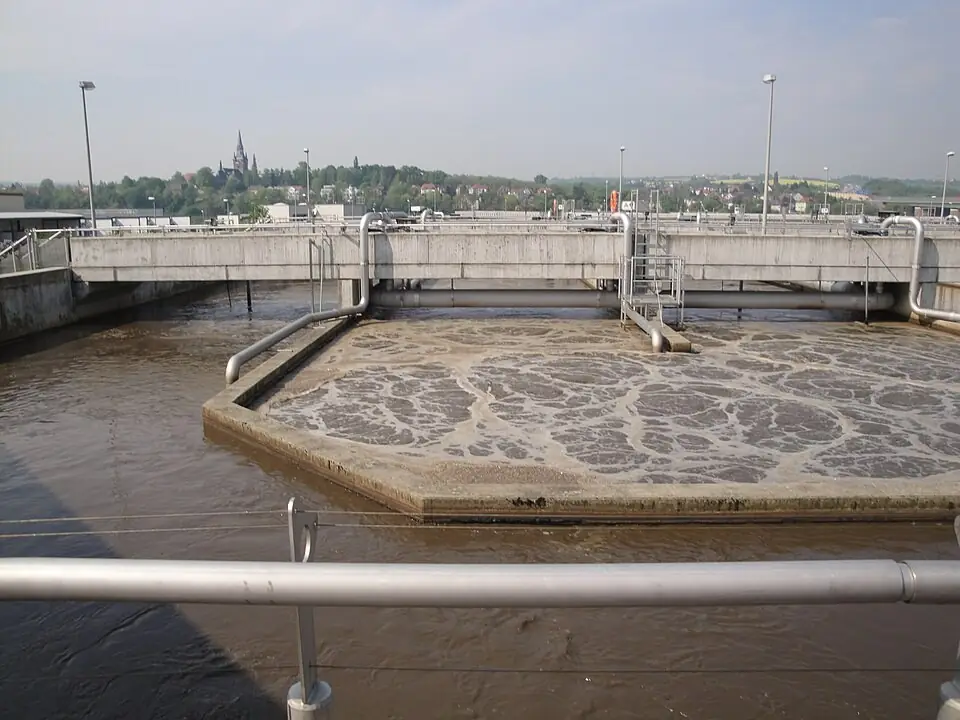
A biological ETP uses bacteria in aerated tanks to break down the dissolved organic load in dyeing and washing effluent, then separates the biomass from the treated water. In Bangladesh it usually follows a chemical stage, because biology on its own removes little colour. Knit, woven and denim units buy one for a new plant or to bring COD and BOD inside their clearance.

A biological ETP supplier in Bangladesh should quote from your lab results and show how the bacteria will be kept alive. Roptan sends one brief to verified sellers, compares aeration volume, blower power, nutrient dosing and start-up plans side by side, and arranges installation through the seller you choose.
Kinds of biological ETP

Activated sludge

Suspended growth: bacteria float in an aerated tank, settle in a clarifier and are pumped back. Choose it for a soluble organic load where the plot has room for the tank and clarifier.

MBBR

Plastic carriers move freely in an aerated tank and grow a biofilm, filling up to about 70 percent of the volume, with no sludge return. Choose it where land is short or an existing tank must treat more.

SBR

One tank fills, aerates, settles and decants in turn, so it is reactor and settler at once. Choose it where effluent arrives in surges, as batch dyeing drains do.

MBR

Membranes replace the clarifier and hold the biomass, usually at about 4 to 12 g/L of solids against 2.5 to 3.5 g/L conventionally. Choose it when treated water goes on to reverse osmosis.

How to specify a biological ETP

pH control
Hold pH 6 to 8 with a meter and an automatic controller, not pH paper. Dyeing effluent is usually strongly alkaline, so acid dosing belongs in this scope.
Nutrients
Textile effluent is usually short of nitrogen and phosphorus. Ask where the feed, usually urea and ammonium phosphate, with its tank and pump, sits in the quote.
Equalisation
Give the hourly flow pattern. A common rule of thumb is a tank holding at least one third of the 24-hour flow, about 8 hours, so the bacteria see a steady load.
Air supply
State blowers with diffusers or surface aerators, the diffuser material, a dissolved oxygen probe rated for continuous use and a standby blower.
Running round the clock
A long stop starves the bacteria, so put blowers and the pH loop on generator backup and ask for a restart plan after Eid closures.
Seed source
Ask what the seller will seed with. Sludge from a working ETP on similar effluent is the usual choice; cow dung is traditional in South Asia but rarely as good.

What to ask a biological ETP supplier in Bangladesh for

ECR 2023 and the Red category
The Environment Conservation Rules 2023 set the outlet limits, including a colour limit, and carry a declaration form for Red category units, which usually include textile dyeing.
EN 12255-6:2023
The European design standard for the activated sludge process. Not required in Bangladesh, but a useful design reference.
Sampling, test methods and the lab
Samples taken to ISO 5667-10, BOD by ISO 5815-1 and colour by ISO 7887, tested at an ISO/IEC 17025 accredited lab, with no dilution of the outlet.
Operating log
MLSS and SVI weekly, a daily settled-sludge test, daily pH, DO and colour, and weekly COD. A microscope shows filamentous bulking early.

What moves the price of a biological ETP

  • Aeration volume and blower size, set by the organic load and the peak flow.
  • Diffuser material: stainless steel usually outlasts mild steel but costs more.
  • Carrier media for an MBBR or membranes for an MBR, against a plain activated sludge tank.
  • Clarifier area, sludge return pumps and the pH and dissolved oxygen instruments.
  • A standby blower, spare probes and whether the seller runs the plant through start-up.

Lead times and delivery

No fixed time applies. Civil work on the tanks, monsoon excavation, imported diffusers or membranes and slow design approval move the date most. After start-up the biomass needs time to establish, and an older Bangladesh guide says this can take several months, depending on how the plant is seeded, so set the acceptance test date with that in mind. Roptan confirms the dates in the quote.

We deliver blowers, diffusers, media, pumps and panels to your factory anywhere in Bangladesh and arrange erection and commissioning through the seller. Handover should cover seeding, working pH and DO loops, operator training on the log sheet, as-built drawings and the O&M manual, with a VAT invoice (Mushak 6.3).

What we check for this order

  • Sized on your lab resultsWe check the aeration tank and clarifier are sized on your analysed COD, BOD and peak flow, not another plant's drawing.
  • Nutrient and pH dosing in scopeWe confirm the nutrient feed, acid dosing and automatic pH controller are in the price, since the bacteria fail without them.
  • Standby blower and backup powerWe check a spare blower is supplied and that blowers and the pH loop are wired to generator backup.
  • Seeding planWe ask how the seller will seed and stabilise the plant, and tie the final test to passing results at normal production.

Questions buyers ask

Can a biological ETP meet the colour limit on its own?

Usually not. Biology alone does most of the BOD and COD removal but takes out little colour, and BGMEA told the Environment Minister in June 2026 that the colour parameters are hard to meet. Most dyeing plants in Bangladesh put a chemical stage first. Ask which layout each quote covers.

Should a new plant use MBBR or activated sludge?

Activated sludge is the established choice where the plot has room for the aeration tank and clarifier. MBBR grows bacteria on moving carriers, needs no sludge return and packs more treatment into the same tank, so it suits tight plots and later expansion.

What happens to the bacteria during an Eid closure?

Short stops of a few hours do little harm. A long shutdown starves the bacteria, and the plant performs badly when production restarts. Ask the seller for a written restart plan, and retest the outlet before relying on it.

What does a biological ETP cost to run?

Blower power and sludge disposal usually make up most of it, then nutrients, pH chemicals, lab tests and operator time. Ask each seller for running kW, sludge per day and nutrient use. Many ETPs in Bangladesh have been reported as underused because of running cost.

How soon will I hear back about ETP plant?

Within 48 hours of a complete requirement, with a price and a delivery date. A requirement is complete when it has the capacity, where it is needed and by when.

Who do I deal with?

With Roptan, when Roptan manages the order: we buy from the verified seller and deliver to you. With the supplier directly, when you post on the requirement board and choose a quote yourself.

Other ETP plant products

Each product type has its own page as it is published; until then its card opens the category form.

All ETP plant