Buying terracotta in Bangladesh
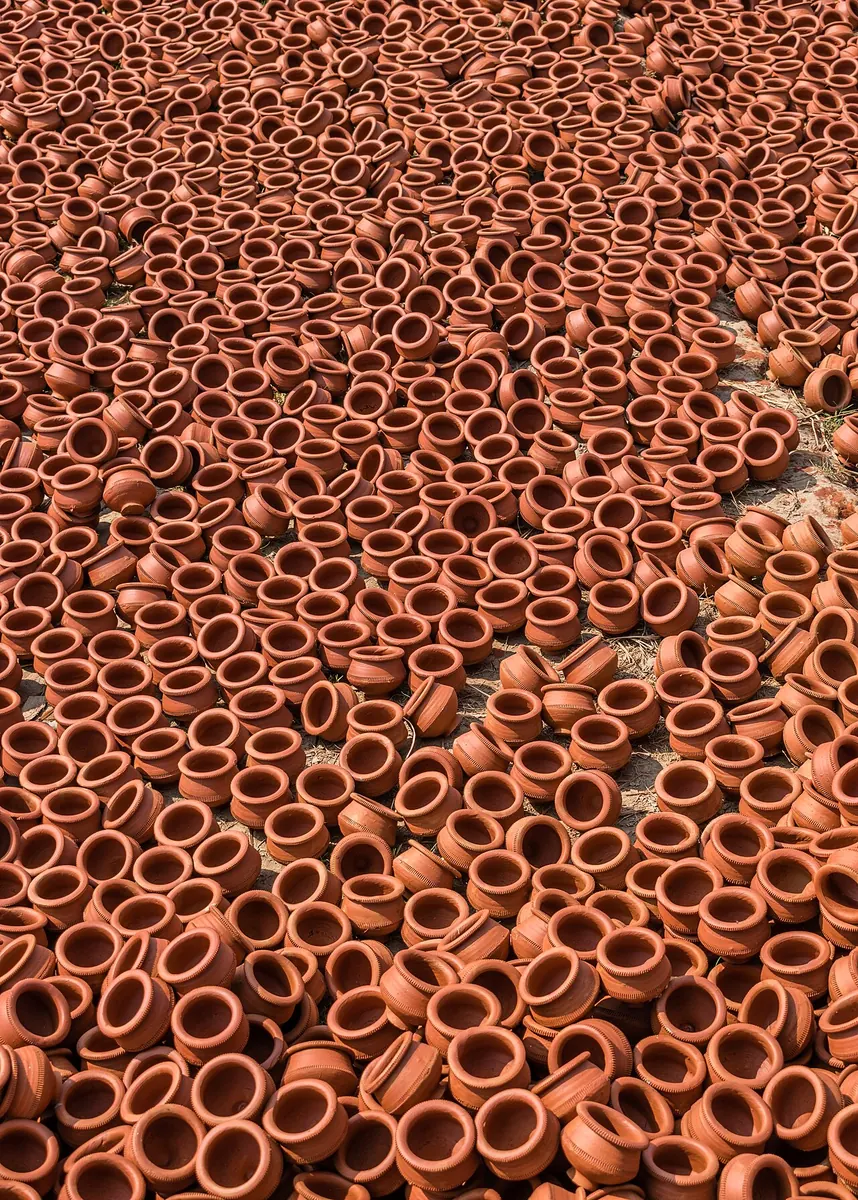
Terracotta is red or orange earthenware: iron oxide in the clay gives the colour, and it is typically fired at around 1,000 degrees C. Bangladeshi potters make garden pots, planters, curd pots, vases, figures, dolls, jewellery and glazed dining plates. Importers and home retailers buy planters and decor, and demand is reported stronger for design-led decor and dining ware than for traditional pots. A terracotta manufacturer in Bangladesh has to match body and glaze to the use.
Roptan takes your shapes and their use and sources them from verified potters. We agree glaze, finish and size on samples, have food-use pieces tested per glaze colour, check bulk for cracks and kiln faults, and pack for breakage. You deal with Roptan only.
How to brief a terracotta manufacturer in Bangladesh
- Use
- Plants, decor, food or outdoor wall. Fired earthenware usually absorbs 5 to 8 percent water, so food and liquid use needs a glaze.
- Glaze and finish
- Unglazed, burnished or glazed, with each glaze colour named. A glaze alone does not always stop water reaching terracotta.
- Outdoor and frost
- For freezing climates, a water absorption result and a frost test, not a glaze, decide whether a pot survives.
- Size and set
- Height and diameter in cm with a tolerance, drainage holes for planters, and nesting sizes for sets.
- One clay or several
- Clay and style vary by district, so for a large repeat order ask whether all pieces come from one clay and kiln.
- Labels for decor
- Pieces not for food that look like bowls need a not-for-food label for the US, or a hole through the food surface.
Food-contact rules and tests for terracotta
- Directive 84/500/EEC as amended by Directive 2005/31/EC
- Limits lead and cadmium release from ceramic food ware in the EU, tested in 4 percent acetic acid at 22 degrees C for 24 hours.
- EU declaration of compliance
- Food-use ceramics need a written declaration at each stage up to retail, with the lab's results and test conditions kept for authorities.
- FDA CPG Sec. 545.450 (lead)
- US action levels for lead leached from food ware, by category, from 3.0 micrograms per mL for flatware down to 0.5 for cups, mugs and pitchers.
- FDA CPG Sec. 545.400 (cadmium)
- US action levels for cadmium: 0.5 micrograms per mL for flatware and small hollowware, 0.25 for large hollowware, on six units.
Lead times and delivery
Time is set by the order, not a fixed range. New shapes and glaze colours need samples, food-use glazes need a lab report before bulk, and pieces that crack in the kiln must be remade. Large or fragile pieces also take longer to pack well. Roptan confirms the dates and the minimum in the quote.
Inside Bangladesh we deliver to hotels, restaurants, shops and offices, packed with dividers against breakage, counted by piece and set, with a packing list and a VAT invoice (Mushak 6.3).
Buying terracotta for export
For importers we quote FOB Chattogram. Earthenware tableware usually falls under HS heading 6912, statuettes and ornaments under 6913 and other pieces under 6914; your customs broker confirms the code. Documents usually include the commercial invoice, packing list, bill of lading, certificate of origin, a REX statement for EU GSP or UK DCTS claims, lead and cadmium reports for food-use pieces, and heat-treated wood if crates are used.
Questions buyers ask
What lead and cadmium limits apply in the EU?
Under Directive 84/500/EEC as amended by Directive 2005/31/EC: flat pieces 0.8 mg/dm2 lead and 0.07 mg/dm2 cadmium; other fillable pieces 4.0 and 0.3 mg/l; cooking ware and vessels over three litres 1.5 and 0.1 mg/l. The test runs in 4 percent acetic acid at 22 degrees C for 24 hours.
Is a lead-free label enough for US buyers?
No. FDA guidance says pottery with extractable lead should not be labelled lead free, and low-fired glazes can release lead when firing is not controlled. Ask for a non-lead glaze declaration and a lab result by the FDA categories, tested on six units.
Can a glazed decorative bowl be sold as not for food?
In the US, FDA treats ware that looks suitable for food as food ware. To sell it as decor, it needs a conspicuous stick-on label, such as Not for Food Use, plus a permanent statement on the base, or a hole bored through the food surface.
Will terracotta pots survive frost outdoors?
Not always. Terracotta is porous, and a glaze does not always seal it from water, so a wet pot can crack in frost. For cold climates, ask for a water absorption result and a frost test on the body, or choose pieces fired near vitrification.
How soon will I hear back about handicrafts and baskets?
Within 48 hours of a complete requirement, with a price and a delivery date. A requirement is complete when it has the quantity, where it is needed and by when.
Who do I deal with?
With Roptan, when Roptan manages the order: we buy from the verified seller and deliver to you. With the supplier directly, when you post on the requirement board and choose a quote yourself.