Managed sourcing from Bangladesh, for export and for buyers at home
Get it sourced

HVAC and cold chain · Cold rooms

PU insulated panel supplier in Bangladesh

Buy through Roptan, your PU insulated panel supplier in Bangladesh. Give the room temperature, thickness, skins and area: we source made-to-order panels from a verified maker, check the data sheet and test reports, and deliver to site.

  • Verified sellers
  • Checked before it ships
  • Delivered by Roptan

Get PU insulated panels sourced

Prefer to deal with suppliers yourself? Post it on the requirement board

Buying PU insulated panels in Bangladesh

A PU insulated panel is a sandwich of rigid polyurethane foam between two metal skins, made in a factory and joined on site into cold room walls, ceilings and floors. In Bangladesh, panels go into cold rooms, clean rooms and factory buildings, and at least one Dhaka maker produces them to order in the thickness and size you choose.

As a PU insulated panel supplier in Bangladesh, Roptan puts one specification to verified makers: core, thickness, skins, joints and area. We check declared values against the data sheet, ask for the fire test report and the blowing agent in writing, and compare quotes.
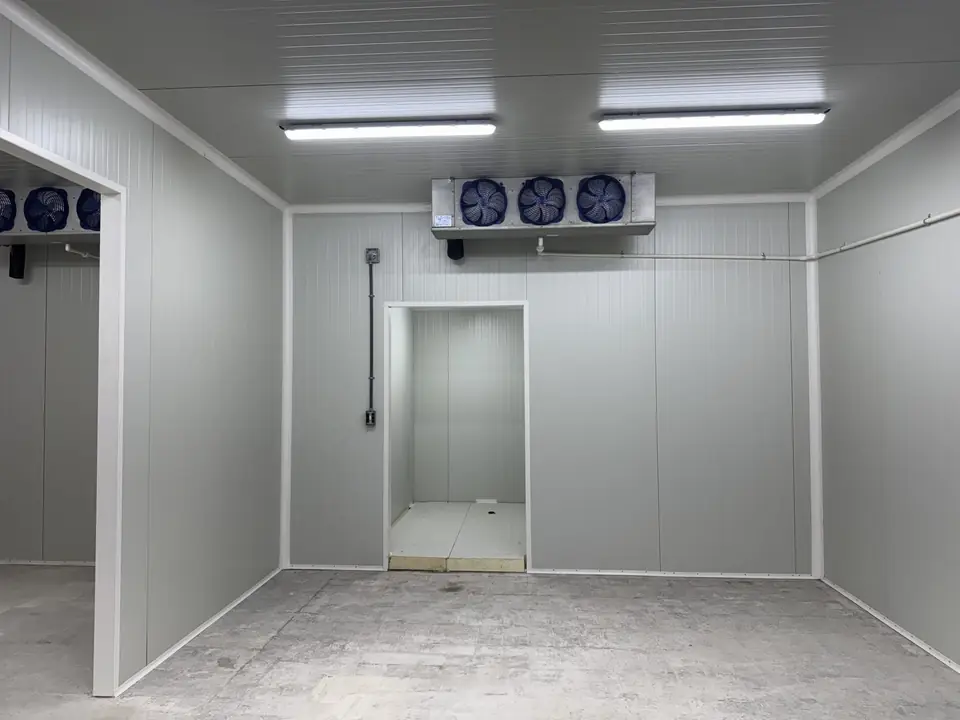
Kinds of PU insulated panel

PUR core panels

Standard rigid polyurethane foam. Choose them for most chill and freezer rooms where the building's fire design does not call for another core.

PIR core panels

Polyisocyanurate, which EN 14509 counts as a polyurethane. It is chemically and thermally more stable than PUR, but one study found higher toxic release in fire, so choose by tested fire class.

Stainless steel faced panels

Skins in 304 stainless steel instead of coated steel. Choose them where food is handled or your hygiene rules call for a stainless face.

Coated steel panels

Colour-coated, galvanised or galvalume steel skins with PVDF or plastisol coatings. Choose them for general cold stores.

Mineral wool panels

Not PU, but often quoted beside it: a non-combustible mineral fibre core. Choose them for walls where the fire design governs.

How to brief a PU insulated panel supplier in Bangladesh

Thickness by duty
Usually 75 to 100 mm for chill rooms, 120 to 150 mm for freezers and 150 to 200 mm for blast freezers. Guides differ, so ask the maker to justify it.
Foam density
Data sheets usually quote about 38 to 45 kg per cubic metre. Density affects compressive strength under racking and floor loads, so ask for the tested value.
Thermal conductivity
Quoted values for polyurethane usually fall around 0.019 to 0.023 W/mK. Ask for the declared value from a test report; EN 14509 excludes cores above 0.06 W/mK at 10 °C.
Closed cells
One maker's data sheet states 90 to 95 per cent closed cells. Fewer closed cells usually means more moisture uptake and weaker insulation over time.
Skins
State steel type, coating and colour for each face, and stainless steel where food is handled.
Joints
Tongue-and-groove edges, usually with cam locks on panels thicker than 75 mm; one maker spaces them 1.5 m apart on panels longer than 2.6 m.
Sizes and openings
Panels are usually made to order, so mark each length, the corners, doors and pipe openings on a drawing.

Standards and papers for PU panels

EN 14509:2013
The European product standard for factory-made double skin metal faced insulating panels, cold store panels included. A revision is in draft, so ask which edition the declaration cites.
EN 13501-1
Reaction to fire classification from test data. A grade such as B2 or B3, or 'self-extinguishing', on a data sheet is not an EN 13501-1 class.
Montreal Protocol and the blowing agent
One maker records HCFC-141b as its foam blowing agent until 2015 and cyclopentane after. Bangladesh is phasing HCFCs out of thermal foam, so get the blowing agent in writing.
ETA-Guideline 021
Covers cold storage premises kits: panels sold as part of a complete room kit fall here rather than under EN 14509. Ask which route the maker's papers follow.

What moves the price of a PU insulated panel

  • Thickness, which follows the temperature duty and the budget.
  • Core: PUR, PIR or mineral wool, and the fire test behind it.
  • Skins: coated steel or stainless steel, and the coating type.
  • Foam density and closed-cell content, which differ between offers.
  • Joint type, cam locks and special pieces such as corners.
  • Cut lengths and openings, since panels are made to order.

Lead times and delivery

No sourced time covers all panel orders. It is usually shorter for standard thicknesses and coated steel skins a maker runs often, and longer for stainless steel or special coatings, 150 to 200 mm cores, PIR, many cut lengths or imported panels. Roptan confirms the dates and the minimum order in the quote.

We deliver panels to your site anywhere in Bangladesh, stacked and protected so the facings arrive without dents or scratches, which weaken corrosion resistance in a humid room. The seller or your builder erects them, fits the vapour barrier and seals each joint. Papers include the packing list, data sheet, test reports and a VAT invoice (Mushak 6.3).

What we check for this order

  • Data sheet against orderWe check thickness, density, conductivity and skins on the data sheet match your specification, not a generic brochure.
  • Fire test reportWe ask for the EN 13501-1 class from a test report on this panel build, not a grade from a data sheet.
  • Blowing agent in writingWe get the foam's blowing agent stated in the quote, so you know whether the panel relies on an HCFC.
  • Facings on arrivalWe check skins for dents, scratches and damaged edges at delivery, as damaged facings let corrosion start in humid rooms.

Questions buyers ask

What is the difference between PU and PIR panels?

PIR is a kind of polyurethane, and EN 14509 treats both under one product standard. PIR is chemically and thermally more stable, but one study found it released more toxic products in fire. Choose by the fire class in a test report, not the core's name.

Why does foam density matter?

Density sets compressive strength, which counts where panels carry racking or form a floor. Data sheets usually quote about 38 to 45 kg per cubic metre and compressive strength above 0.2 MPa. Ask for the tested figure for your order, not a brochure value.

Can the foam inside a panel get wet?

Yes, if the vapour barrier or joint seals fail, moisture can reach the core and weaken the insulation. A technical guide stresses vapour barriers fitted during installation. Ask how joints and pipe openings will be sealed.

Are panels made in Bangladesh?

Yes. At least one Dhaka maker produces PU, EPS and rock wool panels to order in thickness and size you choose. Judge a local or imported panel on the same papers: data sheet, fire test report, blowing agent and the facings on arrival.

How soon will I hear back about cold rooms?

Within 48 hours of a complete requirement, with a price and a delivery date. A requirement is complete when it has the capacity, where it is needed and by when.

Who do I deal with?

With Roptan, when Roptan manages the order: we buy from the verified seller and deliver to you. With the supplier directly, when you post on the requirement board and choose a quote yourself.

Other cold room products

Each product type has its own page as it is published; until then its card opens the category form.

All cold rooms