Managed sourcing from Bangladesh, for export and for buyers at home
Get it sourced

Jute, leather and export goods · Leather goods

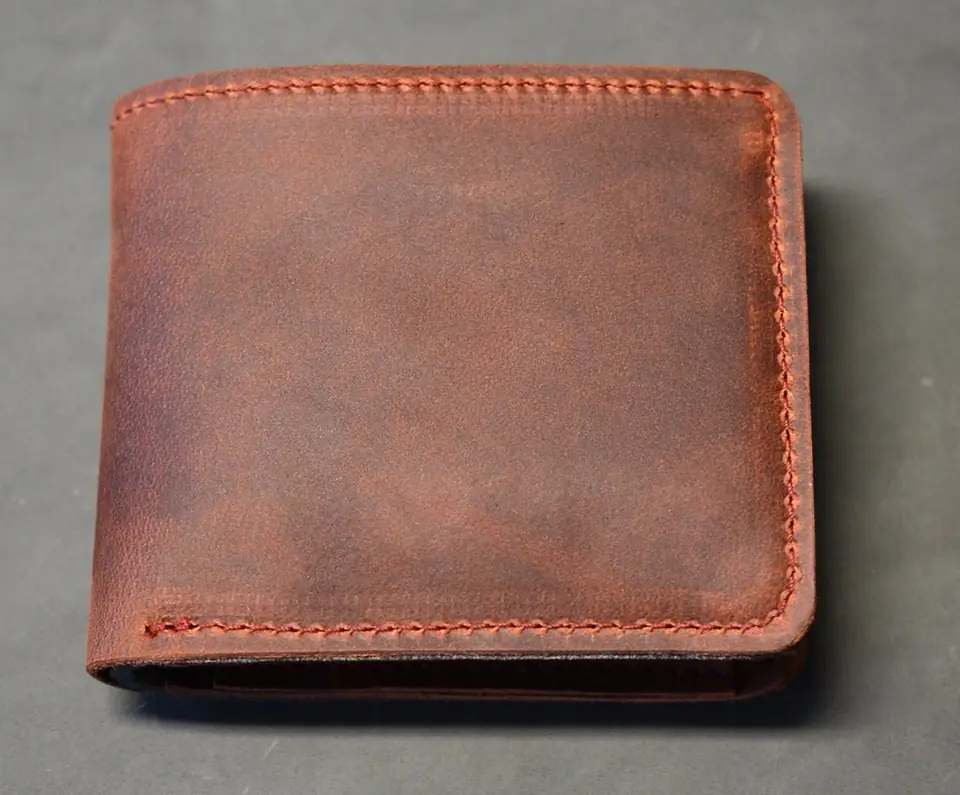
Leather wallet manufacturer in Bangladesh

Need a leather wallet manufacturer in Bangladesh for bifolds, card holders or travel wallets? Send the layout, leather, lining and quantity. Roptan sources from verified makers, checks the tannery papers, the sample and the bulk, then delivers or ships FOB Chattogram.

  • Verified sellers
  • Checked before it ships
  • Delivered by Roptan

Get leather wallets sourced

Prefer to deal with suppliers yourself? Post it on the requirement board

Buying leather wallets in Bangladesh

A leather wallet holds banknotes and cards, and sometimes coins or a passport, in folded panels lined with thin leather or textile. Importers abroad order wallets under their own label; buyers in Bangladesh order them as gifts or shop stock. Several layers meet at every fold, so grade, lining and edges decide how a wallet wears.

A leather wallet manufacturer in Bangladesh may use local or imported leather, so Roptan asks which tannery made it, and for its papers, before quoting. We then match your layout to a verified maker, approve a sample with real cards in it and inspect the bulk.
Kinds of leather wallet

Bifold wallets

Banknotes fold once, and cards sit in slots on each side. Choose it for a slim everyday wallet, and fix the slot count and any coin pocket in the first brief.

Trifold wallets

Two folds, with cards usually upright. Choose it for more slots in a shorter wallet, and judge it closed on the sample, since three panels stack at the folds.

Long and breast wallets

Banknotes lie flat in a taller wallet for a jacket pocket or a handbag; long wallets usually add a coin purse. Choose it when notes must stay unfolded.

Card holders

A slim case with a few card pockets and no note compartment, sometimes zipped. Choose it for a front pocket, where each slot's fit matters more than capacity.

Passport and travel wallets

Sized around a passport booklet, the ISO/IEC 7810 ID-3 format of 125 by 88 mm, with card slots beside it. Choose it for travel gifts and documents kept together.

How to brief a leather wallet manufacturer in Bangladesh

Grade and tannage
Name full grain, top grain, corrected grain or split. Chrome tanning gives softer, more flexible leather; vegetable tanning gives firm leather that holds a shape.
Layout and card slots
State slots, compartments and closure. Most bank and ID cards are the ID-1 size, 85.60 by 53.98 mm, so slots start from that card plus the leather.
Thickness and skiving
Ask for each layer in mm with a tolerance, measured to ISO 2589, and where folds are skived, or thinned, so the closed wallet lies flat.
Lining
Name thin leather or textile and its colour. Dyed linings fall under the EU azo dye limit too, so test reports must cover them.
Edges and stitching
Choose painted or burnished edges; raw cut edges wear sooner. We know of no standard for stitches per inch, so approve stitch length and thread on the sample.

Tests and papers for leather wallets

Chromium VI, EN ISO 17075
For the EU, leather touching skin must hold chromium VI below 3 mg/kg. Ask for a test on each leather and colour.
Azo dyes, ISO 17234-1:2024
The EU limit of 30 mg/kg for listed amines names wallets among its examples and covers dyed parts. Textile linings are tested to ISO 14362-1.
Nickel release, EN 1811:2023
Zip pulls, snaps and studs are plated. Where they touch skin, ask for a nickel release report naming the part and its plating.
LWG certificate, where your buyer asks
LWG rates tanneries Gold, Silver, Bronze or Audited for 24 months. It audits the tannery, not your lot, so it never replaces chemical reports.

What moves the price of a leather wallet

  • Leather grade, tannage, thickness and finish, which set what the leather costs by area.
  • Cutting yield: scars and holes are cut away, so a rule against visible marks usually uses more hide.
  • Layout and finish: every extra slot, zip or coin pocket adds pieces, and painted or burnished edges add steps.
  • Order size and colours: set-up and sample costs spread over fewer pieces, and a custom colour needs its own tannery dyeing batch.

Lead times and delivery

Time depends on the design and the leather. A new layout needs patterns and sample rounds; an existing design moves faster. A colour the tannery holds is quicker than a custom one, which waits for a dyeing batch, and chemical tests must pass before bulk. Fewer colours lower the minimum. Roptan confirms the dates and the minimum in the quote.

Roptan delivers anywhere in Bangladesh, each wallet packed singly as ordered and cartons counted by colour. Cartons are packed dry against monsoon damp. Each delivery comes with the packing list, the inspection report, any test reports you ordered and a VAT invoice (Mushak 6.3).

Buying leather wallets for export

Roptan quotes FOB Chattogram (Chittagong), or air freight from Dhaka for samples. A wallet mixing leather and textile is classed by its outer surface, so your broker confirms the tariff line.

What we check for this order

  • Tannery papers before the quoteWe ask which tannery made the leather, in which country, and for its papers before quoting.
  • Cards in every slotWe fit standard cards in every slot of the sample and of drawn bulk wallets, and check each closes flat.
  • Reports that cover the liningChemical reports must name your leather lot and colour, and cover the lining too.
  • Final inspectionRandom sampling to ISO 2859-1 at your AQL, for stitching, edges, zips, snaps, colour and grain marks.

Questions buyers ask

Is 'genuine leather' a grade?

No. It names no grade, so it does not say which layer of the hide was used. For the US, the FTC leather guides cover wallets: plain 'leather' should mean leather in all substantial parts, and bonded leather should state its share of leather fibre.

Can you promise LWG-certified leather from a Bangladeshi tannery?

No. Recent government and press reports question the Savar tannery estate's effluent treatment and how many of its tanneries hold an LWG rating, and some makers use imported leather. So we ask for the actual tannery and its papers before quoting, and tell you what we found.

How do we stop wallets going mouldy on the way?

Pack them dry and control moisture in the carton through the humid monsoon. Refuse anti-mould sachets containing dimethyl fumarate: the EU limits it to 0.1 mg/kg in any article, after it was used against mould on leather furniture and footwear in humid storage and transport.

What must a wallet sold in the EU carry?

Under the General Product Safety Regulation, the wallet or its pack needs a type, batch or serial number and the maker's name, postal address and electronic address. An economic operator must also be based in the EU: agree with your importer who that is and who prints the details.

How soon will I hear back about leather goods?

Within 48 hours of a complete requirement, with a price and a delivery date. A requirement is complete when it has the quantity, where it is needed and by when.

Who do I deal with?

With Roptan, when Roptan manages the order: we buy from the verified seller and deliver to you. With the supplier directly, when you post on the requirement board and choose a quote yourself.

Other leather goods products

Each product type has its own page as it is published; until then its card opens the category form.

All leather goods