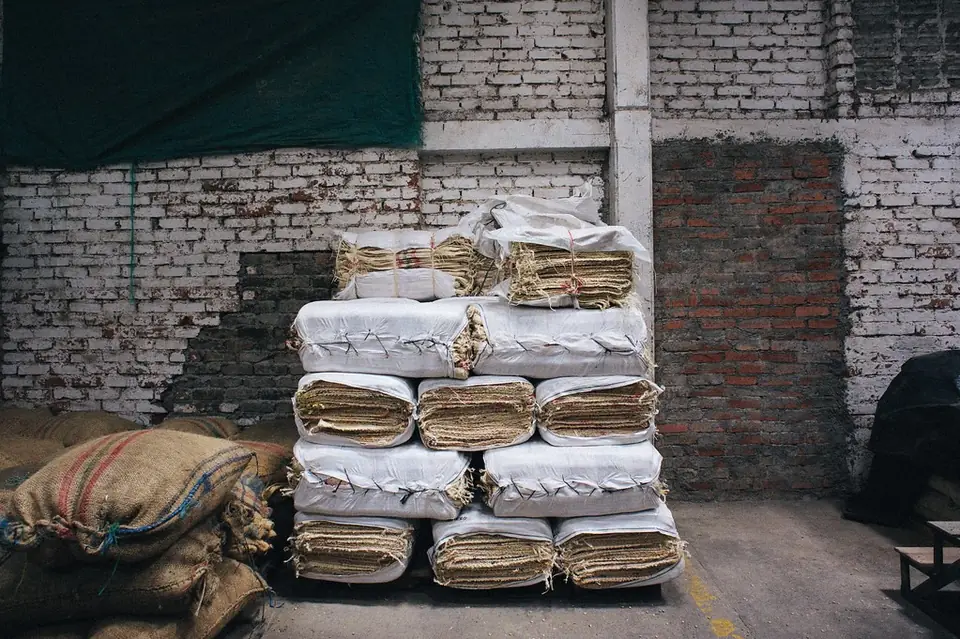
Buying jute sacks in Bangladesh
A jute sack is sewn from sacking, the coarse, heavy end of woven jute, or from lighter hessian. Under the Mandatory Jute Packaging Act 2010, goods such as rice, paddy, sugar and fertiliser sold in Bangladesh must go in jute packaging, so millers and traders buy sacks. Abroad, cocoa, coffee and nut traders use food-grade bags; the EPB tracks jute sacks as a separate export line.
A sack order is judged at the bale: count, corrected mass, construction, oil and smell. As your jute sack supplier in Bangladesh, Roptan names the sack standard in the order, sources from a verified mill, ties test reports to the bale marks and checks the bales.
How to order from a jute sack supplier in Bangladesh
- Goods and fill weight
- Name the goods and the fill, such as 25, 30 or 50 kg; Bangladesh has sack standards by goods, from cement and urea to sugar and onions.
- Cloth construction
- Weave, g/m², ends and picks per decimetre, and yarn counts; sacking weft is usually 483 tex or coarser. Mass alone does not show strength.
- Size and stitching
- Outside length and width, and stitches per decimetre. An Indian food-grain sack standard, for example, specified a 50 kg bag of 94 x 57 cm outside, sewn at about 10 stitches per decimetre.
- Moisture and mass
- The contract moisture regain and a maximum, since mass is judged corrected to it: India's sugar-bag standard uses 20 percent for sacking and 16 for hessian.
- Oil and liner
- An oil content limit, measured by BDS 949:2012, plus the IJO 98/01 test for food. For a liner, give the material and thickness.
Laws, standards and tests for jute sacks
- Mandatory Jute Packaging Act 2010
- Goods named under it, rice, paddy, sugar and fertiliser among them, must be sold in packaging of at least 75 percent jute. The Director General of Jute enforces it and may take samples.
- Bangladesh Standards for sacks
- BSTI's June 2026 list has a BDS for each sack kind and many goods, such as BDS 1767:2025 for 50 kg food-grain sacking bags.
- IJO Standard 98/01
- For cocoa beans, coffee beans and shelled nuts: unsaponifiables below 1,250 mg/kg on the cloth as received, and no untypical odour, also after artificial ageing.
- Regulation (EC) No 1935/2004
- EU food contact rules: the sack must not pass constituents to food in amounts that endanger health or spoil its taste or smell, and must be traceable to its lot.
Lead times and delivery
Sacks in a construction the mill already weaves usually ship sooner than a special size, a liner, printed marks or a food-grade lot awaiting its oil and odour test. Lab tests and inspection add days. Roptan confirms the dates and the minimum in the quote.
Sacks travel in pressed bales, the unit of count, weighing and sampling; BDS 894:2023 covers baling jute products. Ask for bale marks with lot, bag count and gross and net mass. We deliver in Bangladesh with the packing list, reports tied to those marks and a VAT invoice (Mushak 6.3).
Buying jute sacks for export
Jute sacks are HS 6305.10, a line the EPB reports on its own, and your broker confirms the code. Roptan quotes FOB Chattogram or Mongla. News reports say India set anti-dumping duties on Bangladeshi sacking bags on 24 September 2026, varying by producer, so buyers in India should ask who makes the sacks.
Questions buyers ask
Which goods must be packed in jute in Bangladesh?
Goods named under the Mandatory Jute Packaging Act 2010, including rice, paddy, sugar and fertiliser. The government can exempt goods by gazette, and sources differ on how many are covered, so check the current list for your product before you order.
Does vegetable batching oil rule out mineral oil?
Not on its own. IJO 98/01 limits unsaponifiables, but a 2024 cocoa-trade study found mineral oil hydrocarbons in bags made with vegetable oil too, and proposed limits for them. Ask your buyer for its current limits and test the actual lot.
Why is a bale's weight corrected for moisture?
Jute takes up water, so a damp bale weighs more. Sack standards set a contract moisture regain and compare corrected net mass with contract mass, so a bale can pass the scale and still be short. Agree the regain and who weighs.
Can jute sacks carry tea, milk powder or feed?
Yes, with a liner or laminate: jute is generally a poor barrier to water vapour. Bangladesh standards cover polyethylene-lined tea bags (BDS 1906:2016), laminated milk powder bags (BDS 1905:2016) and lined or laminated poultry and fish feed bags (BDS 1990:2021).
How soon will I hear back about jute bags?
Within 48 hours of a complete requirement, with a price and a delivery date. A requirement is complete when it has the quantity, where it is needed and by when.
Who do I deal with?
With Roptan, when Roptan manages the order: we buy from the verified seller and deliver to you. With the supplier directly, when you post on the requirement board and choose a quote yourself.