Buying black pepper in Bangladesh
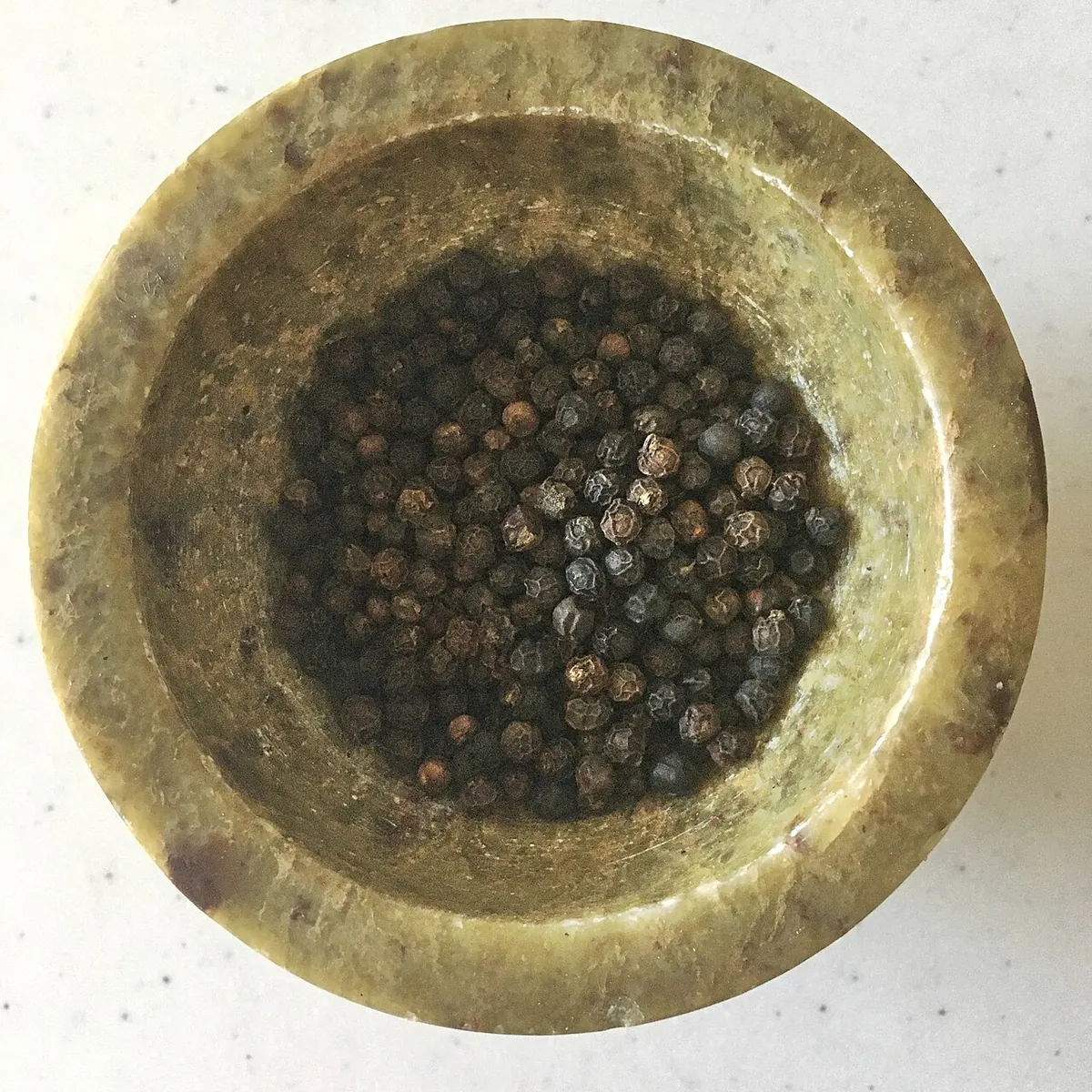
Black pepper is made from the unripe green berries of the pepper vine, cooked briefly in hot water and dried until the skin darkens and wrinkles. Vietnam grew about 30 percent of the world's peppercorns in 2023. Bangladesh grows very little: a 2020 report counted about 200 commercial growers in Chattogram, against imports then of about 1,500 tonnes a year. Food makers, packers and caterers buy it here, whole or ground.
A black pepper exporter in Bangladesh is usually selling berries grown abroad, then cleaned, ground or repacked here. Roptan sources from verified sellers, asks the origin of every lot, sets moisture, cleanliness and microbial limits in the order, and has an accredited lab test the lot before it ships.
How to brief a black pepper exporter in Bangladesh
- Form
- Whole, cracked or ground, with the piece or particle size.
- Grade
- The seller's stated grade and its test method. Berry density and the share of light berries usually set the grade.
- Pungency
- Piperine by ISO 5564, if pungency matters to you; black pepper holds between about 4.6 and 9.7 percent by mass.
- Moisture and cleanliness
- Moisture by ISO 939, extraneous matter by ISO 927, and total and acid-insoluble ash by ISO 928 and ISO 930.
- Microbiology
- Salmonella by ISO 6579-1 and yeasts and moulds by ISO 21527-2, with any treatment of the lot stated.
- Origin
- The country where the berries were grown, with the import papers, since Bangladesh grows little pepper.
Standards and tests for black pepper
- ISO 959-1:2026
- The specification for black pepper, whole or ground, reissued in May 2026; the 1998 edition is withdrawn. Name the 2026 edition in new contracts.
- ISO 5564
- Measures piperine, the compound that makes pepper pungent, by spectrophotometry. Use it when the contract sets a pungency minimum.
- BSTI mandatory list
- Black pepper does not appear on BSTI's mandatory certification list, unlike turmeric, chilli, coriander and cumin powders, so buyers at home rely on lot reports, not a mark.
- Regulation (EU) 2023/915
- Usually covers black pepper under its aflatoxin limits and under the ochratoxin A limit for spices other than capsicum. Ask for both on EU-bound lots.
- ESA Quality Minima
- European Spice Association minima for black pepper on a dry basis: total ash at most 7 percent, acid-insoluble ash 1.5 percent, moisture 12 percent and volatile oil at least 2 ml per 100 g. Write them into the contract as a floor.
Lead times and delivery
No fixed lead time can be given for black pepper. Berries already landed and in store move faster than a lot that must first be imported, and a fresh grind or a retail pack under your label takes longer, because artwork and printed film come first. Lab results must be back before loading. Roptan confirms the dates and the minimum order in the quote.
Inside Bangladesh, Roptan delivers pepper to spice packers, food makers, restaurants and hotels in lined sacks or cartons marked with the lot. You receive the packing list, the lab reports you ordered and a VAT invoice (Mushak 6.3). Ground pepper loses aroma quickly, so ask for it to be packed close to delivery.
Buying black pepper for export
Roptan quotes FOB Chattogram, or CFR or CIF to your port, with samples by air from Dhaka. Pepper ships under HS 0904.11 whole or 0904.12 crushed or ground; heading 0904 also covers capsicum, so your broker confirms the line. Under EU GSP the exporter declares origin through the REX system; since the berries are usually imported, ask how they stand under the origin rules before you count on the preference. Lab reports go with every lot.
Questions buyers ask
Is the black pepper grown in Bangladesh?
Very little of it. A 2020 report counted about 200 farmers growing pepper commercially on some 60 acres, after plantings that began in Mirsarai and Fatikchhari, Chattogram, in 2016; a vine first crops in its third year. The same report put imports at about 1,500 tonnes a year, so most pepper sold here is grown abroad.
Why does pepper need a Salmonella test?
Pepper is often eaten raw and kept on the table, so it is not cooked before it is eaten. A US regulator's sampling of spice shipments in 2007 to 2009 found Salmonella in about 7 percent of them. Ask for a result on each lot by ISO 6579-1 and whether the pepper was treated.
How is black pepper graded?
By the seller's stated grade, usually based on berry density and the share of light berries, with moisture and extraneous matter. Ask for the grade with its test method and a sample from the lot, and write the ISO 959-1:2026 clauses you rely on into the contract.
Should I buy whole or ground pepper?
Whole if you can grind close to use, because whole spice keeps for roughly two years and ground spice for about six months. Ground if you pack or cook with it directly, with a grind date close to shipment.
How soon will I hear back about spices and tea?
Within 48 hours of a complete requirement, with a price and a delivery date. A requirement is complete when it has the quantity, where it is needed and by when.
Who do I deal with?
With Roptan, when Roptan manages the order: we buy from the verified seller and deliver to you. With the supplier directly, when you post on the requirement board and choose a quote yourself.