Buying solar irrigation pumps in Bangladesh
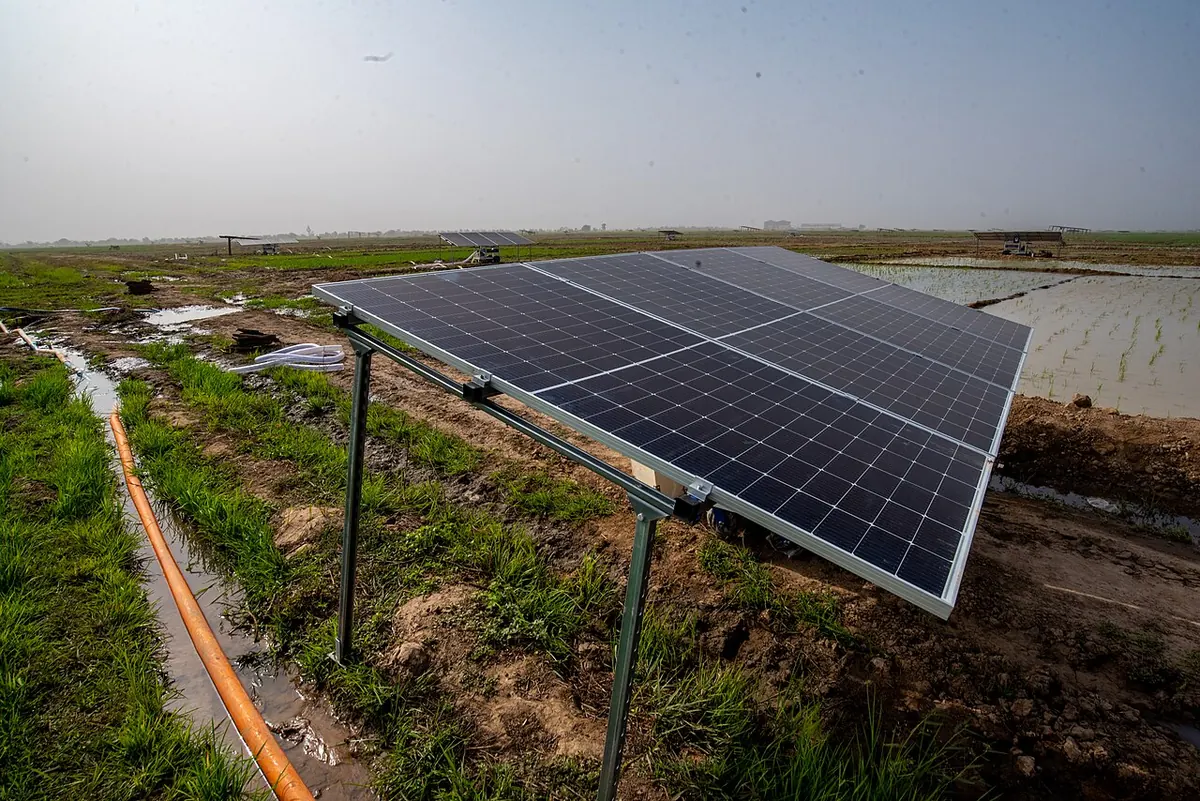
A solar irrigation pump runs a pump from a solar array through a controller, in place of a diesel pump. In Bangladesh it serves mainly summer boro paddy, the peak irrigation season. Buyers are farmers, cooperatives and the partner organisations in IDCOL's programme, which run the pumps and usually charge farmers a fee for the water.
A solar irrigation pump supplier in Bangladesh has to size for one hard season and plan for the rest of the year. Tell Roptan the source, depth and area by form or chat. We source from verified sellers, check panel certificates and pump test evidence, and deliver; the seller installs and commissions. You deal with Roptan only.
How to specify a solar irrigation pump
- Water need by season
- Give the area and crop. Arrays are sized for the boro peak, so they are often oversized for the rest of the year.
- Source and depth
- Bore or surface water, the water level in the dry season and the lift to the field. These choose the pump type and the drive.
- Array to pump ratio
- IDCOL pumps carry a high panel-to-pump capacity ratio, since arrays are sized for the boro peak. Ask for array kWp and pump kW stated apart.
- Storage
- Store water in a tank, not energy in batteries; a solar pump set usually has no battery. Give the tank or channel capacity.
- Controller and protection
- The controller matches pump power to what the panels give and adds low and high voltage cut-out. Ask what it protects against.
- Security
- IWMI found operators sleeping on site to deter theft. Plan a shed, fencing and who holds the keys.
Standards and rules for solar pumps
- IEC 62253
- Design qualification and performance measurement of PV pumping systems as a whole. Not a legal requirement here, but useful evidence that the set delivers its flow.
- ISO 9906
- Hydraulic acceptance test grades for rotodynamic pumps. Ask for the pump's tested curve and grade against your duty point.
- BDS IEC 61215 and 61730, SRO 202/2021
- The panels in a pump set fall under the same mandatory BDS rules and BDS mark as any solar module sold in Bangladesh.
- SREDA grid integration guideline, 2020
- Guidelines for the Grid Integration of Solar Irrigation Pumps: the steps for selling array power, paid at the BERC bulk rate for 33 kV.
Lead times and delivery
Equipment time depends on stock of the pump and controller, the array size, borehole work and site access in the field; Roptan confirms dates and any minimum in the quote. Plan so commissioning comes before boro. Under the 2020 guideline, a grid integration application is accepted within 5 working days and assessed within 10, the pump is installed within 3 months of approval, and the utility inspects and sets a contract date within 10 working days.
We deliver the pump, array, structure and controller to the field, and the seller installs and commissions the set. At handover agree site security, a water-user arrangement and a service contact. Papers: pump curve, panel serial list, BSTI certificate copy, warranty terms and a VAT invoice (Mushak 6.3).
Questions buyers ask
Does a solar irrigation pump need batteries?
Usually not. Storing water in a tank or raised channel is better than storing energy in batteries, so a pump set usually has none. The pump runs while the sun shines and fills the store for later.
What does the pump do after the boro season?
On its own, it stands mostly idle, since these pumps run mainly for the four boro months. A grid-integrated pump sells array power to the utility instead, paid at the BERC bulk rate for 33 kV under SREDA's 2020 guideline.
Can farmers get a pump without paying up front?
Yes, through IDCOL's fee-for-service model, where a partner organisation owns the pump and farmers pay for water. IDCOL is also exploring farmer ownership, and a Finance Division concessional loan fund of September 2026 names solar irrigation pumps.
Should I choose a DC or an AC pump?
DC motors usually serve small and medium pumps up to about 4 kW and run from the panels through the controller. Larger pumps use AC motors behind an inverter. The water depth and daily volume decide which size, and so which drive, you need.
How soon will I hear back about solar panels?
Within 48 hours of a complete requirement, with a price and a delivery date. A requirement is complete when it has the rating, where it is needed and by when.
Who do I deal with?
With Roptan, when Roptan manages the order: we buy from the verified seller and deliver to you. With the supplier directly, when you post on the requirement board and choose a quote yourself.